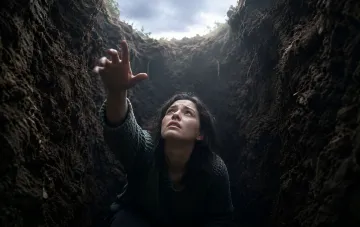
The belief that dreams can foreshadow future events has accompanied humanity for millennia. From ancient shamans who interpreted nocturnal visions as messages from spirits to modern sleep researchers explaining "prophetic" dreams through neural network activity, the topic remains relevant. In the folk traditions of most Slavic peoples, the night from Thursday to Friday holds a special place, long considered a time when dreams acquire unique power. However, whether a "prophetic dream calendar" truly exists and what the greatest thinkers who studied the nature of dreams thought about it are questions answered by both ethnographic records and academic psychology.
Folk calendar: Why specifically Thursday and Friday
One of the most persistent superstitions in the Slavic tradition states that prophetic dreams occur from Thursday to Friday. In popular belief, this night was associated with a unique ability of dreams to foresee future actions and events. The eve of major holidays—Easter, Christmas, Trinity—was also considered a time when "dreams speak the truth." Nevertheless, as field ethnographic research collected by the Research Institute of Peasantry at Cherkasy National University shows, Ukrainian tradition does not have a single unified calendar of prophetic dreams. Individual informants in the records named the night from Friday to Saturday or from Saturday to Sunday as special. Thus, even within a single cultural tradition, the "prophetic" night is not a fixed constant, but varies from region to region and generation to generation.
Gustavus Miller: Three types of dreams and "spiritual" visions
American author Gustavus Hindman Miller in his book *Ten Thousand Dreams Interpreted*, published in the early 20th century, paid significant attention to the possibility of predicting the future through dreams. In the preface, he described three types of dreams: subjective, physical, and spiritual. Miller associated the latter specifically with future events and considered them especially prophetic if they left a strong impression upon waking. The author also suggested that some dreams might contain warnings, and their true content is hidden in symbols and allegories requiring deciphering. Miller's approach, while not claiming scientific rigor, defined the mass perception of dreams for decades as a "code" that can and should be read.
Sigmund Freud: Dreams as the language of unconscious desires
Sigmund Freud in his work *The Interpretation of Dreams*, published in 1900, offered a fundamentally different perspective. He viewed dreams primarily as a manifestation of unconscious desires, experiences, and internal conflicts. According to his theory, during sleep, desires that a person is not conscious of in everyday life acquire a symbolic form, disguising themselves as absurd or strange images. Attributing to Freud the belief that dreams from certain days of the week foretell the future would be incorrect. He did not create a calendar of prophetic dreams and did not recognize the supernatural nature of dreams. His interest lay in the realm of psychological analysis: what exactly a person is trying to "tell themselves" in a dream and what hidden conflicts lie behind it.
Carl Gustav Jung and the "prospective function" of dreams
Carl Gustav Jung went further than Freud, but in a different direction. He viewed dreams not only as a reflection of past experiences but also described the so-called prospective function of dreams—the ability of the unconscious to outpace a person's conscious understanding of a particular situation. According to Jung, the psyche can combine unnoticed details, observations, and emotions, forming a scenario of probable events. A person may not yet realize the potential consequences of their decisions, but already sees their reflection in a dream. At the same time, Jung emphasized: this is not a supernatural prophecy. He compared the prospective function of dreams to a medical diagnosis or a weather forecast—a probabilistic prediction based on available, though not always conscious, facts.
What science says: Why we feel a dream "came true
Despite centuries of belief in prophetic dreams, there is no scientific evidence that dreams can reliably foresee future events. Experts explain the sensation of a "fulfilled dream" through a series of psychological mechanisms. First, selective memory plays a role: a person better remembers dreams that subsequently resemble real events and pays much attention to the hundreds of others that did not come true. Second, the brain naturally seeks patterns and connections between disparate events, so a random coincidence can be perceived as special foresight. According to the Sleep Foundation, dreams often reflect a person's thoughts, emotions, anxieties, and everyday experiences. This is why they can seem strikingly accurate when similar circumstances arise in real life—the brain is essentially "rehearsing" familiar scenarios.
Conclusion: Superstition, psychology, or coincidence
The night from Thursday to Friday and the eve of major holidays truly hold a special place in folk ideas about prophetic dreams. Miller admitted the prophetic nature of certain dreams, Freud looked for hidden desires in them, and Jung explained how the unconscious can foresee probable developments. However, neither of these approaches—neither folkloric, psychoanalytical, nor Jungian—provides grounds to consider a specific day of the week an exact guarantee of a "prophetic" dream. Most likely, the feeling of prophecy is not calendar magic, but a complex interaction of memory function, cognitive biases, and the psyche's natural ability to model the future based on accumulated experience.