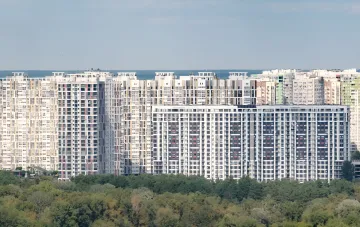
Odesa-based real estate development company PROSTRANSTVO has commissioned over 147,000 sq. m of real estate since the start of the full-scale war. This was reported to RBC-Ukraine by Oleksandr Sokolovsky, partner and chief financial officer of the company. For comparison, over the four pre-war years, this figure exceeded 91,000 sq. m. Thus, the volumes implemented during the war turned out to be approximately one and a half times higher than the total pre-war result for a comparable period.
The pause did not last longer than four months
According to Sokolovsky, after the start of the full-scale invasion, construction processes at the company were suspended for no more than four months, and active work resumed in the summer of 2022. Since then, the developer has systematically commissioned facilities, increasing the final figure to 147,000 sq. m. The company attributes the stability of its pace to systematic management of finances, resources, and risks, which, according to management, became a key factor for stable operations under wartime conditions.
Finance and construction as a single system
Participating in the formation of financial strategy and management decisions, Sokolovsky notes that under wartime conditions, developers have to constantly adapt plans to changes in the cost of construction materials, logistical constraints, a shortage of workers, and power supply interruptions. "In current conditions, finance cannot be viewed separately from the construction process. Procurement, the work schedule, the availability of resources, and cash inflows must work as a single system. The main task is to maintain project manageability and fulfill obligations to buyers even when initial conditions change," he emphasizes.
The war has changed buyer expectations
In addition to operational challenges, the conflict has reshaped the very demand for real estate. Alongside location, layout, and architecture, safety, the availability of shelters, and the autonomy of engineering systems are gaining increasing importance, according to PROSTRANSTVO's assessment. The company emphasizes that these characteristics should be embedded already at the design stage rather than added post-facto, as they directly affect the perception of the property as safe and resilient in the long term.
Spatium Hotel: 220 rooms and protected underground levels
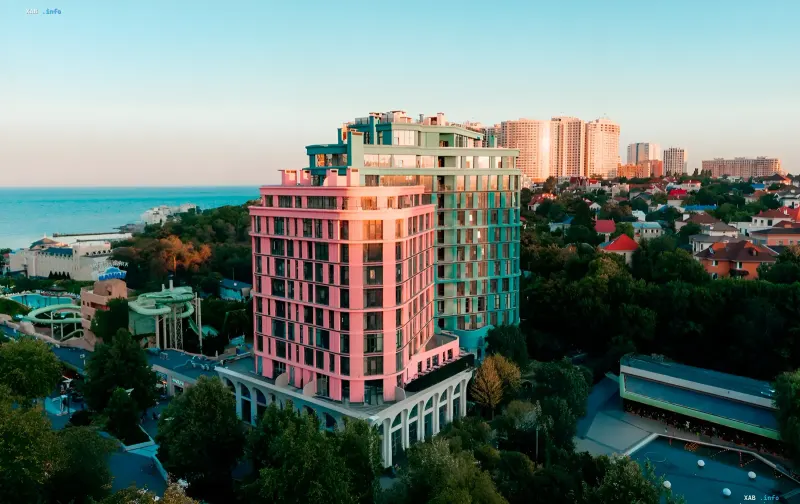
Among the projects implemented during the full-scale war is Spatium Hotel, a five-star hotel with 220 rooms. During its construction, as the company notes, current safety requirements were taken into account: in particular, protected premises are provided on the underground levels. The developer cites this case as an example of how new safety standards are integrated into the architecture and engineering solutions of a property.
Integration into the urban environment as part of value
PROSTRansTvo also focuses on integrating residential complexes into the urban environment of Odesa: landscaping, public spaces, and commercial infrastructure are viewed as components of long-term real estate value rather than as secondary elements. The company summarizes that development sustainability is determined not only by construction pace, but also by financial discipline, risk adaptation, implementation quality, and responsibility to buyers.