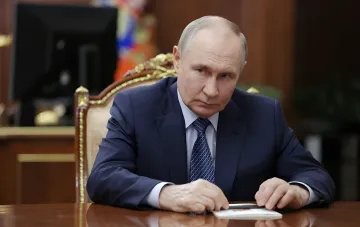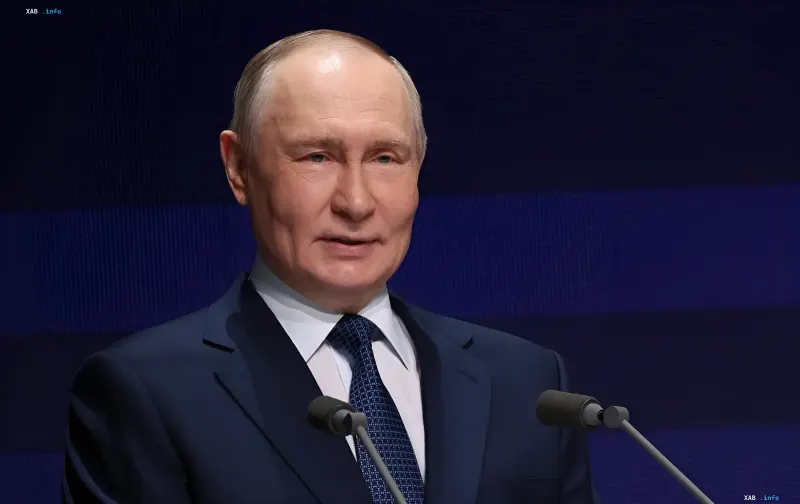
Vladimir Putin publicly admitted that the Russian hypersonic missile 'Tsirkon', which the Kremlin has actively promoted as 'unique weaponry', still requires refinement. Specifically, the Russian President pointed out the need to improve the accuracy of the munition.
The statement came against the backdrop of reports that Moscow intends to continue improving the system. This is reported by RBC-Ukraine, citing Putin's words as quoted by the Russian publication 'Izvestia'.
'There is still work to be done there'
Discussing the development of the latest weapons, the Russian leader noted that new means of destruction and defense constantly emerge in this field. At the same time, he admitted that even such high-profile projects as 'Tsirkon' have not achieved ideal indicators from the first attempt.
'Just think of the 'Tsirkon'! There is still work to be done with it, monitoring its accuracy. Recent applications have shown that it is becoming more accurate,' Putin stated.
At the same time, the Kremlin does not hide its ambitions: according to the President, Russia not only possesses such weapons but also intends to continue their improvement, outpacing the few countries in the world that have similar developments.
The role of the Navy in the nuclear triad
In addition to problems with the hypersonic missile, Putin separately emphasized the role of the Russian Navy (Navy). He reminded that the fleet is one of the key elements of the country's so-called nuclear triad and plays an important role in 'strategic deterrence'.
Particular attention was paid to submarines equipped with intercontinental ballistic missiles. According to the Russian leader, they serve as a tool for 'deterrence of any adversary' and are capable of inflicting 'unacceptable damage in the event of aggression'.
Context: 'Tsirkon' PR and reality
The hypersonic anti-ship missile 'Tsirkon' has become one of the most actively advertised samples of new Russian weapons. Official data indicates its ability to reach speeds of about 9 Mach and strike targets at distances of up to 1000 km.
It was Vladimir Putin who repeatedly called this missile 'unique', claiming that there are allegedly no means of protection against it. However, current admissions about the need to work on accuracy indicate that the idealized image of the weapon, created during the propaganda campaign, is colliding with the reality of operation and combat use.