Four years of war and international isolation have radically reshaped the geopolitical landscape for Russia. If Vladimir Putin used to dictate terms, now, according to Western media, he is increasingly forced to adopt the position of a supplicant in relations with Beijing. Meanwhile, China, demonstrating cold pragmatism, is already looking to the future, preparing for a possible change of power in the Kremlin.
From Admiration to Bargaining: A Change of Roles
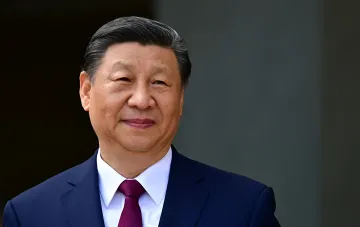
As recently as 2013, Xi Jinping called his Russian counterpart a "role model," admiring his influence on the world stage. However, after the start of the full-scale invasion of Ukraine, the balance of power shifted. Today, Russia's economy is critically dependent on the Chinese market: nearly 40% of Russia's foreign trade is with China. At the same time, Russia's share in China's trade does not exceed 4%.
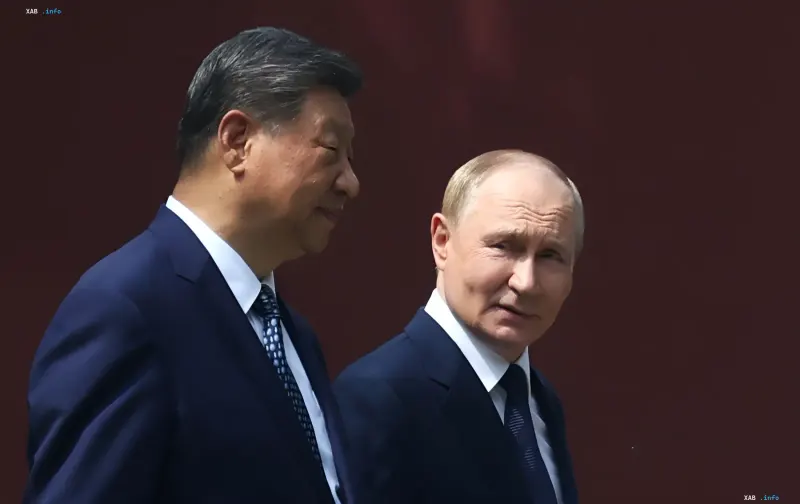
This economic imbalance turns Putin into a dependent partner. A striking example was the Russian leader's May visit to Beijing. Moscow hoped to sign an agreement on the construction of the "Power of Siberia 2" gas pipeline, but Chinese officials agreed to the project only on one condition: the gas must be supplied at the internal Russian price. In effect, Beijing demanded that the Kremlin subsidize the construction.
"Xi received Putin like an emperor receiving a guest in his castle, and then sent him home," commented German businessman Jorg Wutke.
Symbolism and Hidden Threats
The change in status was reflected even in the visual imagery. In photos from the last visit, published by Chinese media, Vladimir Putin is depicted as if looking up at a joint portrait with Xi Jinping. Beijing assured that the staging did not aim to humiliate the Russian leader, but the symbolism is obvious.
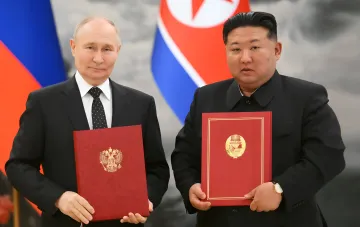
Furthermore, Beijing is seriously concerned about Russia's military cooperation with North Korea. Chinese officials fear that the transfer of Russian technologies will strengthen Pyongyang's nuclear potential, which in turn will push South Korea and Japan into an even closer alliance with the US.
The "Post-Putin" Strategy
Chinese strategists are no longer limited to the present moment. Beijing is actively strengthening contacts with Russian officials and representatives of the elite who may determine the country's course after Vladimir Putin's departure. China is developing long-term ties not only with the current leadership of the Russian Federation but also with those who will influence the country's policy in the future.
At the end of June, Beijing unexpectedly publicly called on Kyiv and Moscow to return to the negotiating table and stop hostilities. For the first time, a Chinese diplomat mentioned the suffering of Ukraine's civilian population, signaling a change in rhetoric.
However, against the backdrop of diplomatic words, secret actions continue. In early July, it became known that Russia and China conducted secret military exercises related to the war in Ukraine. Generals from both countries participated, and the preparation was personally approved by the Russian Minister of Defense.