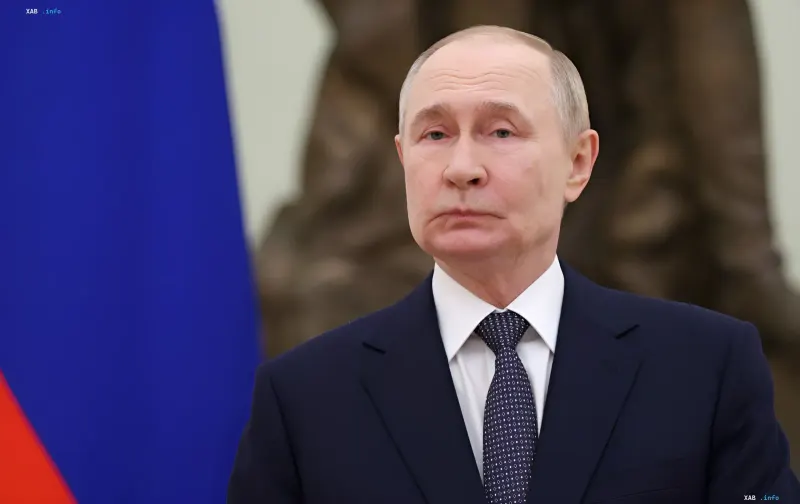
Vladimir Putin stated that the deployment of a European military contingent on Ukrainian territory would be equivalent to the start of a war between Russia and Europe. According to him, Europe is now "pushing its countries toward war with Russia," and any deployment of Western forces on Ukrainian territory would be regarded by Moscow as a direct military conflict. This is reported by RBC-Ukraine, citing Russian state propaganda media.
Rhetoric of "Settled Disputes"
In his speech, Putin emphasized that Moscow allegedly has no grounds for a conflict with Europe: in his words, all disputes between the parties were "already settled following the outcome of World War II." Thus, the rhetoric of the statement is structured in a logic in which any attempt by Europe to strengthen military support for Ukraine is portrayed as an unjustified and "historically unfounded" escalation, with responsibility for the escalation shifted onto Western capitals.
Context: The "Coalition of the Willing" and the Meeting in Paris
The statement came against the backdrop of the activation of the so-called "Coalition of the Willing" — a grouping of around 35 countries, mostly European, coordinating support for Ukraine. Following the coalition's meeting in Paris on September 4, 2026, 26 countries agreed to provide Ukraine with security guarantees, including the possible deployment of a military contingent on its territory. France and the United Kingdom serve as co-chairs of the coalition, whose leaders had previously stated their readiness to deploy forces if necessary.
Timeline: From Kyiv to Exercises in October–November
The leaders of the "Coalition of the Willing" met in Kyiv on August 24, 2026, where French President Emmanuel Macron announced large-scale joint military exercises of the coalition for October–November 2026. According to participants, these exercises are meant to test the readiness of multinational forces for operations following a possible ceasefire. It should be emphasized: according to statements by the coalition's leaders, the deployment of forces in Ukraine may occur only after a "reliable cessation of hostilities" or the end of the war, meaning that the deployment of troops is not taking place right now.
Contradictory Data
The versions on both sides contain a significant discrepancy regarding the timing and nature of the threat. Putin presents the deployment of European troops as an immediate and virtually inevitable cause of war, stating that Europe is "pushing" its countries toward conflict. However, the leaders of the "Coalition of the Willing" consistently assert that any military contingent may be deployed exclusively after the cessation of hostilities, and not during active combat. Thus, the "immediate military threat" depicted by Moscow is, in the coalition's official position, tied to a post-conflict scenario. Moreover, the source of the statement is Russian state propaganda media, which requires taking into account the possible politicization of the presentation.
What This Means for the Negotiation Track
Taken together, Putin's statement and the activation of the "Coalition of the Willing" indicate that the issue of security guarantees and the possible presence of Western forces is becoming one of the central and most contentious points of any future settlement. On the one hand, Europe is recording its readiness for long-term guarantees and even for a military presence after a ceasefire; on the other hand, Moscow is marking a red line in advance, turning the very idea of such a presence into a pretext for escalation. It is precisely this divergence in positions, rather than specific military actions, that at the current stage forms the main risk of the negotiation process breaking down.