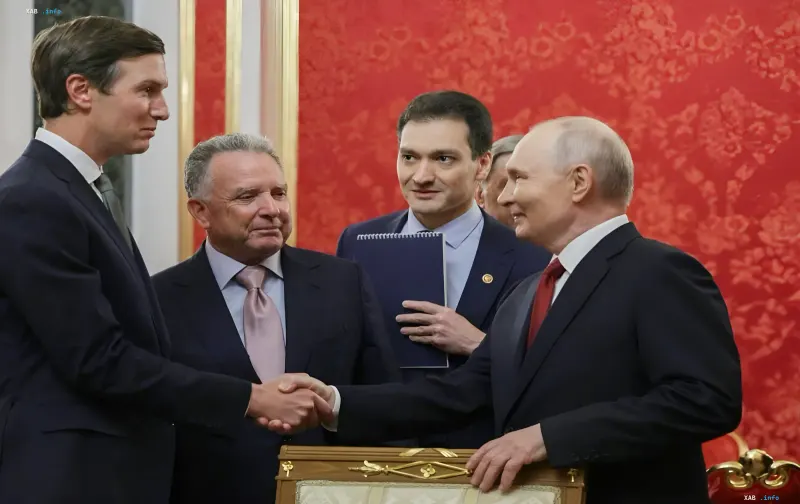
On Saturday, September 5, 2026, a three-hour meeting took place at the Kremlin between Russian President Vladimir Putin and U.S. administration envoys Steve Witkoff and Jared Kushner. The negotiations, focused on resolving the Russia-Ukraine conflict, came after a lengthy pause caused by the American side's shift in attention to the situation around Iran. According to Reuters and Russian media, as cited by RBC-Ukraine, the Kremlin chief called the situation in Ukraine 'complex' at the start of the conversation and publicly praised U.S. President Donald Trump for his efforts to end the war.
Putin Assesses Trump's Efforts and Highlights the 'Complexity' of the Situation
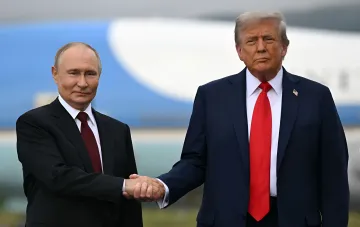
During the negotiations, Putin said words that Reuters quoted verbatim: 'Understanding that he is facing a complex situation, he nevertheless does not stop his efforts aimed at facilitating a settlement and making his contribution to resolving the Russia-Ukraine conflict.' Thus, the Russian leader publicly acknowledged the presence of difficulties in the negotiation process while expressing approval toward the American president, which can be seen as an attempt to maintain a constructive tone in the dialogue and prevent its complete breakdown.
The Kremlin's Official Position: 'Substantive and Frank' Negotiations
Presidential aide Yuri Ushakov, commenting on the outcome of the meeting, reported that Witkoff and Kushner had promised to use, during upcoming contacts in Kyiv, the assessments Putin had voiced regarding the paths to resolving the war. The Kremlin's official spokesperson stated that the negotiations were 'substantive, extremely frank, and conducted in an atmosphere of trust.' This phrasing, characteristic of Kremlin press releases, is intended to project to domestic and foreign audiences an image of a productive dialogue between Moscow and Washington.
Contradictory Data
However, the picture painted by the official Kremlin sharply diverges from information obtained by Reuters from a source close to Putin's administration. According to the agency's anonymous interlocutor, Putin still intends to seize additional territory in Ukraine. 'There is no chance of reaching an agreement along the front line until Putin completes securing the rest of Donetsk Oblast,' the source said, adding that the Russian leader is confident this will happen by the end of 2026. Thus, the public rhetoric of 'trust' and 'frankness' contrasts with the private assessment, according to which the issue of territorial concessions remains absolutely unacceptable to Moscow, and military pressure on the Donbas will continue until it is fully under control.
Context: The Pause in Negotiations and the Role of the American Envoys
The arrival of Witkoff and Kushner in Moscow became possible only after the U.S. administration had resolved the top-priority tasks related to the conflict around Iran, which had previously fully absorbed the White House's diplomatic resources. The very fact of a three-hour meeting in a 'one-on-several' format at the Kremlin indicates that the topic of Ukraine has once again returned to the center of the bilateral agenda. However, the discrepancy between the Kremlin's public statements about a 'trustful atmosphere' and the private assessments about the readiness to continue the offensive in the Donbas suggests that real progress in the settlement remains in question, and the negotiations most likely serve a predominantly informational and demonstrative purpose.