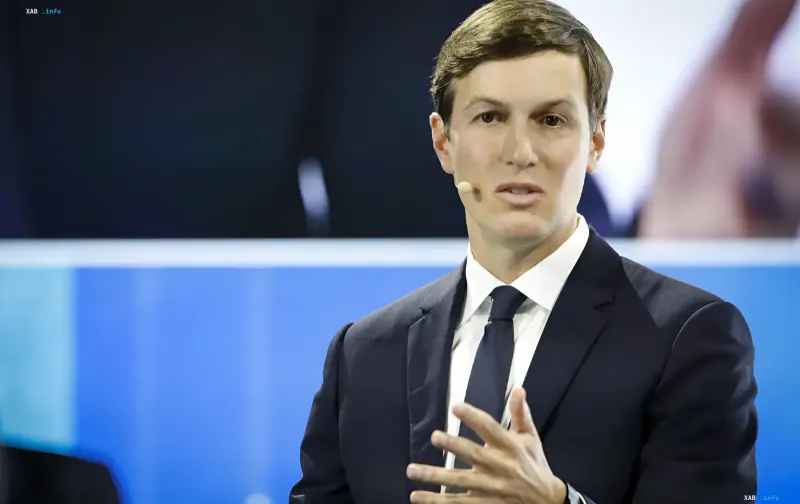
According to New York Magazine, cited by RBC-Ukraine, during negotiations on resolving the war in Ukraine, Vladimir Putin offered US presidential envoy Jared Kushner a series of business agreements in exchange for easing US sanctions. Specifically, this involved joint oil extraction near Sakhalin and the supply of Russian diesel fuel to the US. These reports add to the picture of back-channel contacts between Moscow and Washington, which in recent months have become a key venue for discussing possible terms to end the conflict.
Business exchanges as a tool for pressuring the sanctions regime
According to the publication, in September, Kushner and a second US presidential envoy, Steve Witkoff, met with Putin in the Kremlin. According to the Financial Times, it was during these talks that Russia put forward a package of commercial proposals, which included joint American-Russian oil extraction near Sakhalin Island. The logic, as observers assess it, was for Moscow to link economic benefits for American business with Washington's willingness to lift some of its sanctions.
Sakhalin oil and diesel ahead of US elections
A separate point, the outlet reports, was a proposal to supply the United States with diesel fuel ahead of the midterm congressional elections. According to New York Magazine, Putin counted on Trump suspending some sanctions in response to these energy and investment initiatives. Thus, the energy agenda served as both a commercial and a political argument in the hands of the Russian side.
The disputed consortium and Kushner's denial
The New York Times, for its part, wrote that Putin proposed selling a sanctioned Russian energy company to a consortium that would include the firm of the UAE president's brother, a Qatari company — Kushner's partner in Albania — and a major Trump donor. Kushner, however, denies that this issue was ever discussed in the negotiations. Thus, on one element of the deal, the parties' positions diverge: the media cites Moscow's proposal, while the American envoy claims no such discussions took place.
Political context: from 'gray zones' to the NATO question
During the talks in Abu Dhabi, Kushner stated that Putin was ready for peace "under the right conditions," while in Moscow, the readiness of Ukraine and Europe for agreements was questioned. On November 12, Witkoff and Kushner met with Putin again in Moscow, where the Kremlin head declared that Russia does not recognize "gray zones" and that foreign troops on Ukrainian territory would be considered a legitimate target. Previously, The Wall Street Journal reported that the US is discussing Ukraine's entry into NATO in exchange for territorial concessions, and that Kushner has repeatedly raised this idea in closed meetings with European partners. The Kremlin, conversely, demands that Ukraine's entry into the Alliance be blocked and opposes the deployment of Western troops on Ukrainian territory.
Expert assessments and symbolic gestures
Former White House Russia advisor Fiona Hill characterizes Moscow's approach as: "He's trying to seduce Jared and others with business deals." According to the publication, at one of the meetings, Putin showed Kushner a file from the state archive about his grandfather's participation in the partisan movement during the Holocaust, which the American envoy reportedly perceived as a hint at the historical alliance between the US and Russia against Nazism. The combination of these episodes, according to analysts, indicates that Moscow is trying to expand the negotiating field beyond military issues, including economic and symbolic elements.