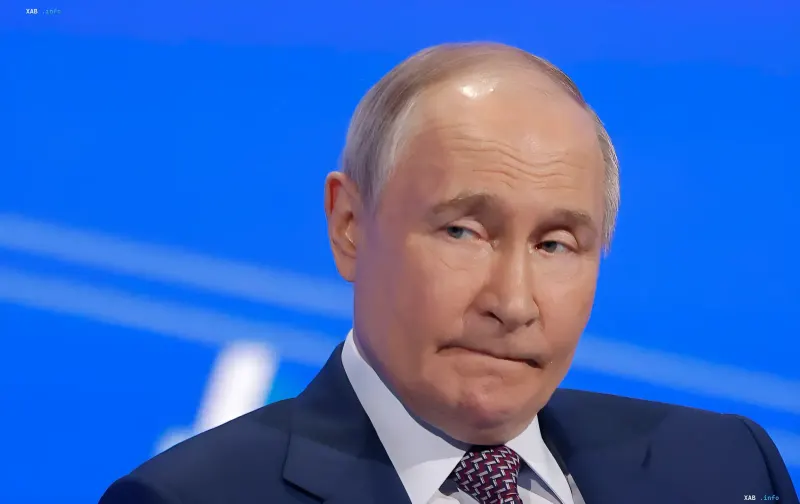
According to The New York Times, cited by RBC-Ukraine, the latest assessments from Western intelligence services indicate that Vladimir Putin is not ready for serious negotiations to end the war against Ukraine and aims to continue military operations at least until the end of winter. These conclusions are drawn amid preparations for a trilateral meeting of the leaders of the US, China, and Russia on the sidelines of the APEC summit in Shenzhen, China, scheduled for November 19.
Western intelligence assessments
NYT sources emphasize that intelligence agencies of allied countries have documented the Russian leadership's desire to conduct military operations in Ukraine at least until the end of winter. According to their data, the Kremlin counts on the army being able to achieve further advances in eastern Ukraine or that massive drone and missile attacks on Kyiv, accompanied by civilian casualties, could increase pressure on the Ukrainian side and undermine its ability to resist.
Internal pressure and the war narrative
As sources note, Putin is under increasing pressure: Russia continues to suffer significant losses, faces difficulties with mobilization, and has an unstable economy. Some NYT interviewees add that continuing the war allows the Russian leadership to suppress internal criticism. These assessments coincide with recent comments from European diplomats and leaders who express doubts that the full-scale conflict, which has been ongoing for nearly five years, will end anytime soon.
France's position and ceasefire stance
"We believe that Russia is in a dire situation," French Ambassador to Washington Aurélien Lechevallier said in an interview, speaking about the country's economic situation under war conditions and its impact on Putin's legitimacy. According to him, the Russian leader needs the war to bolster his own leadership and narrative. The diplomat also noted that Putin spoke out against even a partial ceasefire, which, in his estimation, "frankly contradicts what President Trump has demanded from the very beginning, namely, an end to hostilities."
Potential treaty conditions and Kyiv's reaction
Allied intelligence services explain Putin's unwillingness to negotiate peace in different ways. One service believes the war gives his policy a purpose, and to hold onto power, he needs to announce a victory, which is why he wants to make Ukraine suffer this winter under a barrage of attacks. According to at least one intelligence assessment, the Kremlin would only agree to a deal on favorable terms—specifically, it would demand the handover of the entire Donbas and a promise that Ukraine will never join NATO. NYT sources add that Ukrainian President Volodymyr Zelenskyy and other officials in Kyiv will almost certainly reject such demands, making such an agreement unrealistic. Some European officials suspect that Moscow is stalling for time and hoping for a split in support for Ukraine after the European elections in 2027.
Trilateral summit in Shenzhen and the Ukraine question
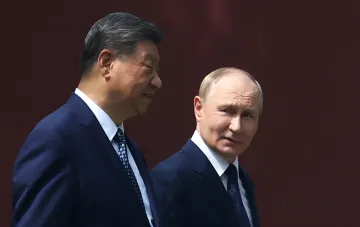
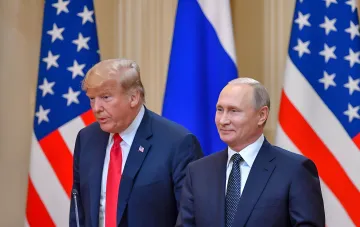
On Thursday, November 19, a trilateral meeting between Donald Trump, Xi Jinping, and Vladimir Putin will take place in Shenzhen on the sidelines of the APEC summit—the first time in modern history that leaders of these three states will sit at the table in such a format. Before the trilateral meeting, Putin and Xi Jinping have already held separate bilateral talks, while there is no certainty regarding bilateral talks between Trump and Putin: the Kremlin allows for such a meeting, and Trump himself has stated his readiness to meet if possible. The Ukraine issue remains a separate intrigue: initially, the White House claimed that Russia's invasion of Ukraine would not be discussed at the trilateral meeting, however, before departing for Asia, Trump personally shifted the focus, stating he intends to discuss Russia's war against Ukraine.