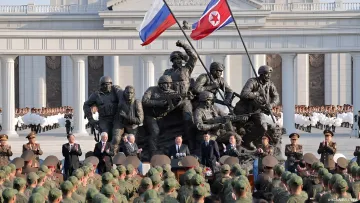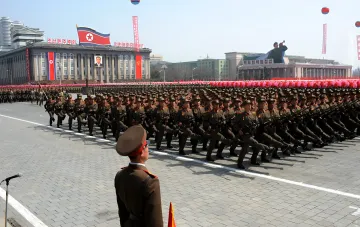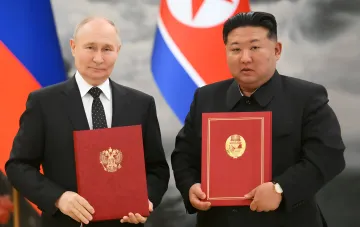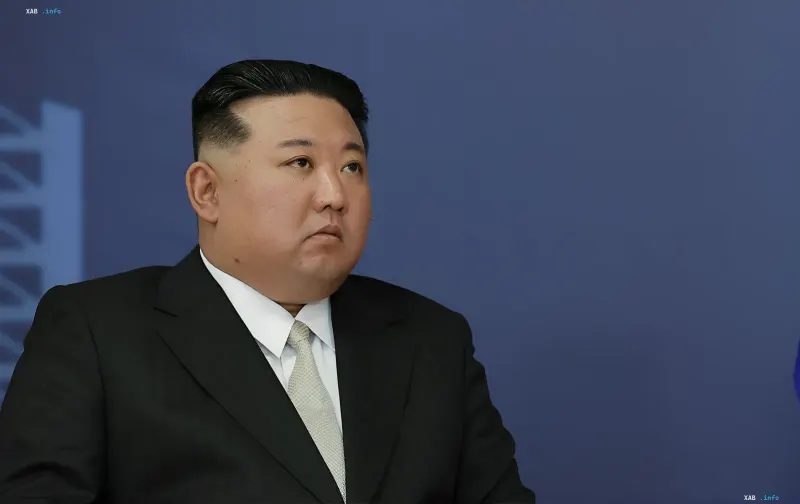
According to Ukrainian and Western sources, a major breakdown has occurred in the relations between Russia and North Korea, leading to an effective halt in military support from the DPRK. The conflict, as reported, began following a statement by the Russian leadership regarding their readiness to help reduce tensions between Seoul and Pyongyang, which North Korea viewed as incompatible with the nature of their allied relations. Reportedly, the decision to temporarily stop military aid was made personally by North Korean leader Kim Jong Un.
Moscow's de-escalation statement served as the trigger
According to sources, the cause of the disagreement was a remark by Deputy Foreign Minister of the Russian Federation Andrey Rudenko, who stated that Moscow would facilitate the reduction of tensions between South and North Korea in the future. In late October, North Korean Foreign Minister Choe Son Hui stated that such a position did not align with the nature of the alliance between the two states and demanded clarification from the Russian side regarding its policy towards South Korea. At the same time, Pyongyang demonstrated another side of its foreign policy in the same month: on October 24, Kim Jong Un visited China, where he participated in the opening of a new cross-border bridge in the border city of Dandong and, according to reports by the Associated Press and the state news agency Xinhua, expressed hope for expanding cooperation with their "powerful neighbor."
What exactly has been halted
According to the Main Intelligence Directorate (GUR) of Ukraine, the restrictions apply to the use of North Korean airspace by Russian military transport aircraft, as well as the supply of KN-23 ballistic missiles and a new batch of artillery ammunition. Furthermore, according to the same reports, Pyongyang is in no hurry to fulfill Moscow's request to increase the number of North Korean military personnel in Russia from 8,500 to 50,000 troops. Meanwhile, units of the 11th Corps of the DPRK Special Operations Forces already in Russia continue to serve in the Kursk region, and since mid-summer, a composite missile unit of the North Korean army has been operating in the Voronezh region, which sources say is part of the 112th Missile Brigade of the 1st Tank Army of the Moscow Military District.
Contingent and local casualties
GUR estimates that total losses of DPRK troops in battles in the Kursk region amount to 7,058, of whom 2,251 were killed, with the rest wounded. The Russian and North Korean sides have not published official data on casualties, so these figures remain a one-sided estimate. Meanwhile, according to North Korean state media, Pyongyang is simultaneously strengthening combat training: at a meeting of company commanders, Kim Jong Un named bringing units to full combat readiness as their "main revolutionary task."
Systemic cooperation issues
Sources identify the low level of interoperability between Russian and North Korean troops, the language barrier, a shortage of translators, and insufficient logistics support from the DPRK as the main obstacles to deepening military cooperation. Another factor, according to available information, is the attitude of some Russian military commanders toward North Korean personnel, as well as significant casualties among the contingent. Thus, further expansion of military cooperation between Moscow and Pyongyang is effectively suspended according to available data, although transport and political contacts (including the opening of a road bridge over the Tumen River in September 2026) are formally being maintained.