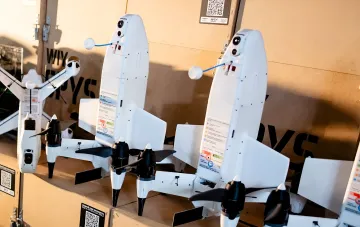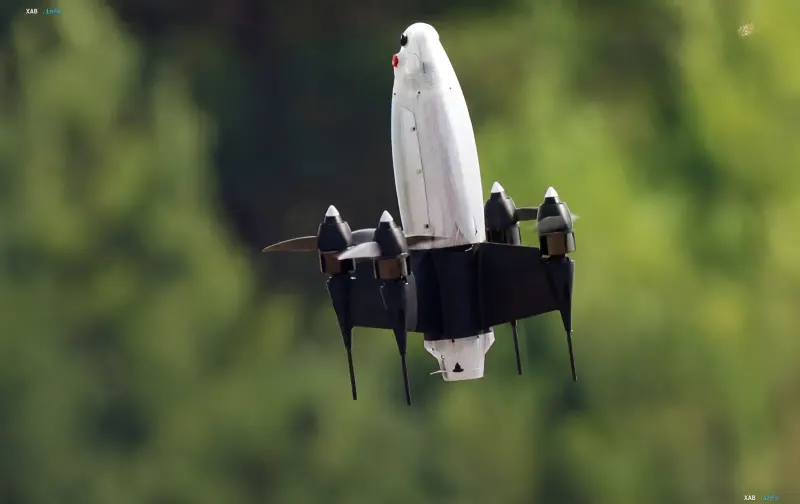
Ukrainian company Quantum Wiy Industries has unveiled an upgraded version of its SPYS interceptor drone, which, according to the developers, can reach speeds of up to 500 km/h. As reported by RBC-Ukraine, the improvements were made based on feedback from combat crews who tested early prototypes against jet targets. The key change was the aerodynamics, which, according to the engineers, had a direct impact on improving all other characteristics of the aircraft.
Aerodynamics as the foundation of modernization
The upgraded SPYS features narrower wings, a redesigned nose section, and modified air intakes. The placement and design of the antenna were also revised: in the previous version, it created significant air resistance, which reduced the interceptor's speed. According to the developers, it is this combination of aerodynamic changes that allowed the drone to reach the stated 500 km/h without radical reinforcement of the power plant.
Overheating control and serial preparation
The color of the plastic housing has been changed from black to white. According to the company, during operation it was discovered that black drones heated up to 80 °C in the summer sun, which created a critical thermal load on the internal electronics. The housing is still produced via 3D printing to allow for rapid design adjustments, and the structure was made more technologically advanced in preparation for mass production.
Standardized warhead and increased range
The mass of the warhead has been increased from 300 g to 500 g. Instead of homemade munitions previously assembled by the military, the drone now features a codified standard factory-made high-explosive warhead with a standard fuse and safe storage packaging. Its main task is to damage the fuselage and disrupt the geometry of an enemy UAV to cause it to lose speed or to trigger the detonation of its own warhead. The interceptor's range has been increased from 33 km to 45 km.
Operations under GPS jamming and reusability
The electronics power section has been reinforced, which, according to the developers, has made the drone more predictable at high speeds and allowed for its reuse. To operate under satellite navigation jamming conditions, a radio beacon system has been implemented: it determines the drone's coordinates via triangulation and automatically turns the ground control station's antenna toward the interceptor, maintaining a stable signal.
Context: the interceptor race in Ukraine
The unveiling of the SPYS comes against the backdrop of active development in the country of an entire family of countermeasures against high-speed UAVs. It was previously reported that the Defense Forces received the first domestic jet interceptor, the Alexa Spatium, equipped with a turbojet engine and designed for the Geran-3, Geran-4, and Geran-5. RBC-Ukraine also reported that the Minister of Defense appealed to the EU to fund jet drone interceptors. According to the head of state, dozens of companies are working on interceptors for high-speed Shahed drones, and SBU units have already used such equipment in combat. Against this background, other manufacturers are also bringing their solutions to market — for example, the company Vluchnyk has completed internal testing of its Zorelit v5 interceptor with a speed of up to 416 km/h and a range of up to 47 km, highlighting competition among developers and accelerating technology refinement.