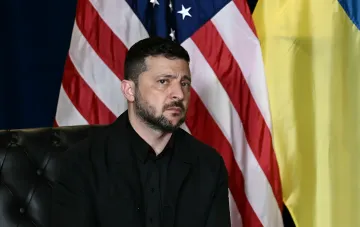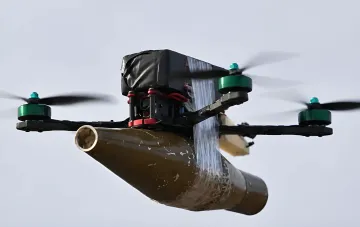
Serhii Beskrestnov, adviser to the President of Ukraine on defense technologies known by the pseudonym «Flash», in an interview with the Associated Press, called the Russian «Rassvet» satellite constellation the number one threat among all technological challenges posed by Moscow. According to his assessment, the deployment of the network will allow operators of the Aerospace Forces and Unmanned Systems Forces to guide «Shaheds», other drones, and cheap missiles in real time, bypassing Ukraine's electronic warfare network built across the country. «They will be able to attack the entire country in real time and do it very accurately. This will be a major catastrophe for everyone», Beskrestnov warned. Full orbital communication coverage over Ukraine, according to his calculations, could be achieved in approximately six months.
From test mode to serial constellation
The timeline of «Rassvet's» creation is quite clear. Russia launched the first 16 serial satellites into orbit in March 2026. In late May, Beskrestnov reported that the devices were operating in test mode and no signs of their military use were recorded at that time. The second serial launch took place on July 19: according to independent orbital databases, another 16 devices were put into orbit. Thus, the constellation currently counts 32 satellites. At the same time, according to Beskrestnov's estimate, stable continuous communication requires at least 200–250 devices, and for the round-the-clock coverage promised by Moscow, more than 250. Therefore, a significant gap remains before reaching the target figure.
What «Rassvet» provides and why it is more dangerous than Starlink analogues
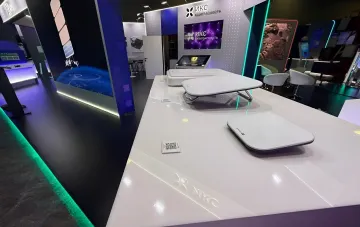
The key difference between the Russian system and commercial satellite services is its integration with combat missions. In early October, «Bureau 1440», the main developer, demonstrated three terminals for «Rassvet» which, according to Ukrainian experts, can be used to control drones over the territory of Ukraine. While the satellites fly over the country, they provide temporary communication lasting 30–40 minutes. This is enough for short guidance episodes, but not for continuous control. It is the transition to a dense constellation providing overlapping coverage that will turn «Rassvet» from an experimental project into a tool for massive strikes, against which the Ukrainian electronic warfare network, built on the principle of local jamming, will prove ineffective.
Ukrainian countermeasures and the problem of defense against a non-functioning system
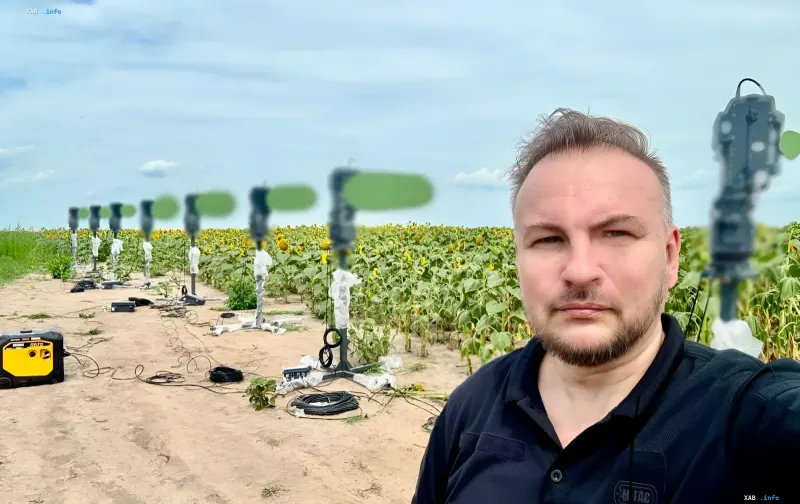
Kyiv is preparing a package of response measures, including sanction instruments against project participants. However, as Beskrestnov himself acknowledges, the task is complicated by the fact that defense must be built against a system that is not yet fully operational. Russian engineers, according to him, have already tested jamming equipment on working Starlinks, which indicates that Moscow has the technological base to counter satellite communications. «When Russia starts using it to strike our infrastructure, we must already have developed defense tools, manufactured them in large quantities, and deployed them», the presidential adviser emphasized. , taken at training grounds in Ukraine, show electronic warfare units lined up against a backdrop of sunflower fields — exactly this kind of infrastructure, according to experts, will be the first to be threatened when «Rassvet» switches to combat mode.
Civilian «wing» of the project and task diversification
In parallel with the military track, Russia is promoting the civilian application of «Rassvet». «Bureau 1440», together with «Russian Railways», is preparing to connect satellite communications on 135 «Sapsan» and «Lastochka» high-speed trains. Another joint project with the operator «MegaFon» combines a satellite terminal with a portable base station, making it possible to create mobile communication hubs in remote areas. The diversification of tasks, on the one hand, reduces the direct military load on the project and complicates sanctions pressure against it, and on the other hand, accelerates the testing of technologies that could potentially be redirected to combat missions.
Context: why the issue of satellite communications has become central
The war in Ukraine has demonstrated that drone control over long distances critically depends on a stable communication channel. The dependence on commercial Starlink, which Ukraine and its partners have used for several years, has become a vulnerability that Moscow is consistently trying to neutralize. «Rassvet» is, essentially, an attempt to create a sovereign analogue that is not subject to Western jurisdictions and does not depend on the decisions of private companies. If the constellation reaches the claimed 250+ devices, the balance in air and missile defense could shift in favor of the side possessing a continuous orbital control channel. For Ukraine and Europe, as Beskrestnov emphasizes, this means the need to revise the entire air and missile defense doctrine, taking into account the scenario of massive strikes coordinated in real time from orbit.