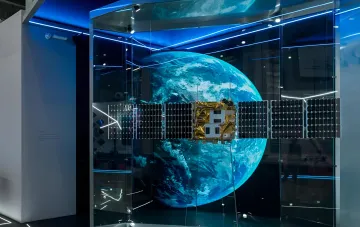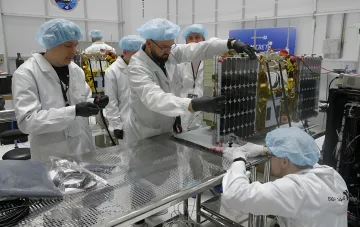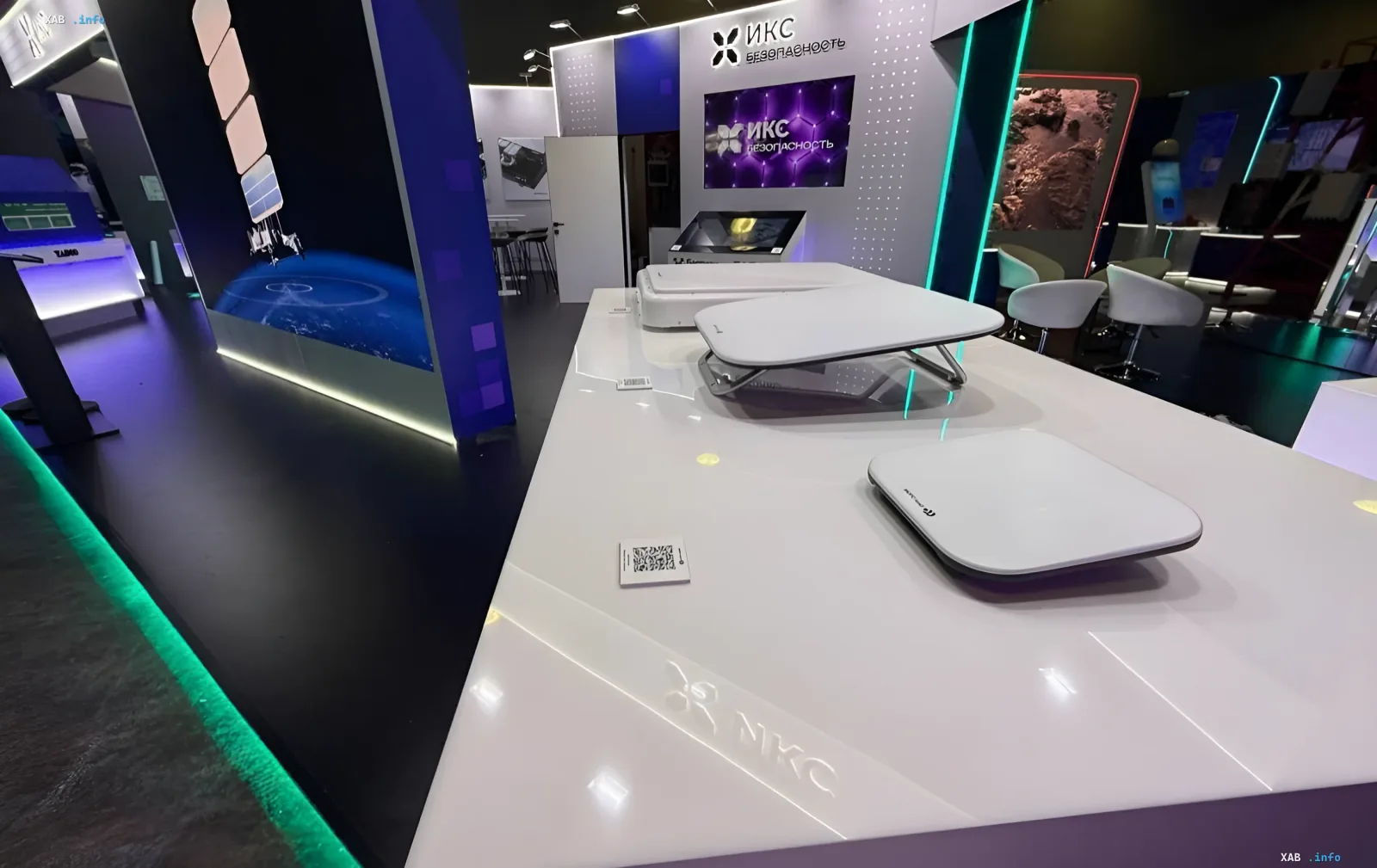
The Russian company Bureau 1440 has officially presented a lineup of three subscriber terminals for the Rassvet low-Earth orbit satellite communication system, positioned as a domestic counterpart to the American Starlink network. The presentation of these new devices has drawn close attention from industry specialists and military experts, as such technologies could potentially be adapted to meet the needs of the Russian Ministry of Defence, including possible drone control in active combat zones.
The Rassvet Terminal Lineup and Specifications
During the presentation, developers demonstrated three equipment modifications designed for various deployment scenarios. The first device is named '1440.ULTRA', positioned as a serial product with maximum performance capable of data transmission speeds up to 700 Mbps. This terminal is targeted at connecting large industrial enterprises, remote infrastructure, and heavy machinery. The second device, '1440.ZEMLYA', was engineered specifically for railway transport to maintain communication on rolling stock at speeds up to 400 km/h. The third sample is the '1440.MINI' concept, corresponding to the portable Starlink Mini with a target data rate of around 100 Mbps for mobile emergency teams and rescue crews.
Contradictory Data
Despite the grand presentation and ambitious claims regarding breakthrough performance, independent experts and specialized sources express skepticism concerning the system's actual readiness. According to estimates, only about 32 serial satellites are currently in orbit (the first 16 were launched in March 2026, and another 16 in July). Communication experts, including Ukrainian and Russian analysts, note that ensuring stable round-the-clock coverage requires a constellation of at least 200–250 spacecraft, while a full-scale commercial service is scheduled by the Russian federal project only for 2027–2028. Additionally, independent observers point to a lack of verification for the claimed throughput and potential manufacturing scaling hurdles amid ongoing sanctions.
Military Context and Application Risks
The expert community is closely evaluating the prospects of militarizing the Rassvet system. Given the architecture of the devices and their structural similarities to SpaceX terminals, analysts do not rule out attempts to integrate the equipment onto Russian long-range strike drones. Such a move could significantly enhance the resilience of drone command channels and their operational range against targets inside Ukraine. However, as of autumn 2026, industry specialists note that the spacecraft and ground infrastructure operate primarily in a test mode, indicating the project is still in the phase of testing and primary functional deployment.
Project Evolution and Deployment Plans
The deployment of the Rassvet system has faced technological complications and schedule shifts. For instance, the March 2026 launch occurred with an approximate three-month delay due to manufacturing issues. According to plans, the satellite count is expected to increase through the federal program by the end of the year, but reaching full commercial or large-scale tactical military implementation requires a lengthy trial period for inter-satellite laser communication and ground terminals.