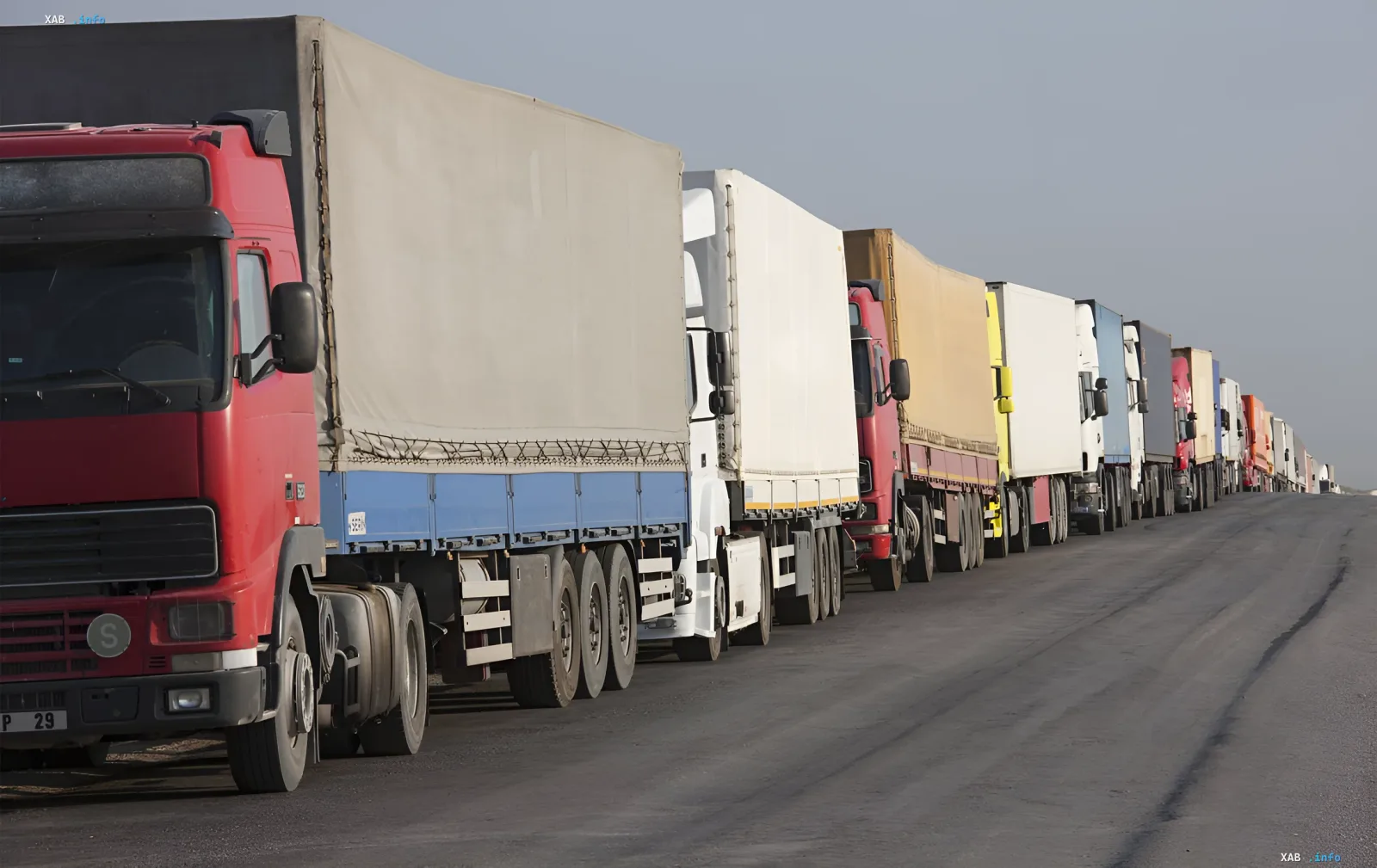
In early August 2026, a debate erupted in Ukraine's information space regarding logistical problems at the border. Social media and some news outlets began circulating reports of a critical situation: allegedly, trucks are forced to wait in queues to leave the country for up to six days. The basis for these rumors was information from the Association of International Freight Forwarders of Ukraine, which reported an accumulation of nearly 5,000 trucks in front of border crossing points in five neighboring countries. However, official data from the State Border Guard Service (SBGS) paints a different picture.
Electronic Queue vs. Physical Congestion
SBGS spokesperson Andriy Demchenko, in a comment to RBC-Ukraine, categorically denied the existence of physical jams of such duration on the Ukrainian side. According to him, the figure of 5,000 trucks refers to those registered in the electronic queue "eCherha," but not to vehicles physically standing in line. The "eCherha" system, introduced earlier, allowed for process optimization: now there is no need for a truck to stand at the border crossing point and wait in advance if its crossing is scheduled for a specific time the next day. Demchenko emphasized that since the beginning of Russian strikes on the ports of Greater Odesa, the situation at the border has not changed significantly, and the physical presence of trucks in queues is not observed in the volume reported by the media.
Where Do Traffic Jams Actually Form?
Despite the absence of congestion on Ukrainian territory, the logistics problem persists, but it has shifted to the territory of neighboring states. Andriy Demchenko explained that physical queues are formed precisely on the side of Poland, Hungary, and other countries where the "eCherha" system does not operate. The largest accumulations of transport are recorded opposite the border crossing points of "Yahodyn," "Rava-Ruska," "Krakovets," and "Shehyni" (border with Poland), as well as opposite "Uzhhorod," "Luzhanky," "Porubne," and "Mamalyha." This creates a "bottleneck" effect, where Ukrainian drivers can quickly pass customs control but are forced to wait for their turn to enter the EU.
Impact of the Tourist Season and Passenger Flow
In addition to freight transport, August 2026 saw a sharp surge in passenger traffic, which also affects the throughput capacity of border crossing points. The SBGS spokesperson noted that high figures are related to the vacation season. For comparison: in the spring, about 80–85 thousand citizens crossed the border on a weekday, and 90 thousand on weekends. Now, on a weekday, this figure exceeds 130 thousand people, and on weekends — more than 150 thousand. Despite this, Demchenko assured that queues are not recorded around the clock, and the system copes with the load, although it is working at the limit of its capabilities.
Contradictory Data
There is a clear discrepancy in the assessment of the situation between the logistics community and the border guard service. The Association of International Freight Forwarders of Ukraine, representing business interests, claims that drivers are forced to wait for at least six days, causing colossal economic damage. Their data is based on general statistics of queue registrations and complaints from drivers who face delays when entering EU countries. At the same time, the SBGS insists that there is order on the Ukrainian side, and delays are a problem of infrastructure and throughput capacity of neighboring states. This creates a situation where official statistics of "clean borders" come into conflict with the real experience of freight forwarders, who are forced to pay for vehicle downtime.
New Control and Coordination Measures
In conditions of high load on logistics corridors, Ukrainian authorities continue to improve control mechanisms. It was previously reported that the State Tax Service and the State Border Guard Service would begin exchanging information to identify tax violations. This will strengthen control over cargo movement and prevent attempts to illegally export goods or evade tax payments, which is particularly relevant in wartime conditions and under sanctions. Despite process optimization, the issue of border throughput capacity remains one of the key ones for the Ukrainian economy in 2026.