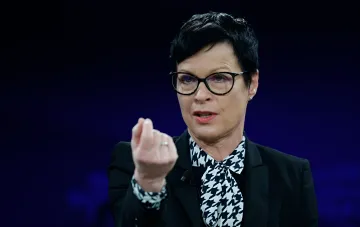
The Verkhovna Rada of Ukraine has taken a significant step toward reforming state public support by adopting a bill on the introduction of basic social assistance. The new initiative aims to consolidate fragmented state payments for low-income families into a single, transparent, and flexible system. According to Olena Shuliak, Head of the Verkhovna Rada Committee on State Organization, Local Self-Government, Regional Development, and Urban Planning, the document legally establishes a support model that has been successfully tested within a large-scale experimental project since July 1, 2025, proving its viability amid ongoing socio-economic challenges.
Essence of the Reform and Consolidation of Payments
The primary goal of the adopted bill is to eliminate the fragmentation of the current social protection system. Until now, citizens had to apply for numerous separate benefits that were often uncoordinated and failed to account for households' real needs. The state is now offering comprehensive targeted support calculated on an individual basis. The amount of basic assistance will be determined as the difference between the total basic value for all family members and their average monthly aggregate income, with the basic value itself being established annually in the state budget law and remaining no lower than the official subsistence minimum.
Individual Approach and the Role of Communities
The new approach fundamentally alters the role of local communities in delivering assistance. Previously, local self-government bodies often lacked information about the specific benefits their residents received from the state budget and could not promptly influence situations in troubled households. A case management method is now being introduced: a detailed individual support plan will be compiled for each recipient. The application-based principle is complemented by the active identification of vulnerable citizens directly at the local level, enabling faster and more efficient assistance through local social services.
Employment Stimulation and European Standards
Beyond the financial component, the reform focuses on returning able-bodied citizens to the labor market. Cash benefits will be closely tied to active employment promotion measures, retraining, and the provision of necessary social services. Family profiling will make it possible to accurately determine the exact support required to overcome a crisis. The bill's authors emphasize that the document fully complies with the European Social Charter and international human rights standards, laying the foundation for the long-term financial independence of Ukrainian families in the post-war period.
Contradictory Data
During the discussion of the initiative within the expert community, debates arose regarding the timelines for fully implementing case management mechanisms across all regions of the country. While official representatives of the parliamentary committee insist on the full readiness of community infrastructure based on the results of the 18-month experimental period launched in July 2025, independent experts express a degree of skepticism. Some analysts point to staff shortages in local social protection bodies and the uneven distribution of resources between major cities and remote rural communities, which could significantly complicate the practical implementation of individual support for all families in need during the initial stage of the law's implementation.