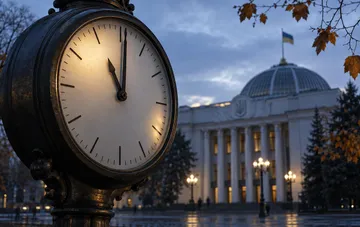
In the autumn of 2026, citizens of Ukraine will once again face the need to adjust their clock hands. Despite previously adopted legislative initiatives aimed at canceling seasonal time changes, the current procedure continues to be regulated by normative acts of the Cabinet of Ministers of Ukraine. According to established practice and government resolution No. 509 of May 13, 1996, the transition to winter time occurs on the last Sunday of October.
Date and Exact Time of the Clock Change in 2026
This year, the last Sunday of October falls on the 25th. Therefore, in the night from Saturday to Sunday, between October 24 and October 25, 2026, at exactly 04:00 Kyiv time, Ukrainians will need to move their clock hands back by one hour to 03:00. This will provide an extra hour of sleep, although mechanical clocks will require manual adjustment, while smartphones, personal computers, and other devices with automatic synchronization will update the time on their own.
The Fate of the Bill to Cancel Time Changes
Many citizens are wondering whether the upcoming autumn transition will be the last one. In July 2024, the Verkhovna Rada of Ukraine supported in the second reading bill No. 4201 "On Time Calculation in Ukraine," which envisaged abandoning seasonal time changes and establishing permanent winter time. However, as of October 2026, the document has not been signed by the head of state and has not entered into legal force. For this reason, there are currently no legal grounds for canceling the traditional time shift.
Controversial Data
The issue of the expediency of seasonal time changes has been a subject of intense debate for many years. Proponents of abolition cite the negative impact of time shifts on biorhythms, sleep quality, and general public health, as well as the questionable energy savings. At the same time, experts note that Ukraine spans a considerable length from west to east, meaning that choosing a single permanent time could lead to inconveniences regarding daylight distribution across different regions. An additional factor is that similar discussions are underway in European Union countries, where the European Parliament supported abandoning time changes back in 2019, but a final pan-European decision has still not been made, keeping synchronization with Europe in place.
Expert Assessments and Future Prospects
The further development of the situation regarding time calculation in Ukraine depends entirely on legislative changes and the signing of the delayed bill. While the document remains without final approval, Ukrainians continue to live under the seasonal time change system. International experience shows that most countries in the world are also continuing to weigh all economic and medical risks, refraining from radical time zone reforms, which makes the autumn 2026 transition inevitable.