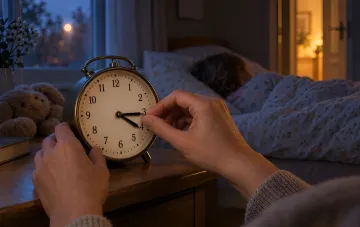
Ukraine continues to follow seasonal time changes, returning in the autumn to standard zone time. In the night from Saturday, October 24, to Sunday, October 25, 2026, Ukrainians will turn their clock hands back by one hour. The procedure will traditionally take place at four o'clock in the morning, making the night sixty minutes longer and allowing residents to sleep an hour extra.
Exact Time and Rules for Turning Clock Hands in October
The transition to winter time in 2026 will occur on the last Sunday of October, as stipulated by the current resolution of the Cabinet of Ministers of Ukraine No. 509 of May 13, 1996. At 04:00, mechanical clocks and household appliances not connected to the internet must be manually reset to 03:00. Meanwhile, most modern smartphones, tablets, personal computers, and smart gadgets will perform this procedure automatically immediately after the designated hour arrives.
Discussions regarding the potential cancellation of seasonal time changes have been ongoing in the country for several years. In July 2024, the Verkhovna Rada of Ukraine adopted draft law No. 4201 "On Time Calculation in Ukraine," which envisioned abandoning the transition to summer and winter time. However, the document has not yet entered into force in the prescribed manner, so in October 2026 citizens continue to live according to the established long-term schedule.
Impact of Clock Changes on the Body and Medical Advice
Experts from the Ternopil Regional Center for Disease Control and Prevention note that the autumn turn of the hands back by one hour is usually tolerated by the human body much easier than the spring change. Nevertheless, even an extra hour of rest does not always guarantee immediate vigor, as adaptation to the new daily rhythm can take from several days to a week. The change in the usual schedule affects human internal biological clocks.
Oksana Chaichuk, the chief state sanitary doctor of the Ternopil region, emphasizes that the human body relies not only on digital indicators on the dial, but also on the natural alternation of daylight and darkness, as well as the regime of nutrition and physical activity. Physicians recommend paying special attention to sleep quality in the first days after the transition, avoiding overloads, and allowing the body to gently readjust to the new conditions.
International Context and Maintaining Synchronization with Europe
The simultaneous transition to winter time at the end of October is also maintained in most European countries, including Poland, Germany, the Czech Republic, France, and the United Kingdom. Thanks to this, the usual time difference is preserved for citizens maintaining regular contacts with relatives, colleagues, or international partners abroad. At the same time, in other regions of the world, such as certain countries overseas, the dates of seasonal time changes may differ significantly.
It is expected that after turning the hands, sunrise by local time will occur much earlier, but it will also start getting dark earlier in the evenings. Experts advise checking the serviceability of mechanical chronometers at home in advance to avoid confusion in the schedule of morning trips and work on Sunday and Monday.