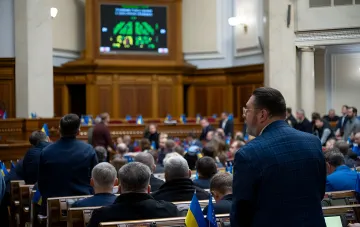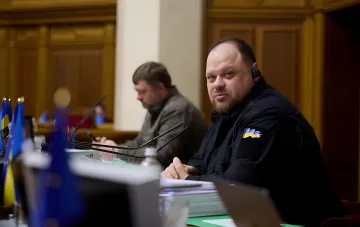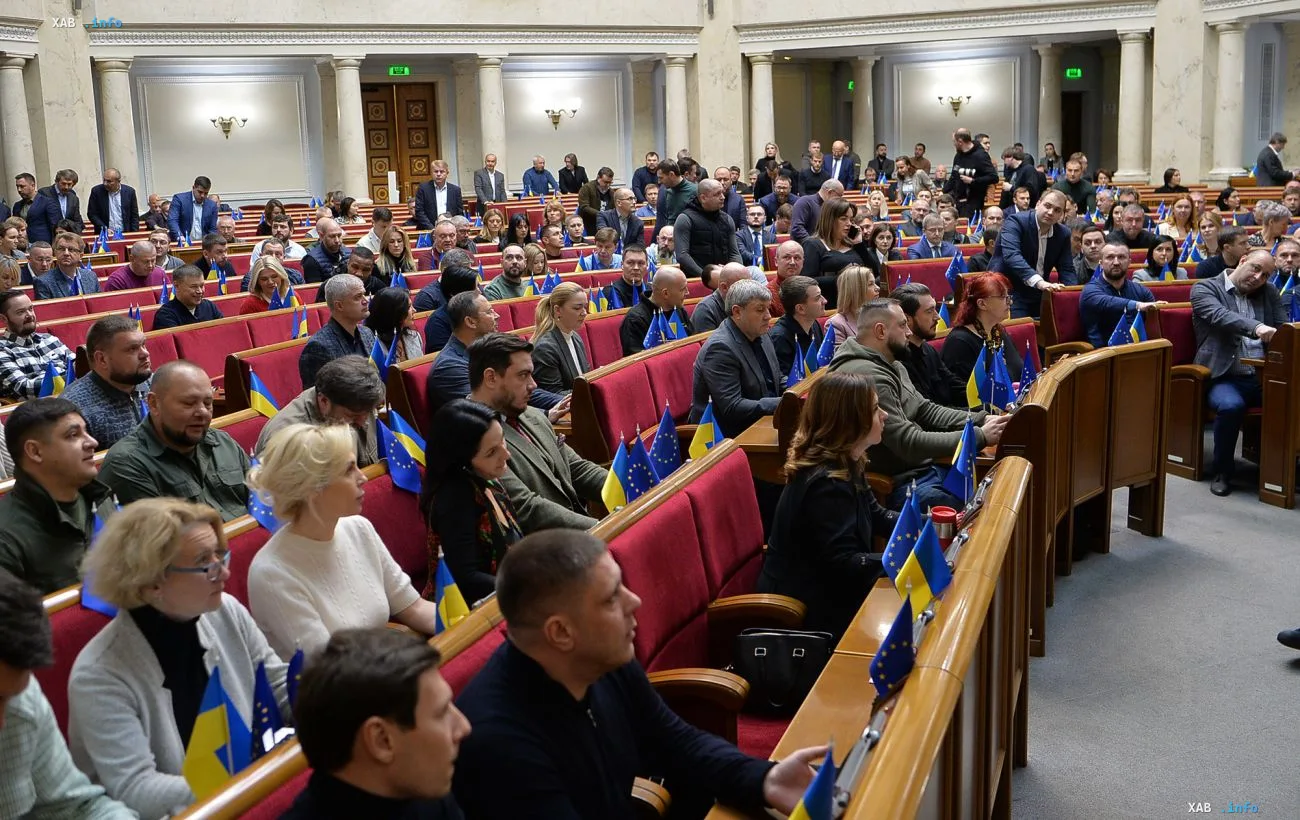
From 17 September to 13 October 2026, plenary sessions are not being held in the chamber of the Verkhovna Rada of Ukraine — the total length of the pause is 26 days. This fact has been actively discussed in the media over the past day: some outlets presented the information as deputies going on a “long break” or “holidays,” while others cited a “financial crisis” as the reason for the pause. However, on 20 September the press service of the Verkhovna Rada Apparatus issued an official denial, stating that the legislative body continues to function in full, simply not in the format of chamber sessions. This is reported by RBC-Ukraine, citing Ukrinform and the parliament’s press service.
What is happening in parliament amid the 26-day pause
According to the press service of the Verkhovna Rada Apparatus, the absence of plenary sessions is not equivalent to a halt in parliament’s work. Throughout the entire period from 17 September to 13 October, people’s deputies continue their activities in committees, subcommittees, working groups, and factions. Parliament emphasizes that this work “does not stop for a single day.” Thus, the legislative process — the preparation of bills, expert review, conciliation procedures, work on budgets and sectoral reforms — is carried out in working formats that do not require presence in the chamber.
Denial of the “holidays”: the press service’s position
The parliament’s press service directly stated that rumors of “holidays” and a “break” are actively spreading in the media space, even though in reality the Verkhovna Rada continues to function. The press service’s wording is explanatory in nature: this is not about the cessation of activities, but about a change of format — from plenary sessions to committee and working-group work. This is standard practice for any parliament in the world, where a plenary session is only one of several forms of a legislative body’s work.
Contradictory data
Here it is necessary to honestly record a discrepancy in how the information is presented. On the one hand, the press service of the Verkhovna Rada Apparatus categorically denies the very concept of “holidays,” insisting on the continuity of committee and working-group work. On the other hand, a number of outlets — including 5-tv.ru and osnmedia.ru — present the same 26-day pause as “prolonged holidays amid a crisis” and a “break of almost a month due to a financial crisis.” Obozrevatel.com also uses the phrasing “declared a break of a full 26 days.” Thus, the fact of the absence of plenary sessions during the specified period is confirmed by all sources, but its interpretation — “holidays” versus “working mode in committees” — remains a matter of differing readings. The parliament’s press service takes the position that it is incorrect to speak of “holidays,” while some media record precisely the pause in plenary work as a break.
Context: “Plan B” and the reserve site
Separate mention is deserved by information previously voiced in the Rada about so-called “Plan B” — funds provided in the budget for the arrangement of a reserve working site for parliament in case the main building on Hrushevsky Street in Kyiv is destroyed. This statement, made against the backdrop of ongoing hostilities, underscores that the question of the continuity of the legislative process in Ukraine has not only organizational but also strategic significance. In conditions where the physical building of parliament may become a target, the presence of a reserve working mechanism becomes an element of state resilience.
What this means for the legislative process
For citizens and business, the key takeaway is that the 26-day pause in plenary sessions does not mean a “freezing” of legislation. Committees continue to consider bills, working groups — to prepare texts, and factions — to shape their positions. However, it is precisely plenary sessions that remain the only format in which final decisions on the adoption of laws, appointments to positions, and votes on the budget are made. Therefore, the 26-day period without plenary work objectively limits the speed of adopting key decisions, even if committee work is proceeding in a normal mode. The next plenary session, according to available data, is scheduled for 13 October 2026.