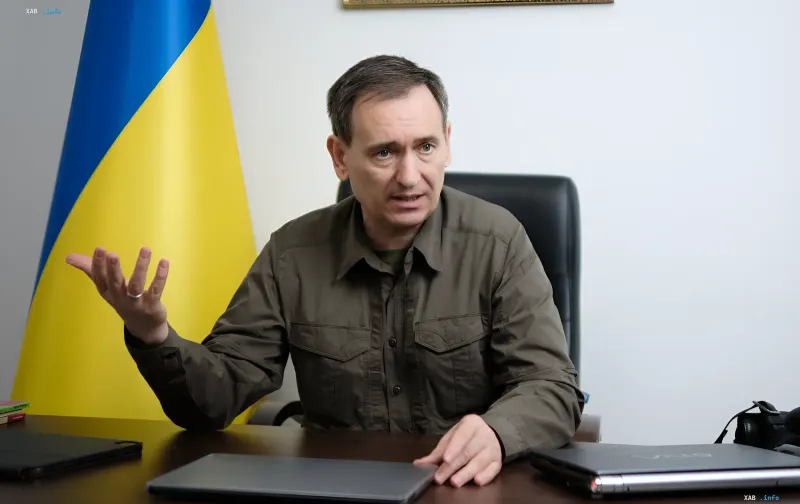
People's Deputy of Ukraine and member of the Verkhovna Rada Committee on National Security, Defense and Intelligence, Fedir Venislavsky, revealed details in an interview with RBC-Ukraine about the preparation of a legislative initiative intended to serve as the foundation for a deep reform of the Security Service of Ukraine (SBU). According to him, Acting SBU Head Oleksandr Poklad confirmed his support for the department's transformation during a closed committee meeting on November 10, 2026. The reform aims to definitively separate the SBU's economic powers and change its reporting model. Venislavsky emphasized that the committee has moved to a practical phase, as existing developments regarding the SBU's legal status are being translated into a full-fledged bill, the adoption of which will trigger systemic changes.
Closed Meeting and the "Carthage" Case: What the Acting SBU Head Said
A key moment of the discussion at the November 10 committee meeting was Oleksandr Poklad's report regarding subordinates involved in the high-profile "Carthage" case. The Acting SBU Head confirmed that the respective employees had been suspended from their duties. Venislavsky noted that the meeting was held behind closed doors, meaning he is not authorized to disclose the full extent of the report. Nevertheless, the MP indicated that as a result of the discussion, the committee received direct assurances from Poklad regarding his support for deep reform of the agency. The phrasing "deep reform" in the context of Venislavsky's statement implies not cosmetic adjustments, but a structural rethinking of SBU functions, including the reallocation of powers and changes to accountability mechanisms.
Reform Goals: Withdrawal from Economy and New Reporting Model
According to the position voiced by Venislavsky, the central element of the future reform should be the final removal of the SBU's powers to intervene in the economic sphere. The MP also outlined a goal to make the Service "non-public" in a certain sense — referring to a revision of existing mechanisms for the agency's public reporting. Venislavsky linked the necessity of these changes to lessons from the "Carthage" case, noting that the concentration of economic and law-enforcement powers in a single agency created fertile ground for abuse. He is convinced that adopting the bill will help avoid similar threats in the future. At the same time, the MP emphasizes that the process must be completed within a reasonable timeframe, rather than turning into a years-long discussion with no practical result.
Balance Between Reform and Military Tasks: Two Components of the SBU
Venislavsky drew attention to the fact that, amidst the ongoing war, the approach to SBU reform must be "very balanced." He highlighted two key components of the agency that must remain in the new model. The first ensures the execution of combat missions directly on the front line — these are operational and intelligence functions in active combat zones. The second component is aimed at preventing terrorist actions by enemy agents within the country and countering artificial destabilization of the internal political situation. According to the MP, both directions are critical for national security and must be reflected in the text of the future bill. The reform, therefore, does not involve reducing the SBU's law-enforcement or intelligence functions, but is aimed at eliminating duplication of powers and excluding interference in economic activity.
Employee Declarations: Closed Contour Instead of Full Transparency
Separately, Venislavsky addressed the issue of publicizing income declarations of SBU employees. The MP stated that he does not support the idea of full open access to such documents, as it creates serious risks both for the employees themselves and for the agency's operational efficiency. Instead, he proposed a "closed contour" model: employees of the National Anti-Corruption Bureau of Ukraine (NABU) will have access to the declarations and income information of SBU workers. This will allow for the verification of the lifestyle, level, and legitimacy of employees' incomes without putting sensitive data into the public domain. The Verkhovna Rada Committee, according to Venislavsky, supports this concept and intends to include it in legislative initiatives. The goal is twofold: to prevent SBU or intelligence personnel from earning non-salary income or participating in corruption schemes, while simultaneously protecting them from the disclosure of information that could be used by the adversary.
Context: Space Forces and Mobilization Risks
In the same interview, Venislavsky touched upon other national security topics. Earlier, the MP assessed Ukraine's potential for creating Space Forces by the end of 2027, describing this project as part of a long-term strategy to strengthen defense capabilities. Furthermore, he warned that Russia might tighten mobilization measures within one or two months, which will require an operational reaction from Kyiv at the intelligence and counterintelligence level. These statements emphasize that SBU reform is not viewed in a vacuum, but in the context of comprehensively strengthening security institutions against the backdrop of the ongoing armed conflict and escalation on the front.