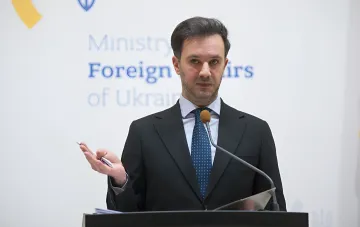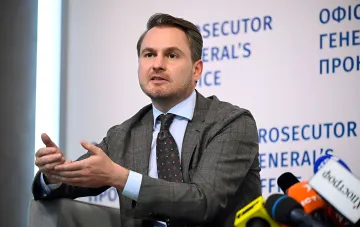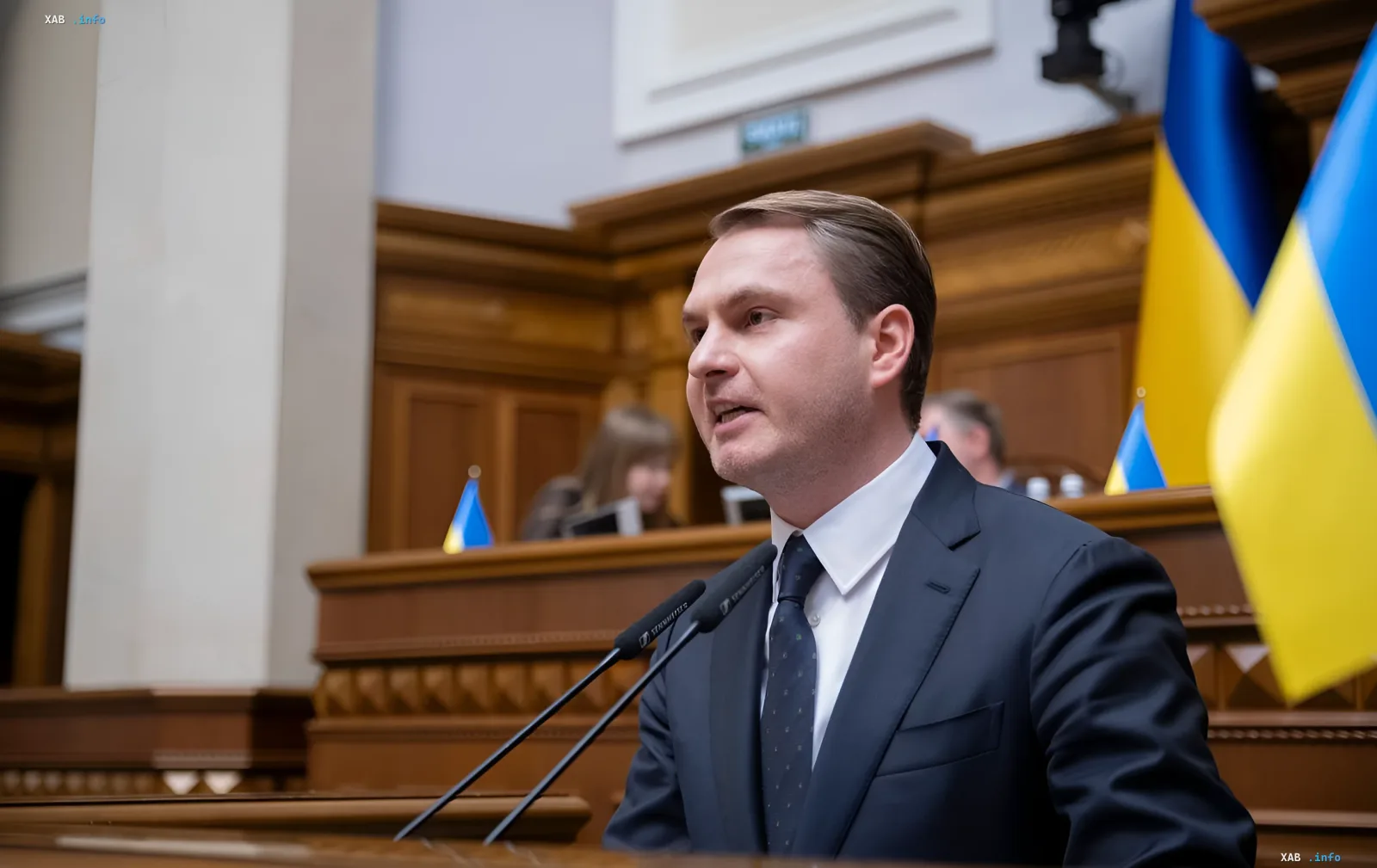
Ukraine's Verkhovna Rada will consider the resignation of Prosecutor General Ruslan Kravchenko on September 15, on Tuesday. This was announced by David Arakhamia, head of the Servant of the People faction, who published the relevant information, according to RBC-Ukraine. Thus, within the next day or so, parliament is set to determine Kravchenko's further fate in the post of head of the Office of the Prosecutor General (OPG) — a position around which one of the sharpest intra-political conflicts in Ukraine's law enforcement system has unfolded this week.
Voting Date and the Faction's Initiative
According to Arakhamia, the consideration of Kravchenko's resignation statement has been included in the session agenda for Tuesday, September 15. This means that the formal procedure for terminating the prosecutor general's powers will be completed on the same day that Kravchenko himself, by his own account, is outside Ukraine on an official business trip. The surrounding context, as recorded by Ukrainian and international media, indicates that at the time the vote was being prepared, President Volodymyr Zelensky had no ready candidates to replace Kravchenko, making the resignation procedure not merely a personnel decision but a stage in a broader redistribution of influence within the anti-corruption vertical.
Context: the 'Carthage' Case and the Resignation Statement
Kravchenko's resignation statement was filed on September 7. According to RFI and Ukrainian media, the decision was made against the backdrop of an investigation by the National Anti-Corruption Bureau (NABU) and the Special Anti-Corruption Prosecutor's Office (SAP) into the so-called 'Carthage' case, in which employees of the Office of the Prosecutor General became subjects. It is precisely this link — between the investigation into subordinates and the departure of the head of the department himself — that became the key argument in assessing the reasons for the resignation: some observers interpret it as a consequence of pressure, while others see it as an attempt by Kravchenko to exit the conflict while retaining control over the agenda.
The Positions of the President and the Prosecutor General
Volodymyr Zelensky had earlier publicly called on the Verkhovna Rada to 'immediately' support Kravchenko's dismissal and stated that he sees 'only one option' for the prosecutor general — to leave the post, despite the fact that Kravchenko himself characterizes what is happening as political pressure. Kravchenko, for his part, called his resignation decision political and deliberate, emphasizing that he does not intend to allow the prosecutor general's office to be used in political confrontation. Thus, both sides have in effect agreed that the post should be vacated, but they differ in their assessment of the causes: for the president it is a personnel necessity, for the prosecutor general — a refusal to become an instrument of political pressure.
Business Trip Abroad and Charges Against the NABU Director
Meanwhile, Kravchenko left Ukrainian territory, stating that he is abroad on an official business trip, during which he plans meetings with international partners to discuss the situation in the anti-corruption bodies system. On September 14 he also announced that he had signed charges against NABU Director Semen Kryvonos and called on him to leave his post: according to the prosecutor general's version, Kryvonos is charged with forging official documents to obtain illicit benefit on an especially large scale, as well as with a fictitious adoption of a child that was allegedly meant to create grounds for evading liability in court. According to sources close to the president, Kravchenko's decision to initiate charges against Kryvonos and a person close to SAP head Oleksandr Klymenko was not coordinated with the President's Office and was the prosecutor general's personal initiative.
Contradictory Data
The statements of the parties and the facts they themselves voice contain notable inconsistencies that should be laid out openly. First, Kravchenko claims he is leaving so as not to allow the prosecutor general's office to be used in political confrontation, yet in the days before his resignation he, by his own account and without coordination with the President's Office, sharply escalated the conflict with the heads of NABU and figures close to SAP — which looks like the opposite of 'neutralizing' the post. Second, the president speaks of 'only one option' — resignation — and is in effect pushing for it through the Rada, while the prosecutor general characterizes the same event as political pressure; both formulations describe the same fact from opposite sides. Third, the combination of filing a resignation statement, leaving the country on a 'business trip,' and simultaneously signing charges against key figures in the anti-corruption system creates a contradictory picture: formally the prosecutor general is no longer in office, yet he continues to make procedural decisions, raising questions about their legitimacy and the moment they take effect. Finally, the data that Zelensky has no candidates for replacement contradicts the narrative of an 'immediate' personnel decision, since the latter implies a ready-made succession rather than a vacuum.
Bottom line: on September 15 the Rada will formalize Kravchenko's departure, however, judging by public statements, the conflict between the Office of the Prosecutor General, NABU, SAP and the President's Office is not being resolved by the resignation but is entering a phase of a struggle for control over the anti-corruption agenda and over who will be the next head of the department.