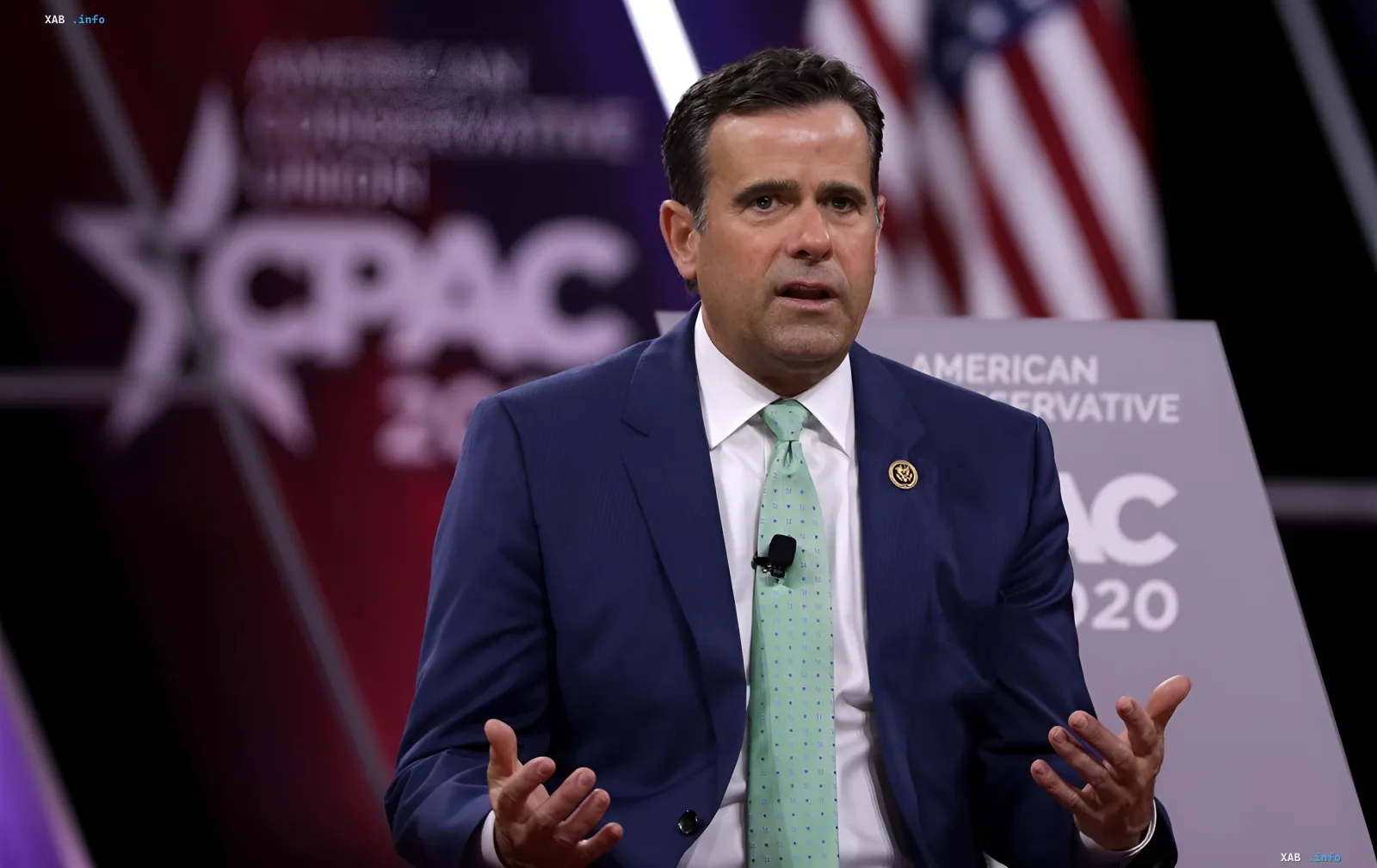
On August 25, 2026, a U.S. Air Force military aircraft landed at a Moscow airport, and a diplomatic motorcade drove through the capital — this is how the secret visit by CIA Director John Ratcliffe to Russia was first publicly revealed. The trip became known on Tuesday, August 25, after observers spotted the American aircraft and the motorcade. According to available data, this is the first known visit by Ratcliffe to the Russian capital in his capacity as CIA Director. Before the delegation's departure, a senior Ukrainian official said that Kyiv was notified of the American group's trip and asked to refrain from strikes on Russian territory during the visit.
Purpose of the Visit: A Warning on NATO
According to sources familiar with the situation, Ratcliffe's main task was to warn Russia against attacks on NATO member states. This step is linked to recent U.S. intelligence assessments indicating that Vladimir Putin may be prepared to authorize provocative actions on the alliance's territory — cyberattacks, hybrid operations, and other actions that do not fit the format of a conventional military attack. In the view of intelligence officials, the likely goal of such moves is not to start a war, but to test NATO's unity and the readiness of the Donald Trump administration to defend its allies.
Iran and the Strait of Hormuz
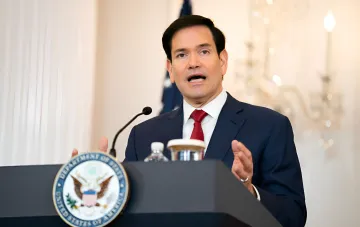
Separately, the CIA Director raised the issue of Iran at the meeting. According to sources, he warned of the introduction of additional sanctions if the Strait of Hormuz is not reopened to shipping. Thus, the agenda of the secret trip included, alongside NATO security, the Iran track and the issue of freedom of navigation through one of the world's key oil routes.
Washington's and the Kremlin's Positions
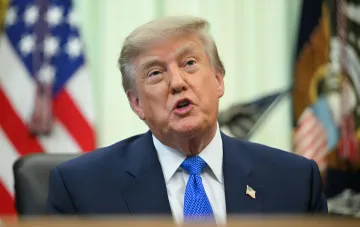
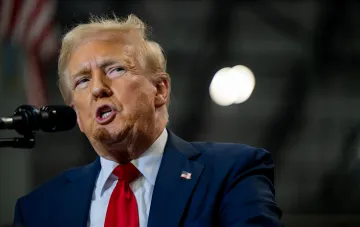
President Donald Trump confirmed the fact of the visit in an interview with radio host Glen Beck, but stated that the trip was not related to Iran or to Russia's desire to test NATO, calling it "semi-routine." At the same time, the White House chief added that as a result of Ratcliffe's visit "something might come of it," pointing to the desire to end Russia's war against Ukraine. In the Kremlin, in turn, spokesman Dmitry Peskov told journalists that Ratcliffe spoke with representatives of Russian intelligence but did not meet with Vladimir Putin, and the purpose of the trip was characterized as "establishing contacts between security services."
Contradictory Data
The versions of the parties diverge significantly. American sources (including CBS News, WSJ, and Politico) claim that the central purpose of the visit was a direct warning to Russia against strikes on NATO countries and separate pressure on the Iran track through the threat of sanctions over the closure of the Strait of Hormuz. President Trump, conversely, publicly distanced the trip from these topics, calling it "semi-routine" and unrelated to Iran or to testing NATO. The Kremlin also does not confirm the "NATO warning" framing, limiting itself to the formulation of "establishing contacts between security services" and emphasizing that there was no meeting with Putin. Thus, the discrepancy concerns precisely the content and level of the negotiations: for Washington, according to sources, it is a deterrence signal; for Moscow — a working contact between intelligence services; and the White House publicly minimizes the significance of the trip.
Context: NATO Tests and Article 5
Anxiety within the alliance is fueled by a series of recent incidents: the intrusion of drones into Romanian airspace, the launch of a Russian missile toward Poland last month, and a rise in the number of likely sabotage acts and cyberattacks in Europe. Under Article 5 of the NATO treaty, alliance members are obliged to come to each other's defense in the event of an attack — a provision the United States invoked after the September 11, 2001 terrorist attacks. At the same time, Trump has long cast doubt on the reliability of NATO and criticizes member states for insufficient contributions to their own defense, making the alliance's response to possible provocations less predictable.