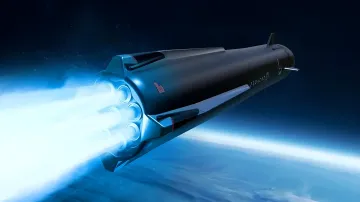
As part of the Y Combinator autumn batch, German startup Ratlog, founded by graduates of Dresden University of Technology, has unveiled a heavy-launch-vehicle project that the team claims fundamentally differs from approaches used in the modern space industry. The company's key bet is the radical simplification of the rocket engine's design: the number of parts is planned to be reduced by 90%. "There are companies using different fuel or building a tank out of a different material, but those are all incremental steps. We are the only ones doing something truly different," said Ratlog CEO and co-founder Charlie Weise at the project presentation.
Target Parameters and Architectural Solutions
The Ratlog rocket aims to achieve performance comparable to SpaceX's Falcon 9—parameters orbital launch customers have already grown accustomed to. At the same time, according to the startup, the rocket fairing will likely be wider than that of its American counterpart, which could expand payload accommodation capabilities. The founders emphasize that their approach is not limited to replacing fuel or tank material, but affects the very philosophy of engine design, which, by their estimation, can significantly reduce the cost and production time of power plants for spacecraft.
Chronology: From Grant to Y Combinator in Five Months
The Ratlog team is demonstrating high development speed. The first grant of 30,000 euros from the German government was received in April 2026. Already in early September, a test launch of the engine prototype took place, and a few weeks later the startup was accepted into the Y Combinator autumn batch. For comparison, Israel-based Isar Aerospace, founded in 2018, conducted the first launch of its significantly smaller-class rocket only in 2025. Thus, Ratlog went from receiving state funding to participating in one of the world's most prominent tech accelerators in a matter of months.
Upcoming Stages and Commercial Agreements
In November 2026, Ratlog plans to conduct hot-fire engine tests, and in December, to demonstrate the results at the Y Combinator Demo Day. According to the startup, the company already has preliminary agreements with orbital data center operators and satellite constellation owners, indicating potential commercial demand for launch services. The founders position Ratlog as a European alternative, stating their intention to become a "cheaper and more affordable Ariane 6"—the flagship heavy rocket of the European Space Agency.
Launch Sites and Strategic Positioning
Ratlog is considering the territories of Oman and the United Arab Emirates as potential launch sites. The choice of these locations is likely due to geographical position, climatic conditions, and the availability of space launch infrastructure in the Middle East. If the stated approach to simplifying the engine design is confirmed during testing, it could pave the way to a significant increase in launch frequency and a reduction in the cost of placing payloads into orbit, which is especially relevant amid growing demand for orbital data centers and large satellite constellations.