By 2026, the science fiction film 'The Martian', directed by Ridley Scott based on Andy Weir's novel of the same name, has firmly established itself not just as a spectacular blockbuster, but as one of the most accurate cinematic works in the history of space exploration. At NASA, whose specialists actively consulted on the project, it was acknowledged that many plot decisions turned out to be surprisingly prophetic. This is especially true regarding survival technology that seemed like fiction in the film but has become reality today.
From Script to Reality: The MOXIE Experiment
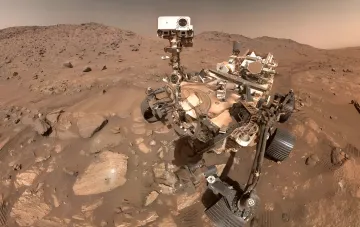
One of the central scenes in the film involves the process where the protagonist Mark Watney (played by Matt Damon) produces oxygen by synthesizing it from carbon dioxide, which makes up 95% of Mars' atmosphere. For a long time, this remained in the realm of theoretical calculations. However, in 2023, a real NASA instrument called MOXIE (Mars Oxygen In-Situ Resource Utilization Experiment), delivered to the Red Planet by the 'Perseverance' mission, successfully demonstrated the viability of this method. Scientists confirmed that extracting oxygen from the Martian atmosphere is not fiction, but a viable technology that will be key for future crewed missions.
Agriculture on Mars: Myths and Facts
Another controversial point in the film was Mark Watney's use of human excrement as fertilizer to grow potatoes in Martian soil. In 2026, the scientific community clarified the details of this process. Modern research into Martian soil has shown that it already contains sufficient nitrates necessary for plant growth. This means that using waste products, while an effective closed-loop method, is not a strictly mandatory condition for obtaining the first harvest. Nevertheless, the very idea of using local resources (In-Situ Resource Utilization) has been confirmed as the only viable path to survival on Mars.
The NASA Atmosphere: Accuracy Down to the Details
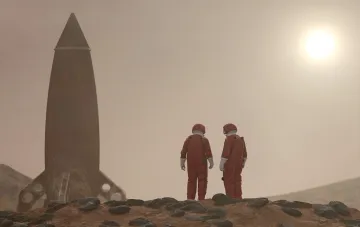
Beyond technical details, the film's creators surprised experts with the accuracy of conveying the internal culture and operational processes of NASA. Real astronauts and engineers note that the film faithfully reflects the team dynamics, bureaucratic procedures, and determination characteristic of the agency. The visual component also did not fail: the landscapes, lighting, and general appearance of the planet in the shots correspond to real data obtained from orbital probes and rovers over the past years.
Contradictory Data: Physics vs. Dramaturgy
Despite the high rating of realism, there are moments where the creators of the film consciously violated the laws of physics for the sake of the plot. The main intrigue is the destructive sandstorm that forced the crew to leave Mark Watney on the planet. In reality, the atmosphere of Mars is so thin that even at wind speeds of up to 90 km/h, it does not possess the kinetic energy to overturn heavy equipment or destroy the hull of a ship. On Earth, such wind would be strong, but on Mars, it is felt more like a light breeze. The creators sacrificed scientific accuracy for spectacle to create a reason for the hero's isolation. NASA acknowledged this compromise as justified for cinema, but emphasized that in reality, such storms do not pose a mortal threat to equipment.
Conclusion: The Film's Legacy in 2026
Years after its premiere, 'The Martian' remains the gold standard of science fiction. The involvement of scientific consultants by Andy Weir and Ridley Scott allowed for the creation of a work that inspired a whole generation of engineers and astronauts. Today, as we stand on the threshold of real crewed missions to Mars, many technologies shown in the film are already being tested or implemented in practice, making Mark Watney's fictional story a prologue to humanity's real history in space.