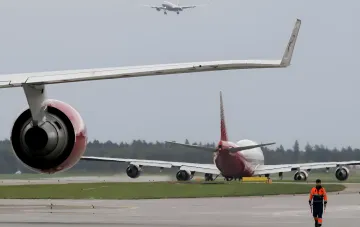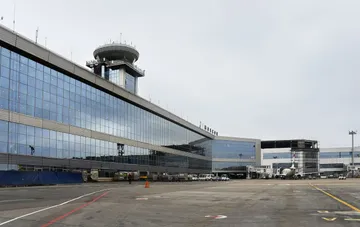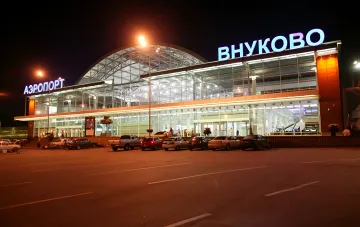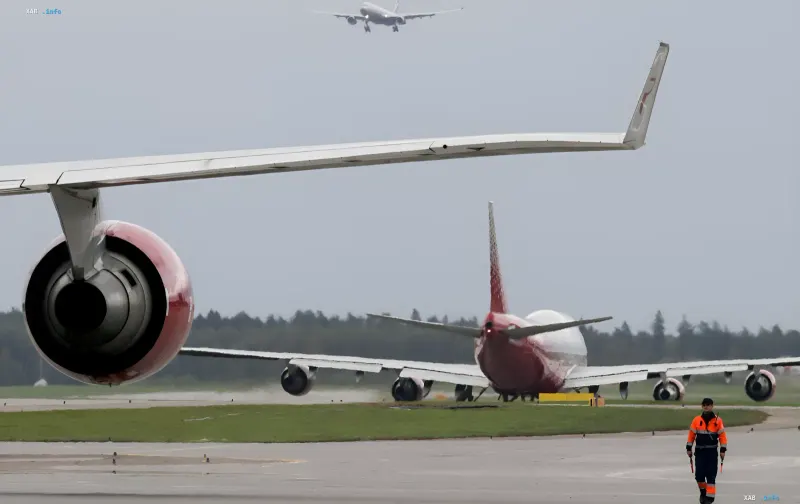
On October 29, the airports of Moscow and St. Petersburg experienced the consequences of a large-scale drone attack that led to unprecedented schedule disruptions. According to calculations based on airports.ru data and cited by the Astra Telegram channel, more than 460 flights were canceled or delayed at the capital and St. Petersburg airports. This is one of the largest disruptions to air travel in the region during the current conflict.
Scale of Airport Disruptions
Vnukovo and Sheremetyevo airports suffered the most from the restrictions. Pulkovo Airport in St. Petersburg served as a backup in this situation, directing aircraft that could not land in Moscow. Rosaviatsiya lifted flight restrictions at Vnukovo, Domodedovo, and Zhukovsky only at 6:46 AM on October 29, while flight delays persisted until the evening hours, indicating prolonged efforts to restore a normal schedule.
Record Statements from the Russian Ministry of Defense
The Russian Ministry of Defense stated that during the night and morning hours of October 29, 1,214 drones were shot down over 18 regions and Moscow. According to Bloomberg, this is a record number reported by Russian authorities simultaneously throughout the entire war against Ukraine. The previous maximum was recorded on September 20, when the agency reported 1,100 shot-down drones.
Context of Attacks on the Capital
The October 29 attack continued a series of strikes on Moscow. On the evening of October 28 and into the night of October 29, the capital was also attacked by drones: according to Mayor Sergey Sobyanin, the total number of intercepted drones exceeded fifty. Earlier, following a massive attack by Ukraine's Defense Forces on the capital on October 24, more than 210 flights were delayed or canceled at Moscow airports, which was already a notable disruption for passengers and carriers.
Calculation Methodology and Practical Consequences
The figure of 460 flights was obtained from open data of the airports.ru service, allowing it to be viewed as an indicator of the scale of disruptions independent of official statements. For passengers, this means mass delays, rescheduling, and flight cancellations, while for airlines it means additional costs and logistical difficulties. The combined data shows that drone attacks continue to directly impact the functioning of civil aviation in key regions of Russia.