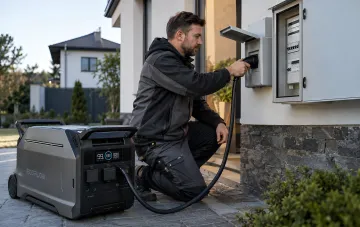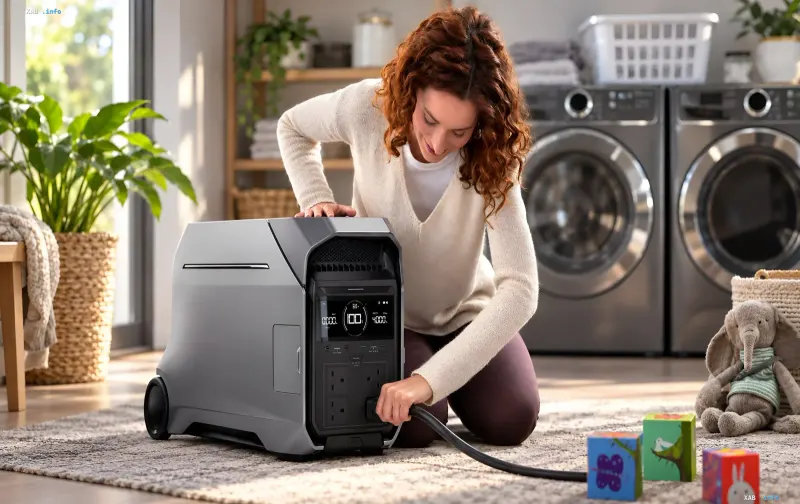
Power outages have become a familiar reality for millions of households, and portable power stations have transformed from a niche gadget for campers into an almost mandatory element of home infrastructure. However, not every user understands that a station capable of powering a smartphone and laptop for hours might fail to run a refrigerator or a washing machine. Miscalculating power requirements leads to overload, automatic shutdown, or even equipment overheating. Styler magazine explains how to determine appliance compatibility with a specific power station model and which connections should be avoided.
Three characteristics that make calculations meaningless without them
Before plugging any household appliance into a portable station, you must check three key parameters listed in the device's manual. The first is rated output power in watts: this is the maximum load the station can sustain over a long period. The second is peak power, which is the short-term load the equipment can handle when starting devices with electric motors. The third parameter is battery capacity in watt-hours, which determines the energy reserve and, accordingly, the operating time of connected equipment. For example, a station with a rated power of 1000 W and a capacity of 500 Wh can theoretically power a 100 W device, but not necessarily for exactly five hours: part of the energy is spent on inverter operation and internal current conversion processes.
The 0.85 coefficient: how to calculate real operating time
Manufacturer EcoFlow recommends using an efficiency coefficient of 0.85 for a rough estimate of station operating time, which accounts for DC-to-AC conversion losses and control system operation. Thus, a 500 Wh station under a constant 100 W load will provide about 4.25 hours of operation (500 × 0.85 / 100 ≈ 4.25 h). The actual result will depend on the specific station model, ambient temperature, and power consumption mode. If you simultaneously connect a router, laptop, or lighting, the total operating time will decrease proportionally to the total load.
Refrigerator: the compressor starting current trap
Connecting a refrigerator to a portable station is possible, but requires special attention to the compressor's starting characteristics. According to Jackery, the starting load of compressor equipment can be several times higher than its operating load. A refrigerator that normally consumes 150 W may require significantly more power for a brief moment when the compressor starts. This is why a station might power a refrigerator without issues for some time, but shut down during the next compressor start cycle. Furthermore, for household appliances with electric motors, it is advisable to use stations with a pure sine wave output if required by the appliance manufacturer. Another nuance: some station models automatically turn off the AC output during low energy consumption, leading to a power cut when the compressor is temporarily idle. In the EcoFlow DELTA 2 manual, the manufacturer explicitly recommends checking the AC output auto-off settings when connecting a refrigerator.
TV: the "lightest" of large appliances
TVs consume significantly less electricity than appliances with heating elements or powerful motors. According to preliminary data from power station manufacturers, the energy consumption of a modern TV is approximately 40–150 W depending on screen diagonal, display technology, brightness, and operating mode. An 80 W TV powered by a 500 Wh station using the 0.85 coefficient can run for about 5.3 hours. However, this calculation is for a single device: simultaneously connecting a router, laptop, or lighting will reduce autonomy. Before connecting, make sure the station provides the voltage and frequency intended for the TV, and has sufficient power for all devices running simultaneously.
Washing machine: a load that changes throughout the cycle
A washing machine can also be powered by a power station, but its power consumption varies significantly throughout the operating cycle. Drum rotation requires one level of power, while water heating increases electricity consumption multifold. According to EcoFlow reference data, a washing machine without water heating consumes roughly 450–550 W, but the heating element can increase the total load to 2000 W or more depending on the model. A station that easily starts the machine in cold wash mode may shut down as soon as the appliance starts heating water. Therefore, before connecting, you must consider the maximum power consumption of the washing machine, not just motor specs, and verify equipment compatibility according to both manufacturers' instructions.
Practical recommendations before connecting
A summary of manufacturer recommendations boils down to a few rules. First, always compare the rated and peak power of the station with the maximum consumption of the appliance stated in its manual. Second, for equipment with electric motors (refrigerator, washing machine), choose stations with a pure sine wave AC output. Third, check the low-power automatic shutdown settings so the station doesn't "kill" the output during compressor pauses. Fourth, calculate operating time using the 0.85 coefficient and keep a reserve for simultaneously connecting other devices. Following these rules helps avoid overloads, overheating, and premature power shutdowns at the most inopportune moment.