A technological shift is taking place on the front lines of the Ukrainian army, changing traditional defense tactics. Engineers of the Main Directorate of Intelligence (GUR) have developed their own sector surveillance system called 'Perimeter'. The new development is designed to replace soldiers who were previously forced to physically stand guard at combat positions, exposing themselves to danger.
Details of the project were revealed by an engineer from the 'Wings' unit with the callsign 'Osaka' on the 'Active Discussion' podcast, as cited by RBC-Ukraine. According to the developer, the main goal was to create a complex that would be as simple, cheap, and interchangeable as possible.
Design philosophy: accessibility and simplicity
The uniqueness of 'Perimeter' lies in its 'grassroots' origin. Engineers intentionally abandoned complex imported electronics, assembling the device from components that can be found at the nearest electronics market. This approach allows for the rapid repair or creation of new complexes directly in the field.
The system is equipped with two cameras, ensuring 24/7 sector control:
- Daylight camera: Operates during the day and twilight. Even in the absence of light, it is capable of showing the outlines of objects immediately after sunset.
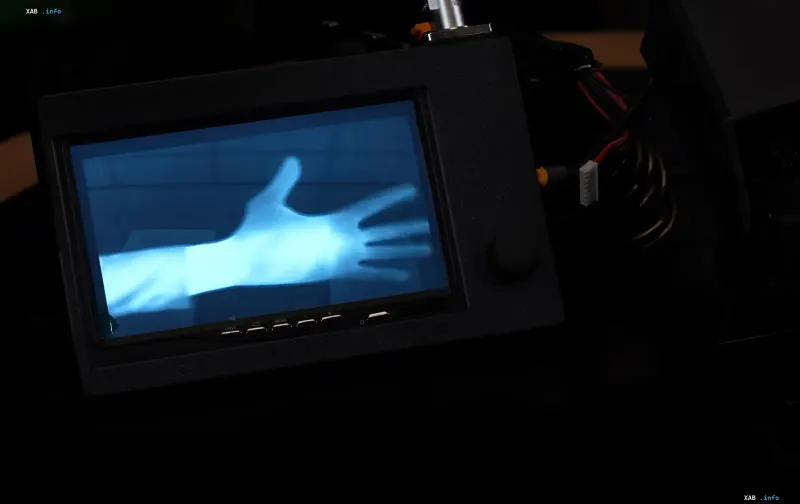
- Infrared camera: A specialized 'thermal imager' for detecting heat signatures, which is critical for night reconnaissance.
Demonstration footage shows how the infrared mode clearly highlights the operator's hand against a darkened background, confirming the effectiveness of the thermal imaging module.
Stealth and autonomy
Developers paid special attention to camouflage. The device is practically invisible to enemy thermal imagers, especially during the spring period ('greenery'), when the camera, mounted on a tree, blends in with the bark and foliage.
The complex is fully waterproof, allowing it to withstand any weather conditions. The energy autonomy of the system is calculated for at least 24 hours of operation without recharging from two batteries. When deploying a position, the cameras are fixed at height, and the batteries are placed in a dugout for protection.
"If the camera is mounted, it hangs there for months and no one goes near it," explained 'Osaka'. This avoids unnecessary movement of personnel and reduces the risk of detection.
Cost savings by abandoning recording
An important engineering decision was to abandon the video recording function. Currently, 'Perimeter' works exclusively in real-time mode. Engineers consciously excluded data storage modules to minimize the cost of the system and simplify its maintenance.
The cost of a ready-made complex is about 60,000 hryvnias. Of this amount:
- Approximately 30,000 hryvnias is the cost of the camera.
- Two batteries in the kit cost another almost 10,000 hryvnias.
The remaining expenses cover the housing, cabling, and assembly. For military units, this price is affordable, allowing the system to be scaled for use across wide sections of the front.
Implementation context
The implementation of 'Perimeter' fits into the overall strategy of the Ukrainian army to actively use unmanned systems and continuous surveillance. This allows for the timely detection of enemy movements and minimizes risks to personnel by eliminating the need for human presence in the most dangerous areas.
The GUR has already demonstrated other proprietary developments, in particular, sea drone carriers used to strike targets in the waters of occupied Crimea and attack Russian boats in the Black Sea. 'Perimeter' becomes further proof that Ukrainian intelligence and engineering units are capable of creating effective combat solutions from scratch.