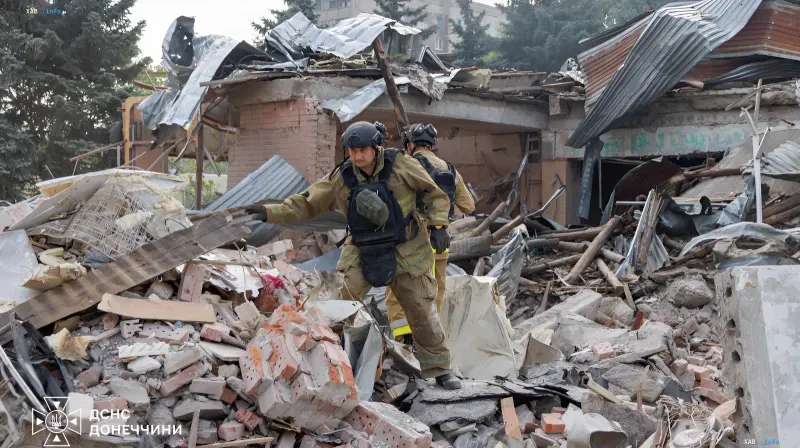
Against the backdrop of destroyed buildings and piles of rubble, rescuers continue search and rescue operations. The situation remains tense, and the risk to life and health is extremely high. At the scene, employees of the State Emergency Service (SES) of the Donetsk region are working.
Working in Conditions of Devastation
Emergency service personnel in full gear, including protective helmets and body armor, move through debris consisting of bricks, concrete, twisted metal, and wooden beams. The building where operations are taking place is almost completely destroyed: walls have collapsed, the roof has been torn off, and the interior space has turned into a pile of construction waste.
Rescuers carefully examine every corner and every fragment, hoping to find survivors or determine the causes of the tragedy. Their actions require not only physical strength but also high concentration, as even the slightest movement can lead to new collapses.
Organization of Search Operations
Special equipment and additional resources are deployed to conduct effective search and rescue operations. Coordination of actions is carried out at the level of the regional SES administration, which allows for an operational response to changes in the situation.
It is important to note that the work of rescuers often takes place in conditions of limited visibility and structural instability, which requires maximum caution and professionalism from them.
Consequences for the Population
The destruction of buildings and infrastructure has a serious impact on the lives of local residents. Many families are left homeless, and access to basic services such as water, electricity, and medical care is significantly limited.
Regional authorities are taking steps to organize temporary accommodation for the victims and provide them with necessary resources. However, the scale of the destruction requires time and significant effort to restore normal life.