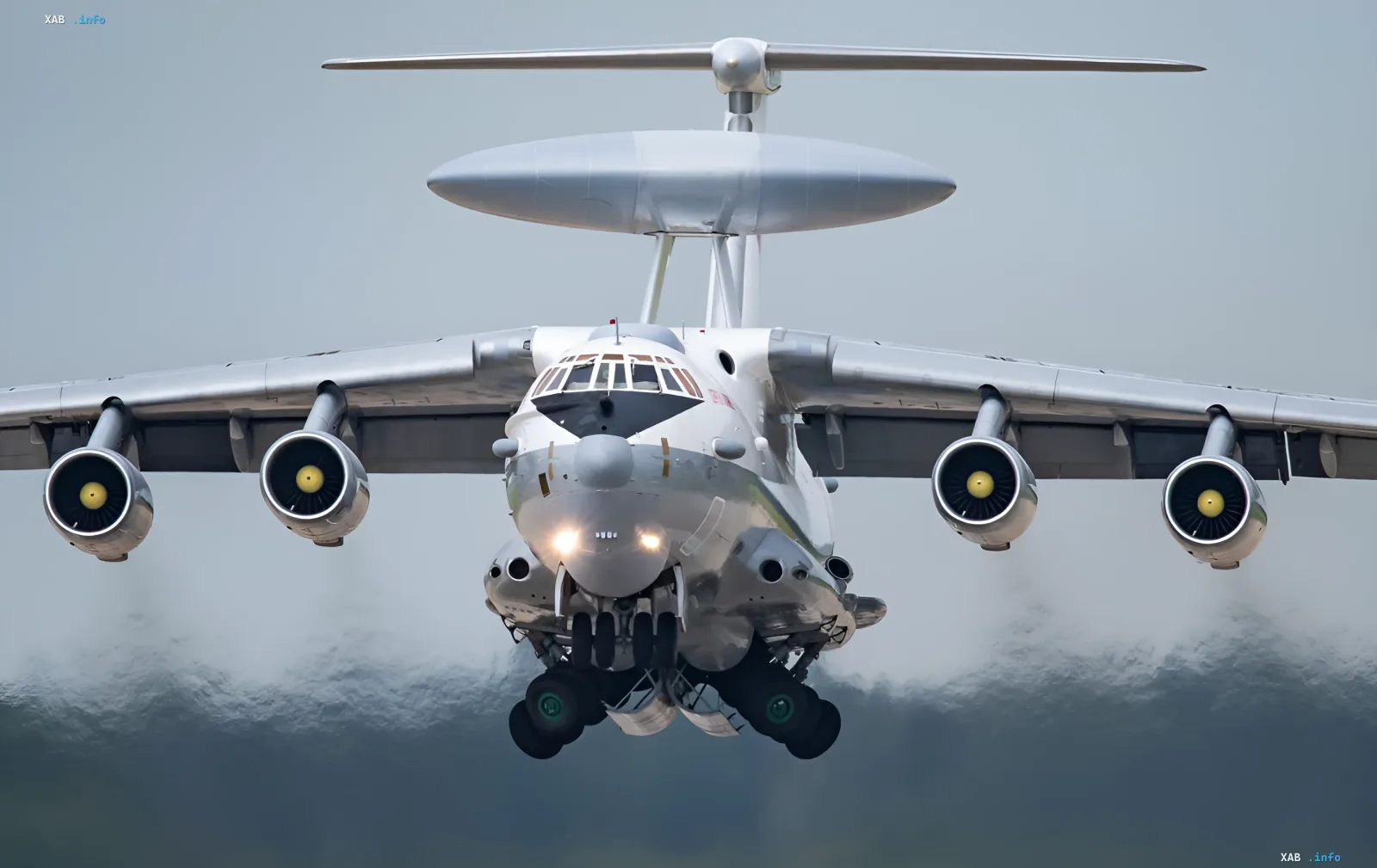
Russian Airborne Early Warning and Control (AEW&C) aviation has undergone radical changes in its operations over the past few weeks. While the skies over Russia's rear areas were practically devoid of these unique aircraft in the first half of June, the situation has now changed beyond recognition. Russian A-50U aircraft have returned to regular combat mode, carrying out dozens of flights to monitor airspace.
From silence to intensive patrols
Analysts from the 'KyberBoroshno' project have recorded a sharp surge in activity. Between June 4 and June 22, the use of A-50U aircraft was minimal. During these dates, only isolated movements were observed, related to the commissioning of repaired aircraft, such as the plane with tail number '47 red', and training flights, such as the Vorkuta — Olenya route.
The turning point came on June 23. From this date, one of the airframes began regularly performing night patrols. Their main zone of activity became the airspace of the Ulyanovsk and Samara regions. In a short period until the end of the reporting period, about 60 flights were recorded, indicating a systematic approach to organizing air defense.
Strategic dispersal and maximum readiness
An important aspect of the new tactic was a change in the geography of basing. Previously, Russian aircraft operated primarily from airfields in Ivanovo and Ulyanovsk. However, after these bases fell into a zone of increased risk, Moscow decided to disperse the equipment deeper into the rear.
Currently, A-50U aircraft are based at airfields in more remote regions:
- Bolshoye Savino (Perm);
- Orenburg-2;
- Chelyabinsk.
The culmination of this process was the event on July 7, when Russia simultaneously launched four A-50U aircraft into the air. According to experts, this is practically the entire combat-ready fleet of such machines in the country, indicating that the air defense system has switched to maximum readiness mode.
The role of the A-50U in repelling attacks
The effectiveness of the new strategy was confirmed as early as July 4. On this day, a Russian A-50U aircraft played a key role in repelling an attack by Ukrainian cruise missiles. Thanks to its capabilities, the A-50U is able to detect air targets at a significant distance and promptly transmit data to air defense systems and fighter aviation.
Presumably, Moscow is striving to compensate for losses in air defense effectiveness and increase the chances of intercepting missile munitions delivered by the Armed Forces of Ukraine. In the last two weeks, Ukrainian troops have almost daily attacked the logistics infrastructure of the Wildberries marketplace, causing damage of 17% to 22% of the entire network. Critical facilities such as the Saratov Refinery, Engels airfield, and oil depots in the Kaluga region are also under attack.