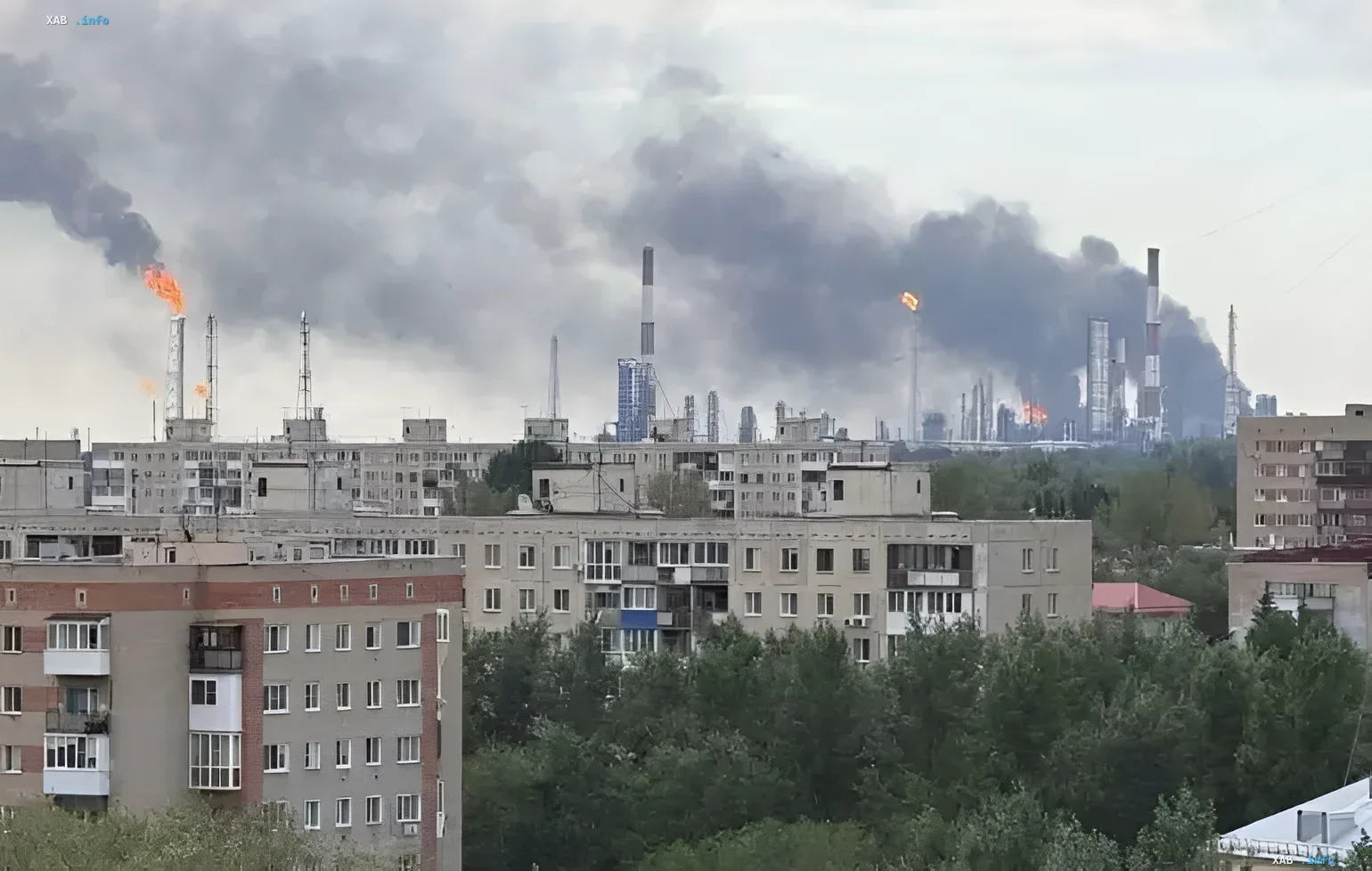
Summer 2024 has become one of the most challenging periods for the Russian energy sector in recent years. In July, the Armed Forces of Ukraine (AFU) launched at least 30 strikes against Russian oil infrastructure. The targets included oil refineries (ORs), tankers, and pipelines. According to analysts, this is the second-highest figure since the start of the full-scale invasion.
Record Drop in Refining
Western media, particularly Bloomberg, paid special attention to the attacks on Russia's largest refinery, the Omsk Oil Refinery. The incident occurred in the first half of July when a strike hit a facility located more than 2,500 kilometers from the Ukrainian border. The consequences of the attack were significant: the level of oil refining in the country fell to its lowest point since 2002.
According to estimates by EA Analytics, the average level of oil refining in Russia in July was 3.6 million barrels per day. This is approximately one-third lower than the seasonal norm. Experts attribute such a sharp decline directly to a series of sabotage acts and strikes on key logistics and production nodes.
Export Blockade and Port Issues
From the second half of the month, the tactics of Ukrainian forces shifted: the main focus was placed on strikes against oil tankers. This directly impacted the operations of the Novorossiysk port, through which about 20% of all Russian seaborne oil exports pass.
The port's performance statistics speak for themselves: during the period of active attacks, only four tankers were unloaded, whereas in previous weeks, this figure was eight vessels. This logistical deadlock creates a threat of shortage in the domestic market, forcing Russian authorities to take strict measures. In particular, the ban on the export of most types of diesel fuel and gasoline was extended.
Strategy and Prospects
The Commander-in-Chief of the AFU, Mykhailo Drapaty, previously outlined the goals of such operations. Ukraine aims to "increase the lethality" of Russia's losses and "undermine Moscow's economic potential during wartime." To achieve this, asymmetric approaches and proprietary technologies are used, allowing strikes on targets at significant distances.
Analysts at Rystad Energy predict that Russia may attempt to partially redirect export flows from the Black Sea to Baltic ports. However, experts doubt the success of this strategy. There are likely insufficient reserve capacities in pipelines, storage facilities, and tankers to fully compensate for the losses. Furthermore, Baltic infrastructure remains vulnerable to potential attacks.
The situation in the fuel market remains tense. Regarding how close Russia is to a full-fledged fuel collapse and what scenarios for development are possible in the near future, a detailed analysis is provided by Oleg Sarkits.