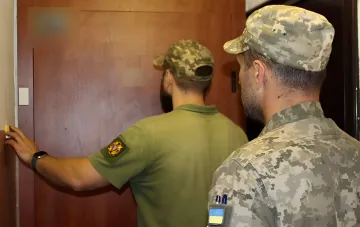
The Ministry of Defense of Ukraine has announced the launch of a pilot project designed to radically simplify the procedure for obtaining a deferment from mobilization for teachers. As part of an update to the 'Rezerv+' application, pedagogical workers in general secondary education institutions will, for the first time, have the opportunity to arrange a deferment remotely, bypassing bureaucratic red tape and the need for a personal visit to the TCC (Territorial Recruitment Center). As reported by RBC-Ukraine citing the ministry, the system will automatically verify data in state registries, eliminating the need to collect certificates.
Conditions for Participation in Testing and Process Automation
The new service is currently in the beta-testing stage, and the Ministry of Defense is actively inviting teachers to join the process. The key condition for participation is employment at a general secondary education institution as the main place of work with a workload of at least 0.75. This requirement aims to filter out those who have only an episodic connection to pedagogical activity and focus resources on full-fledged employees of the education system.
The technological essence of the innovation lies in the integration of the 'Rezerv+' application with state registries. When submitting an application, the system independently verifies information about the applicant's employment. This means that teachers will no longer have to collect paper confirmations, stand in queues at the CNAP (Public Service Centers), or spend hours on bureaucratic red tape. After the successful completion of testing, the function is planned for a mass launch for all users of the application.
Evolution of Digital Deferments: From Scientists to Teachers
The launch of online deferment for teachers is a logical continuation of the digital transformation of the mobilization process in Ukraine. Back in May 2026, the list of categories of citizens entitled to remote deferment was expanded in the 'Rezerv+' application. At that time, scientific workers received this privilege: scientists, employees of scientific institutions, as well as employees of the Presidium of the National Academy of Sciences of Ukraine and national branch academies of sciences.
The transition from paper document circulation to a digital format is viewed by the authorities as a way to reduce the load on TCCs and increase the transparency of the process. However, as practice over the last few months shows, digitization brings not only convenience but also the risks of technical failures that can affect the status of thousands of citizens.
Contradictory Data and Risks of Digitization
Despite optimistic statements about the launch of new functions, concerns remain in the information space regarding the stability of the 'Rezerv+' system. In particular, earlier media reports appeared about critical failures due to which data on deferment suddenly disappeared for thousands of men. This created a real threat of their immediate mobilization, as the absence of a mark in the registry is equated to the absence of legal grounds for deferment.
On the one hand, the Ministry of Defense states that the system is ready for automatic data verification and invites teachers to testing. On the other hand, experts and users note that technical errors in the past led to mass problems when people lost their legal status due to 'glitches' in the database. This creates a contradiction between the declared efficiency of the digital service and the real risks for citizens relying on it.
Prospects for System Development in 2026
In the current year, 2026, the issue of mobilization and deferments remains one of the most acute in Ukrainian society. Expanding the functionality of 'Rezerv+' to the category of teachers is an important step that affects one of the most numerous professions in the country. The success of the beta test will depend on how quickly and painlessly the system can process thousands of applications without making mistakes that could lead to the unlawful conscription of teachers.
The Ministry of Defense emphasizes that after the completion of testing, the new opportunity will be available to all users. This means that in the near future, the procedure for arranging a deferment for teachers may become fully automated, which will significantly reduce the administrative burden on both the teachers themselves and the military management bodies.