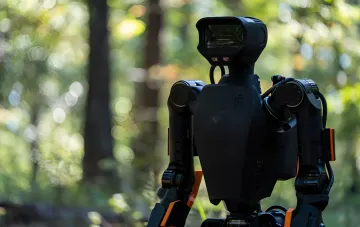
German defense conglomerate Rheinmetall has confirmed that it is actively working on the creation of humanoid combat robots. CEO Armin Papperger stated that the first military-grade prototypes are expected "relatively soon, perhaps in 15–18 months." According to him, the company has already invested significant resources into this direction and is currently developing the upper torso of the future humanoid robot.
Timeline and Technical Level
The estimated 15–18 month horizon is calculated from the time of the announcement, placing the expected demonstration of the first prototypes in mid-to-late 2028. Papperger did not disclose the specific military tasks the machine would perform, but emphasized that a high level of artificial intelligence development is required to ensure the functionality of such systems. He estimates that the robots must possess sufficient cognitive capabilities for communication and interaction with humans, highlighting the ambitious nature of the technical specifications. Experts citing these estimates note that even under an optimistic scenario, ready-to-use systems are unlikely to be prepared for actual combat deployment until the early 2030s.
Global Context: The Humanoid Robotics Race
The development of humanoid robots has become one of the top priorities for defense ministries and technology companies worldwide. Over the past two years, according to industry observers, significant progress has been achieved in this field: new platforms have emerged, mobility has improved, and manipulation precision has increased. Competition between corporations and nations in the combat humanoid segment is intensifying, and Germany, with its industrial potential and a substantially increased defense budget in recent years, occupies a notable position in this race.
The Ukrainian Experience: Brave1 Grant Competition
In parallel with German developments, a grant competition for the development of humanoid robots for the defense forces was announced in Ukraine as part of the Brave1 defense cluster. The goal of the project is to minimize risks for Ukrainian soldiers during combat operations and frontline rotations. According to reports previously communicated by RBC-Ukraine, prototypes under this initiative are also in the active development stage. Former Minister of Defense Mykhailo Fedorov publicly confirmed Kyiv's interest in creating its own fleet of humanoid combat robots.
USA: xTechHumanoid Competition and Five Winners
In the United States, the Army announced five companies as winners of the xTechHumanoid competition, which selected the best combat humanoid robots. This competition was one of the first major government orders for the development of humanoid combat platforms in the USA and set a vector for a whole range of private developers. The combination of these initiatives—from Rheinmetall to Brave1 and xTechHumanoid—indicates that humanoid robotics is transitioning from laboratory experiments into a phase of applied defense programs with specific timelines and budgets.
Thus, Armin Papperger's statement fits into a broader trend: major defense corporations and nations are simultaneously launching programs for the creation of humanoid combat robots, banking on their deployment within the next decade. The first demonstration prototypes, according to current estimates, will appear no earlier than 2028, and several more years of intensive testing and refinement are expected before actual combat use.