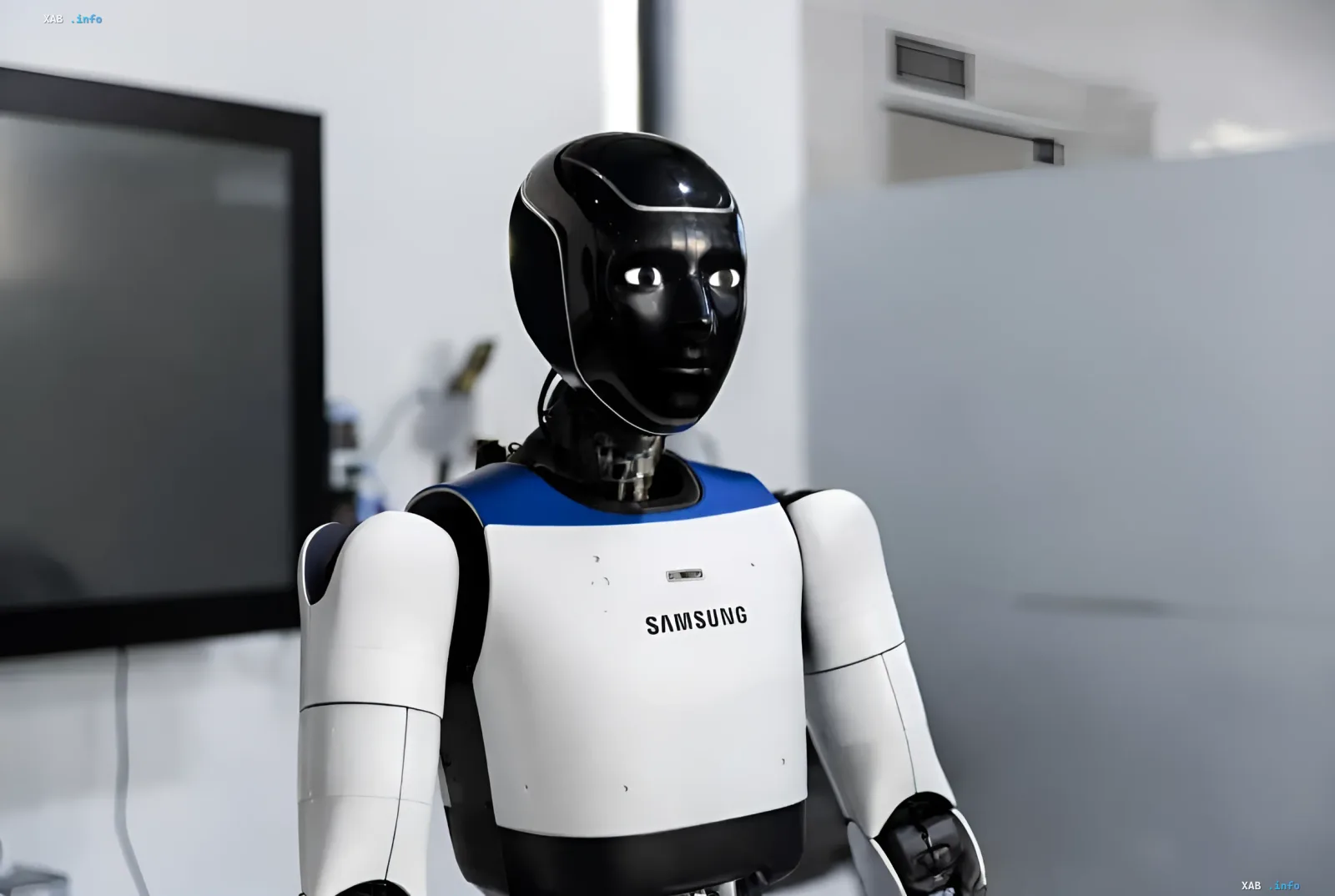
South Korean tech giant Samsung has officially announced the creation of a new strategic division — RX (Robotics eXperience). This decision marks a major shift in the company’s corporate architecture: the new division will report directly to the CEO of Samsung Electronics. This move underscores that robotics is being viewed by leadership not merely as a supporting technology, but as one of the key growth drivers for the coming decades.
Global expansion strategy
The new department’s responsibilities go far beyond current experiments. The RX division will take charge of shaping mid- and long-term robotics strategy, developing foundational technologies, and executing concrete business projects. Special emphasis will be placed on expanding research activities both within South Korea and internationally.
To realize its ambitious plans, Samsung intends to open specialized research centers in three key global tech hubs: the United States, China, and Japan. The company aims to leverage local ecosystems and attract top-tier specialists working in these regions.
Experience from the automotive world
The newly appointed head of the division is Executive Vice President Lee Dong-kun. This appointment is no coincidence and speaks to the seriousness of the company’s intentions. Previously, Lee Dong-kun was responsible for robotics strategy at Hyundai Motor Group, where he oversaw the development of the renowned Boston Dynamics. His experience managing complex robotics projects will form the foundation for the new division’s growth at Samsung.
From industry to everyday life
At Samsung, they are convinced that the advancement of Physical AI makes the creation of humanoid robots increasingly practical and economically viable. The company has outlined a clear roadmap for deploying these technologies:
- Phase 1: Industry. In the first phase, humanoid robots will be deployed on production lines to boost efficiency and automate complex processes.
- Phase 2: Commerce and home. The next step will be entering the retail sector and, ultimately, integrating robots into domestic environments to assist people with daily tasks.
The creation of the RX division signals to the market that the race to develop intelligent mechanical assistants is entering a new phase — and Samsung intends to take a leading position in it.