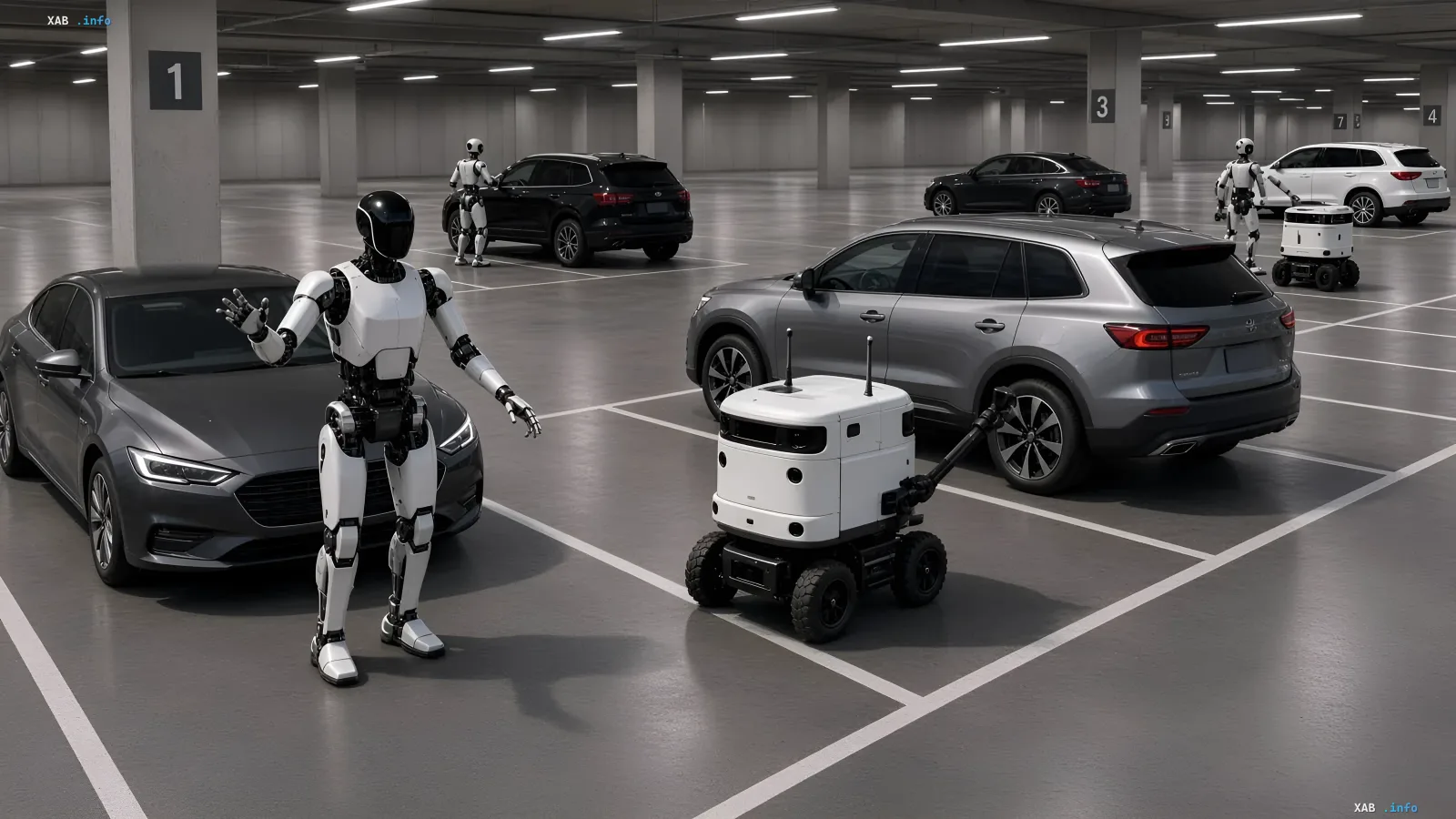
In Seoul, the capital of South Korea, trials have begun for a large-scale robotic system capable of independently parking vehicles in designated spots. This innovative project, implemented in one of the residential complexes in the western part of the metropolis, marks a transition to a new stage in the development of urban infrastructure. As reported by XAB.info, the system has already begun operating in pilot mode, demonstrating an unprecedented level of automation.
Synergy of Hyundai Giants
The implementation of the project became possible thanks to a powerful alliance within the Hyundai corporate structure. The pilot launch was carried out in close cooperation between three key divisions: Hyundai Motor, Hyundai ViA, and Hyundai Construction. Such consolidation of efforts allowed for the combination of competencies in automotive manufacturing, artificial intelligence, and robotics, as well as construction engineering. The system has been officially approved by the Ministry of Land, Infrastructure and Transport of the Republic of Korea, underscoring the strategic importance of the initiative for the state.
Space Savings and Efficiency
The main advantage of the new technology is a radical change in the approach to organizing parking space. According to Hyundai engineers' calculations, the automated approach allows for an increase in parking capacity by 20–50% compared to traditional solutions on the same area. This is achieved by eliminating the need for wide aisles for driver maneuvering and the ability to tightly pack vehicles. Furthermore, the system completely eliminates the problem of finding a free spot, which is particularly relevant for densely populated areas of Seoul.
Full Service Cycle
The system's functionality goes beyond simple parking. When the vehicle is needed by the owner again, the robotic complex similarly locates the vehicle and returns it to the driver in a convenient drop-off zone. This creates a completely seamless experience of using personal transport in conditions of dense urban development. The project is being implemented as part of the national "smart city" program and is funded by state funds, which guarantees its sustainability and scalability.
Implementation Prospects
The full-scale launch of the system is planned for next year, after residents begin moving into the new residential complex. The current stage serves to debug algorithms and check the reliability of robotic manipulators in real-world conditions. Successful completion of the trials in Seoul could become the starting point for the global implementation of similar technologies in other world metropolises where a shortage of parking spaces is an acute problem.