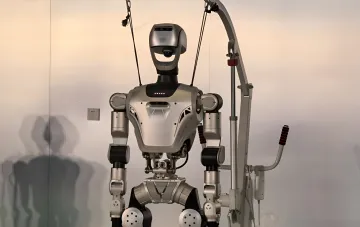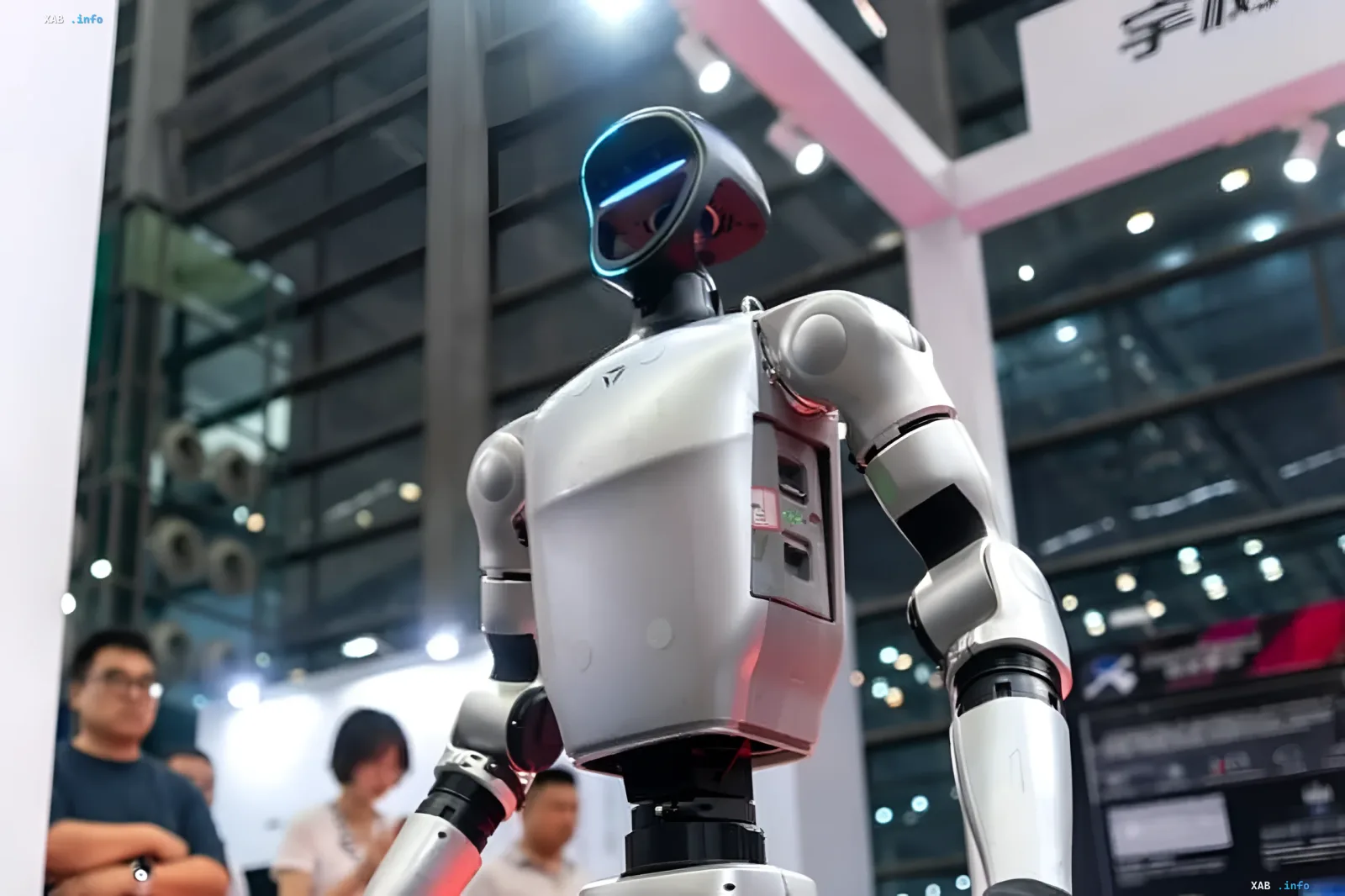
The world of industrial automation is experiencing an unprecedented shift. As of August 2026, China does not just dominate but has effectively monopolized the global market for humanoid robots. According to a fresh analytical report from financial giant Morgan Stanley, Chinese manufacturers account for nearly 97% of all global supplies of anthropomorphic machines. This figure indicates a colossal gap between Beijing and the rest of the world, where traditional technological powers—the US, Japan, and EU countries—have fallen behind in the race for mass production.
Ecosystem vs. Prototypes: Why China Won the Race
China's advantage in 2026 is explained not only by assembly speed but also by the maturity of the entire industrial ecosystem. If in 2025 China's share was about 90% of total supply (13,000–16,000 units), the gap has only widened over the last year. While American and Japanese companies are still at the stage of testing prototypes and debugging algorithms, Chinese market leaders have already established mass production on an industrial scale. According to Morgan Stanley estimates, the largest Chinese manufacturer delivered approximately 36 times more machines to customers than the combined total of American companies in a comparable group.
Control Over Supply Chains
The key factor in success was vertical integration. China controls more than half of the 100 key global suppliers of critical components: reducers, servomechanisms, and vision sensors. This allows Chinese engineers not only to release products faster but also to significantly reduce the cost of the final product. While Western developers are forced to source components from around the world, facing logistical complexities, Chinese factories receive parts "from conveyor to conveyor," ensuring unprecedented efficiency.
Contradictory Data: Scale vs. Quality
Despite overwhelming leadership in volume, experts point to significant differences in quality and functionality. Many Chinese robots dominating the market demonstrate impressive skills in walking, dancing, and performing pre-programmed movements, but their ability to stably perform complex useful work in unstructured environments remains questionable. At the same time, the US maintains strong positions in the development of artificial intelligence and the "brains" for robots. Thus, China wins in "hardware" and scale, while the West continues to lead in "software" and the cognitive capabilities of machines.
First Steps in the Real Sector
Inside China, the active implementation of humanoid robots into the real economy is beginning. A striking example is the automaker BYD, which plans to use robots in its car dealerships to serve customers. However, as analysts note, current supply volumes do not always directly indicate the maturity of the technology for widespread application. Nevertheless, it is the scale of production that gives China a critical advantage: a huge array of operational data that allows for faster neural network training, cost reduction, and strengthening ties with suppliers, creating a closed loop of development.