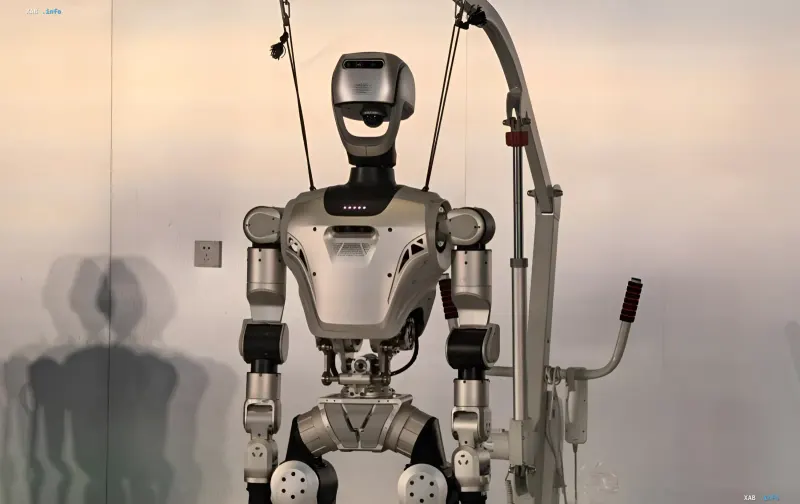
China has unveiled a fundamentally new humanoid robot equipped with «embodied artificial intelligence» and built entirely on domestic components. This new development relies on zero foreign technologies, making it a unique achievement in the fields of national electronics and robotics.
Innovative architecture and nervous system
A key feature of the robot is its electronic architecture, which acts as a complex intelligent nervous system. The innovative digital platform allowed engineers to separate and simultaneously integrate physical control processes with artificial intelligence computing operations. This ensures the humanoid's lightning-fast reaction to external stimuli and operator commands.
Extreme durability and cybersecurity tests
During rigorous testing, developers evaluated the machine's resilience to extreme conditions, including simulated mechanical joint damage, targeted cyberattacks, and malicious virus infection. While devices with standard architectures quickly lost control, shut down, or failed, the entirely national system demonstrated absolute stability and manageability. The architecture provided instant failure isolation and robust protection against external interference.
Strategic significance and production safety
According to Li Qingdu, Executive Dean of the Institute of Machine Intelligence at Shanghai University of Science and Technology, the main achievement lies in transitioning from targeted import substitution to creating a fully autonomous technological ecosystem. Such security guarantees that the physical actions of the artificial intelligence will remain strictly within safety boundaries and pose no threat to people in industrial environments.
Compliance with China's state plans
The presented development fits fully into the current state strategy. It complies with the directive of the Ministry of Industry and Information Technology of China aimed at establishing a completely secure supply chain by 2027, as well as the large-scale project of the 15th Five-Year Plan covering 2026–2030, which provides for accelerated development of the robotics industry.