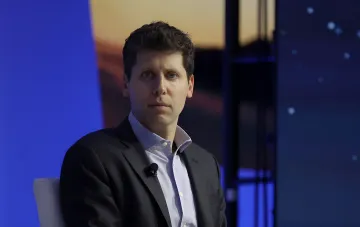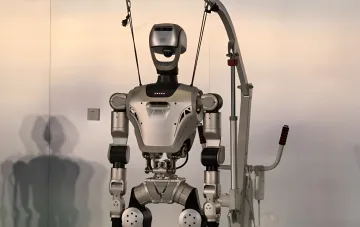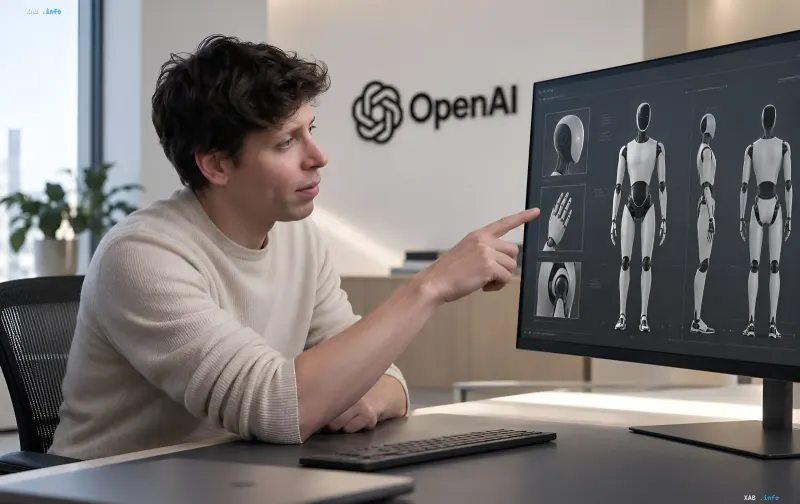
OpenAI has officially confirmed it is working on its own humanoid robot. Appearing on the Sources podcast, CEO Sam Altman stated that «developing a machine in human form is a logical step for the company.» According to him, the choice of an anthropomorphic format is driven not by aesthetics, but by practical necessity: the existing domestic and industrial environment is originally designed for the human body.
Why the Human Form Specifically
Altman explained that door handles, keyboards, working tools, and general infrastructure are calculated for a specific type of body. A robot that has to move around in the same rooms and use the same objects must match similar anthropometric parameters. Thus, the humanoid configuration is viewed as an engineering solution that allows the use of the already existing material environment without its large-scale restructuring for new machinery.
The Main Difficulty is the «Digital Brain»
At the same time, the head of OpenAI emphasized that the physical shell is a less critical task. In his estimation, the key complexity lies in developing the digital brain — an artificial intelligence system that will make the hardware work efficiently in the physical world. Altman gave a simple example: a regular cup lift requires the machine to recognize the object, find the handle, calculate the gripping force of the fingers, and maintain balance. It is solving such a complex of software and sensory tasks, rather than assembling the body, that determines the pace of the project's development.
Hardware and Team Recruitment
The focus on the software component does not mean that hardware is left unattended. OpenAI is already developing its own electromechanical actuators: we are talking about motors, transmissions, internal sensors, and cooling systems. The company is also attracting specialists in setting up mass production and supply chains. To work through engineering and software tasks, OpenAI has opened 27 vacancies, including for experts in motion control, system state assessment, and physical AI machine learning. According to specialized media outlets, the sought-after specialists include designers of actuators, electromagnetic systems, gearboxes, printed circuit boards, as well as engineers in thermal modeling, firmware, and prototyping.
Goals, Competition, and Timeline
OpenAI's initial goal is to create robots for building infrastructure, and the long-term goal is to develop a personal home assistant that, according to management's plans, could eventually become available to a wide range of users. Altman also pointed out that the company is working in parallel on machines for other areas of application, in particular for data centers. OpenAI's entry into the humanoid robotics market intensifies competition with Tesla, whose head Elon Musk previously stated that humanoid robots are capable of radically changing the economy and the nature of labor. Currently, the development is at an initial stage: retail prices, subscription details, and the date of a full-scale release have not been announced. Altman reported that the first working demonstration is expected in 2027, but the mass appearance of such devices in everyday life will require several more years.