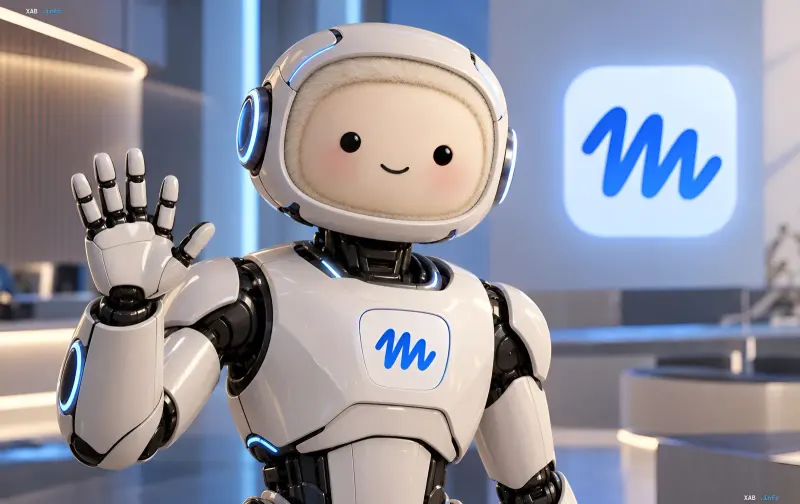
Tech giant Meta has unveiled its first working prototype of a bipedal humanoid robot codenamed Max. Developed in partnership with Chinese manufacturer Fourier, the device is intended, according to the company, to serve as a 'physical body' for the Muse AI agent, capable of performing routine household chores. According to sources familiar with the project, the first prototype was assembled in just three months, which is considered an anomalously fast timeline for hardware robotics.
What Max Is and How It Was Created
According to available data, the robot stands about 1.5 meters tall and weighs around 48 kilograms. An Nvidia Jetson Thor processor is installed inside the chassis to handle complex computing processes. The device is equipped with five-fingered manipulator 'hands' designed for handling small objects, as well as built-in speakers and a display capable of mimicking facial expressions. Per The Information, a team of Meta robotics specialists traveled to China to collaborate with Fourier: Li-Chen Miller, Meta's vice president of robotics products, spent nearly two months at the startup's Shanghai facility, and in late August, the prototype was demonstrated to Meta employees at an internal robotics event.
Strategy: Bringing Muse Beyond the Screen
The primary strategic goal of the development is to take Meta's algorithms beyond the digital environment. Chief Technology Officer Andrew Bosworth noted that humanoids are viewed as the physical embodiment of the Muse AI agent. In the future, this should turn the virtual assistant into a full-fledged home helper capable of performing physical labor around the house—from simple object manipulation to assisting with daily tasks.
Max 2 Already in Development
The company has already begun creating a second version of the prototype named Max 2. The update features a redesigned torso, improved hands for more precise object manipulation, and the addition of a projector and new sensors that will allow the robot to navigate stairs with confidence. According to sources, work on the next version started in September.
Partnership with China and Security Concerns
Analysts are paying special attention to the choice of partner: instead of producing its own hardware, Meta utilized the technological base of a third-party Chinese developer, Fourier. In the US, this move has already raised concerns over potential risks of data leaks and remote access to devices, which, in the context of corporate and home AI deployment scenarios, could become a subject of regulatory and public pressure.
Challenges Ahead
Despite rapid progress, Meta's engineers still face many complex challenges. Full-fledged humanoid operation in domestic environments requires precise object recognition, safe manipulation of fragile items, and autonomous navigation in a dynamic environment. Successfully resolving these issues will determine whether Max and its successors can transition from a demonstration prototype into a real consumer product.