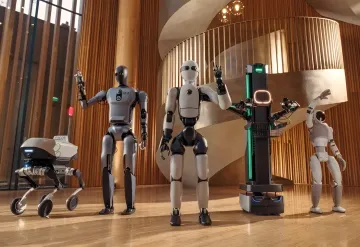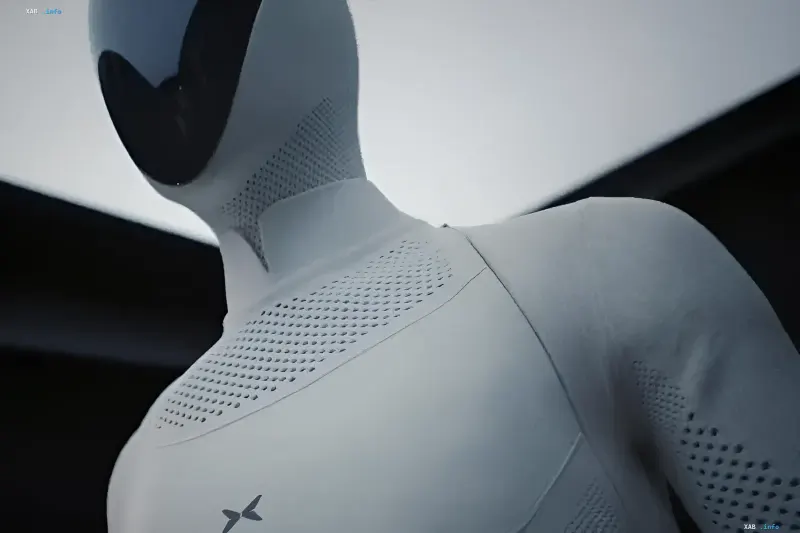
Chinese automaker Xpeng has revealed the key commercial parameter for its humanoid robot, Iron: according to Brian Gu, vice chairman of the company's board of directors, the android's cost will be comparable to the price of an average electric vehicle. The executive did not disclose an exact figure, but for reference, one can use Xpeng's current price list: its cars sell in the range of 119,800 to 309,800 yuan (approximately $17,982 to $46,501). Thus, the robot is intended to fall within the same price corridor as a mass-market electric vehicle — this fundamentally differentiates Iron from more expensive research platforms of competitors and bets on broad commercial accessibility.
Sales launch and retail preparation
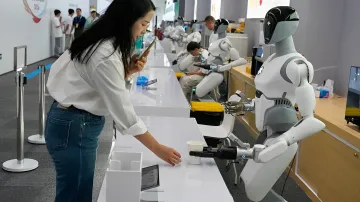
Xpeng plans to launch open sales of its humanoid robots in the second quarter of 2027. Prior to this, in the first quarter, Iron models will undergo a preparatory phase where they will be trained for retail work, Brian Gu said. The company views retail as the first practical arena for the robot: this is where Iron will be able to demonstrate skills in interacting with customers, navigating, and performing routine operations, which is important for both refining the technology and building the product's reputation before a mass launch.
Target volumes and monetization model
In 2027, Xpeng intends to sell several tens of thousands of its humanoid robots; Brian Gu called this year key for scaling and commercializing the venture. Moreover, the company is building more than just one-off hardware sales into its business model. Beyond the equipment, Xpeng expects to generate recurring revenue from software updates, robot training, and the development of data infrastructure necessary for their operation. This approach transfers the logic of subscription and service-based revenue from the automotive business into robotics, making the product potentially more profitable in the long term.
Robotics as an answer to the automotive business slowdown
The bet on robotics for Xpeng is not only an ambitious technological project but also a strategic response to external pressure: electric vehicle sales in China are slowing down, and entry into international markets is complicated by protectionist policies of other countries. Against this backdrop, robots, autonomous driving, and flying cars are becoming additional growth drivers for the company and a way to position itself as a provider of a wide range of AI solutions, rather than just an automaker. In that same year, 2027, Xpeng has scheduled the release of its first specialized robotaxi — the autopilot systems, according to the company, are already undergoing tests.
Financial context: revenue growth amidst a loss
The decision to expand the portfolio is being made amidst fierce competition and price wars that are forcing Chinese automakers to optimize costs. By the end of the third quarter, Xpeng had increased its revenue by 19% year-on-year, but ended the reporting period with a loss. The company is trying to mitigate industry pressure on costs through technological developments, adjusting its product mix, and changing its model range structure, striving to increase the profitability of its automotive business while simultaneously ensuring the commercial sustainability of new directions, including robotics.