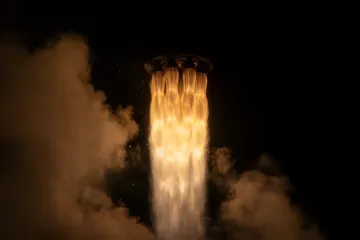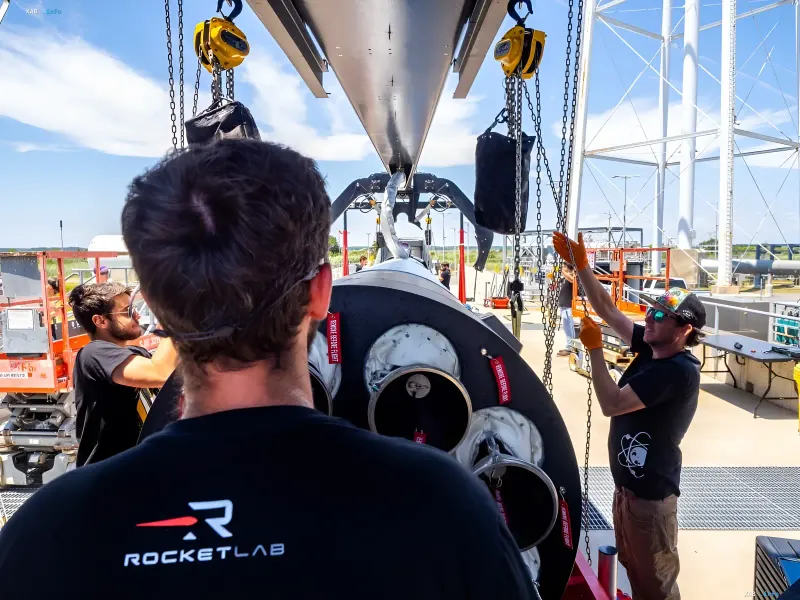
Amidst the rapid militarization of near-Earth space and the growing demand for operational space launches, the American company Rocket Lab has unveiled an innovative solution capable of reshaping the landscape of rocketry. The GHOST system (Global Hypersonic & Orbital Spaceport Technology) is a fully mobile launch complex packaged in standard shipping containers. In August 2026, the company confirmed that all necessary ground infrastructure, including flight control and support systems, is now portable, allowing a launch site to be deployed anywhere in the world within weeks.
Technological Breakthrough: From Fixed Spaceports to Mobile Solutions
Traditional spaceport construction requires billions in investment and years of preparation. The GHOST system breaks this paradigm. The complex is designed to support both the Electron orbital launch vehicle and the HASTE (Hypersonic Air-breathing Spaceplane Testbed) suborbital modification. This enables both commercial satellite launches and military testing of hypersonic vehicles. According to Rocket Lab founder Peter Beck, the creation of GHOST was a direct response to customer requests for mobile launch solutions not tied to geographical constraints.
Strategic Deployment in Alaska and Pentagon Contract
The first site to demonstrate GHOST capabilities will be Kodiak Island in Alaska. As part of the Pacific Spaceport Complex-Alaska project, the company plans to establish Launch Complex 4 by 2027. This deployment is directly linked to a major contract with the U.S. Space Force worth $266 million. The agreement provides for 12 suborbital launches with an option for an additional 6 missions. Using Alaska allows the Pentagon to test hypersonic weapons with the ability to alter trajectories and impact zones, which was impossible when tied to NASA test centers in Florida or Virginia.
Geopolitical Aspect: Sovereign Launches for Allies
GHOST technology opens new possibilities not only for the United States but also for its allies. Countries wishing to access space or test hypersonic technologies can deploy their own launch complex without the need to build expensive fixed facilities. This lowers the barrier to entry in the space race and allows for operational launches at specific orbital inclinations, which is critical for reconnaissance and military satellites. The containerized approach solves the issue of operational speed, allowing launch installations to be moved quickly in response to geopolitical challenges.
Logistical and Regulatory Challenges
Despite technological readiness, deploying mobile complexes involves serious bureaucratic and logistical complexities. Each new site requires obtaining licenses, coordinating air and maritime space, and developing rescue schemes along the flight path. For Alaska, this is particularly relevant due to harsh climatic conditions and remoteness. Nevertheless, Rocket Lab is confident that the containerized approach justifies the investment, providing flexibility that traditional spaceports cannot offer.