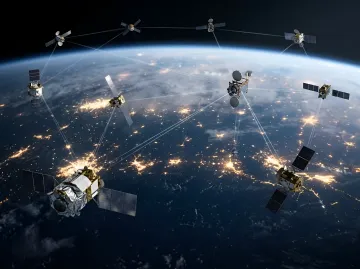
On August 16, 2026, Rocket Lab officially announced a major expansion into Europe by establishing a subsidiary, Rocket Lab Germany GmbH. This decision marks the beginning of direct competition with European rocket manufacturers, which are only just beginning to master the commercial market. In a landscape where approximately 12 local companies are preparing for their first launches, the New Zealand giant offers a fully functional ecosystem: from serial satellite production to launch services using Electron rockets and the upcoming Neutron.
Financial Gap and Pace Leadership
The key factor in Rocket Lab's success in Europe is its financial stability. By the end of the second quarter of 2026, the company held $2.13 billion (approximately €1.85 billion) in cash and cash equivalents. For comparison, in November 2025, member states of the European Space Agency (ESA) allocated €902.2 million to the European Launcher Challenge program, which supports five European startups. Thus, Rocket Lab's capital exceeds the total state funding for European competitors by more than two times.
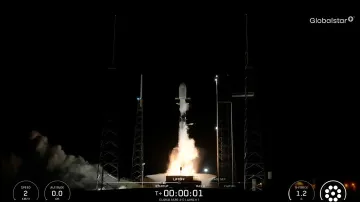
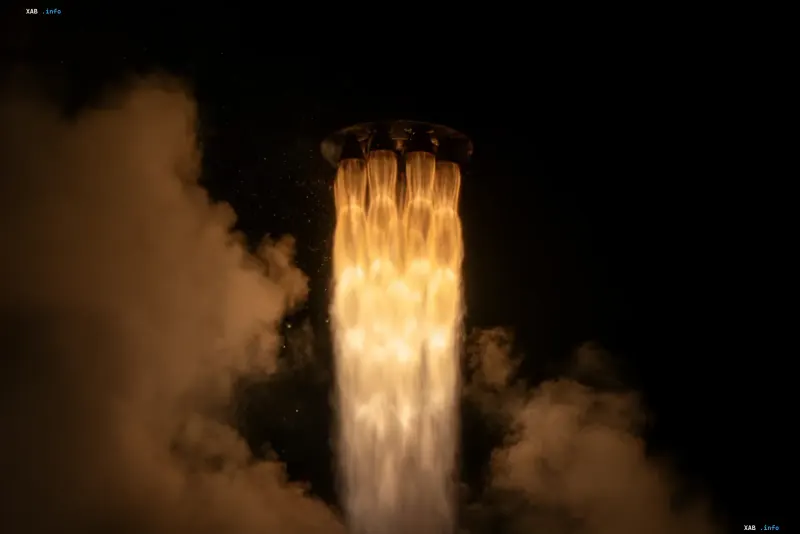
This financial cushion allows the company to outpace European operators in launch rates. In 2026, Electron rockets and their suborbital version, HASTE, have already completed 13 successful launches. Meanwhile, active European operators — Arianespace with the Ariane 6 rocket and the Italian Avio with Vega-C — have conducted only 4 launches in total. The gap in activity demonstrates that Rocket Lab already has streamlined processes, while European startups are facing delays in infrastructure construction and technical issues prior to launches.
Technological Advantage: The GHOST System
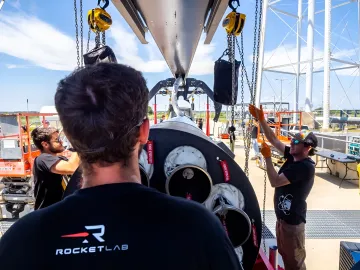
One of Rocket Lab's main innovative advantages is the deployable GHOST (Global High-Orbit Space Transport) system. This technology allows rockets and launch complex equipment to be transported in standard shipping containers and then rapidly deployed on-site. This creates an alternative to the necessity of building permanent spaceports, which is particularly relevant for European companies experiencing a shortage of accessible infrastructure.
The GHOST system enables launches from various locations, reducing dependence on geographical constraints and political barriers. For European startups, which are forced to invest significant funds in building their own sites, this represents a serious competitive advantage. Rocket Lab can offer clients flexibility and speed unavailable to traditional operators.
Contradictory Data
Despite Rocket Lab's obvious advantages, assessments of its service costs have sparked disagreement among European competitors. The company HyPrSpace considers Electron rockets relatively expensive regarding the cost of placing a kilogram of payload into orbit and expects increased price competition in the market. At the same time, the startup HyImpulse claims readiness to compete through flexible and competitive launch services, betting on adaptability and a personalized approach to clients.
Thus, while Rocket Lab holds financial and technological superiority, European companies are attempting to find their niche through pricing policies and specialized services. This creates a complex competitive environment where victory will depend not only on capital but also on the ability to meet specific customer needs.
Prospects and Challenges
Rocket Lab's entry into the European market intensifies competition for commercial launches, where price and infrastructure availability become key factors. European companies that received funding under the European Launcher Challenge program count on priority in institutional contracts, especially in projects related to sovereign access to space. However, the commercial market remains open, and here Rocket Lab can use its advantages to capture a significant share.
In the long term, Rocket Lab's success in Europe will depend on its ability to integrate into the local ecosystem, adapt to regulatory requirements, and offer unique solutions that local operators cannot provide. Meanwhile, European startups must accelerate the development of their technologies and infrastructure to avoid losing their market position.