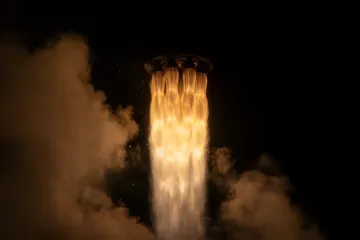
On the night of August 16, 2026, the private aerospace company SpaceX demonstrated unprecedented operational efficiency. Within a single hour, with an interval of just 38 minutes, two successful launches of Falcon 9 launch vehicles were carried out from opposite ends of the United States. This event not only marked a new historical record in spaceflight but also confirmed the company's leadership in the field of frequent orbital launches.
Double launch: a record of speed and logistics
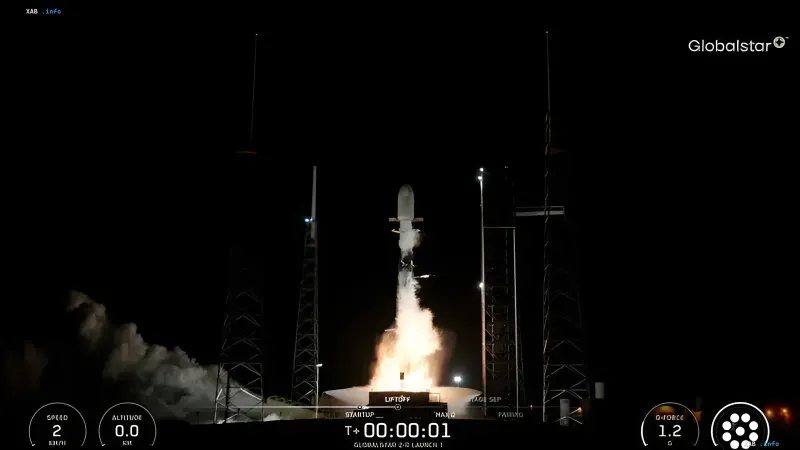
The first launch took place on Saturday, August 15, at 21:12 Eastern Daylight Time (4:12 MSK on August 16) from Cape Canaveral Space Force Station in Florida. The Falcon 9 rocket successfully delivered eight satellites for the telecommunications company Globalstar to low Earth orbit (LEO). The mission, named Globalstar 2-2 Launch 1, became an important stage in the renewal of the communications satellite constellation. Just 8 minutes after liftoff, the rocket's first stage performed a soft landing on the launch pad at Cape Canaveral, marking its 14th flight in its career.
The second launch was carried out just 38 minutes and 40 seconds after the first — at 21:50 EDT (4:50 MSK) from Vandenberg Space Force Base in California. This launch was executed as part of a classified mission codenamed USSF-366. The first stage of this rocket, which had already completed 18 flights, successfully landed on the autonomous spaceport drone ship (ASDS) "Of Course I Still Love You" in the Pacific Ocean.
Classified mission USSF-366 and the Starshield platform
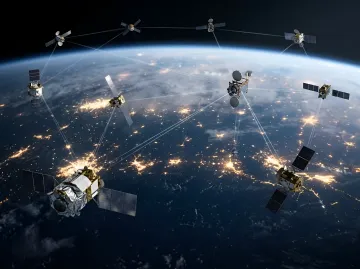
Details of the second mission, USSF-366, remain classified, however, industry experts make well-founded assumptions regarding its objectives. According to NextSpaceflight.com, an analysis of the flight trajectory and stage separation points indicates that the rocket may have delivered a batch of classified satellites for a US government agency. These spacecraft are likely based on the Starshield satellite platform, a specialized division of SpaceX dedicated to fulfilling government and military contracts. The coincidence of mission parameters with previous Starlink Group 15 launches only strengthens this theory.
Scale of SpaceX operations in 2026
These two launches were the 95th and 96th Falcon 9 flights of the current year, 2026. The statistics demonstrate the impressive intensity of the company's work: the vast majority of missions — about 75% — are dedicated to deploying the Starlink satellite constellation. The ability to conduct such frequent launches using reusable launch vehicles drastically reduces the cost of access to space and changes the paradigm of the space industry.
Historical context of the record
The previous record for the minimum interval between launches was set by SpaceX on August 31, 2024, when the difference between launches was 65 minutes. The new record of 38 minutes reduced this interval by almost half, which testifies to significant progress in rocket preparation, servicing, and launch procedures. Such a pace of work requires the highest level of coordination between teams at two remote spaceports and flawless operation of engineering systems.