On August 15, 2026, SpaceX made an unprecedented leap in the pace of space operations by conducting two orbital Falcon 9 rocket launches just 38.5 minutes apart. This event not only confirmed SpaceX's leadership in the private space sector but also demonstrated unprecedented synchronization of logistics, preparation, and flight control across two continental US coastlines.
Two launches, two missions, one story
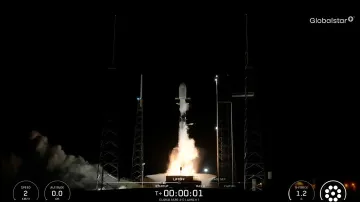
The first launch took place from Cape Canaveral Space Force Station in Florida. The Falcon 9 rocket deployed eight Globalstar satellites into low Earth orbit, replenishing their constellation for global communications. For this mission, first stage booster B1090 was used—already on its 14th flight, highlighting the high reusability of SpaceX hardware. Eight minutes after liftoff, the booster successfully landed at Landing Zone 40 near the launch pad, marking the 52nd orbital launch from the Florida coast in 2026.
The second launch, conducted just 38.5 minutes after the first, lifted off from Vandenberg Space Force Base in California. This time, the rocket delivered a classified payload for the U.S. Space Force as part of mission USSF-366. Details about the payload’s purpose and composition remain undisclosed, but the launch itself underscores SpaceX’s growing role in supporting U.S. national security. The second booster—B1088—was also successfully recovered, landing on the autonomous drone ship Of Course I Still Love You in the Pacific Ocean. This landing marked the 650th successful first-stage recovery in SpaceX history.
Technological breakthrough or planned operation?
The record-breaking speed of conducting two launches from opposite ends of the country requires not only technical readiness but also unprecedented coordination between teams at Cape Canaveral and Vandenberg. According to SpaceX representatives, such synchronization was made possible by automated pre-launch check systems, a unified flight control center, and well-established logistical chains. The company emphasizes that similar operations will become standard in the coming years, especially in the context of scaling Starlink programs and government contracts.
Contradictory data
While SpaceX’s official statement confirms the exact interval between launches—38.5 minutes—some independent analysts, including experts from SpaceNews and The Space Review, point to possible discrepancies in the timeline. Specifically, one source claims the second launch may have been delayed by 2–3 minutes due to weather conditions in California, making the actual time between liftoffs closer to 41 minutes. Another source, citing telemetry data, confirms the 38.5-minute figure but notes that this time includes only the interval between liftoff moments, not the full preparation cycle. Thus, while the record itself is not disputed, the precise details of its achievement remain a subject of discussion.
Implications for the space industry
This record has far-reaching consequences for the entire space industry. It demonstrates that private companies can execute missions once considered the exclusive domain of government agencies—and do so with unprecedented speed and efficiency. For SpaceX, it also means the ability to increase launch frequency without increasing costs, which is critical for realizing ambitious projects such as Mars colonization or creating mega-constellations of satellites.
The future of launches: what’s next?
In his post-launch commentary, Elon Musk stated that the company plans to conduct up to three launches per day from different spaceports in 2027. This will require even greater automation, infrastructure expansion, and possibly the introduction of new rocket types, such as Starship. If SpaceX can realize these plans, by the end of the decade it could fully dominate the orbital launch market, leaving all other players behind.