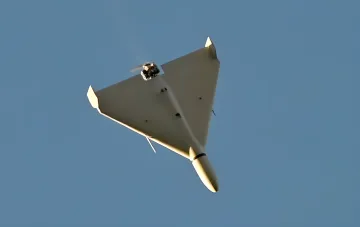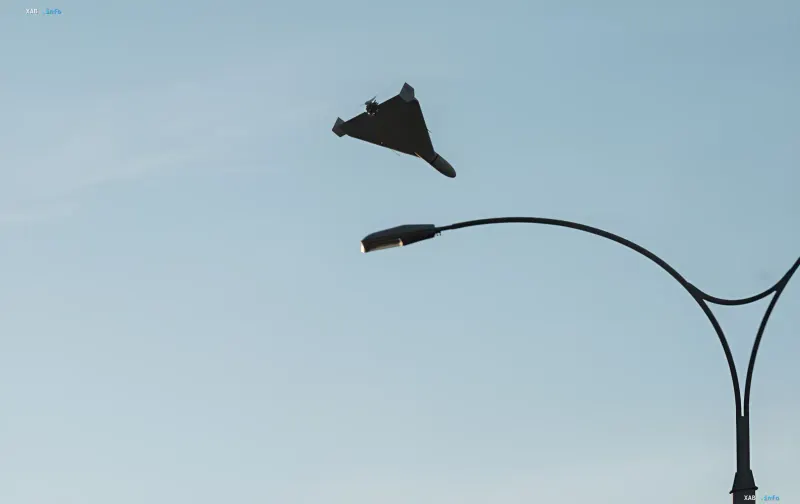
On the night of Thursday, August 20, a drone entered Romanian airspace near the border with Ukraine. The aircraft subsequently crashed in an unpopulated area near the town of Grindea in Tulcea County. This was reported by RBC-Ukraine, citing the Romanian Ministry of National Defense. According to available data, there were no casualties or material damage, but the incident once again drew attention to repeated violations of the airspace of the NATO member state.
Timeline of the Night Incident
According to the Romanian Defense Ministry, at 02:23 the radar surveillance system detected a group of aerial targets near the border with Ukraine. The situation developed rapidly: by 03:20 the population of the relevant area had been alerted by the RO-Alert system, and at exactly 03:21 the drone crossed the Romanian airspace border — approximately 13 kilometers east of the city of Galați. Four minutes later, around 03:25, the helicopter crew reported that the target had crashed approximately 4 kilometers northeast of the town of Grindea in Tulcea County.
NATO and Romanian Air Force Response
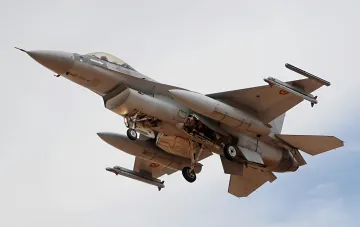
Romanian and allied forces reacted immediately to the detection of the targets. Two F-18 fighter jets of the Spanish Air and Space Force were scrambled, along with a Romanian IAR-330 SOCAT helicopter deployed for aerial reconnaissance. It was from the deck of this helicopter that the crew recorded the moment the aircraft crashed. Notably, the Spanish fighters had previously participated in similar episodes over Romania as part of a NATO mission, indicating a sustained alliance response mechanism to such threats.
Consequences and On-Site Actions
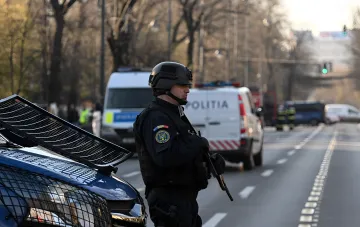
The drone's impact with the ground caused a fire, which reportedly extinguished on its own. There are no reports of injuries or destruction. A military team was dispatched to the crash site to secure the area and inspect the territory. The official attribution of the aircraft's origin is not disclosed in available statements, leaving the question of its affiliation open.
Context: A Series of Incidents at the Border
The night episode near Grindea is not isolated. Just days earlier, a Spanish F-18 fighter, as part of a NATO mission, shot down a drone over Romania; the alliance's operations headquarters stated that the aircraft was "probably Russian." Earlier, at the end of July, there was also a reported episode involving an F-16 fighter that shot down a drone in Romanian airspace. In parallel, incidents involving drones of different origin were also recorded in the region: in early August, Bulgaria summoned the Ukrainian ambassador after a drone explosion near the border with Romania, and an explosion of a maritime device occurred in the port of Constanța, regarding which statements were made by the Ukrainian Navy and the Romanian president.
Contradictory Data
Open sources show discrepancies in the details and attribution of the incidents. First, regarding the drone that crashed on August 20, official statements do not contain a direct indication of its Russian origin, whereas in previous episodes the alliance used the phrasing "probably Russian." Second, different types of fighters (F-18 and F-16) and different dates appear in different events, which sometimes leads to the conflation of separate episodes in a single news feed. Finally, some incidents at the Romanian border are linked to drones of Ukrainian origin, which contradicts the simplified narrative that all aircraft at the border belong to one side. Thus, the fact of the airspace violation and the drone's crash is confirmed, but its exact affiliation remains officially unconfirmed.
The incident near Grindea once again underscores the heightened tension in the airspace of Romania and neighboring countries and demonstrates the well-rehearsed alert and interception procedure by Bucharest and NATO. As of the morning of August 20, no further official clarifications regarding the origin of the crashed aircraft and the findings of the military team working at the crash site had been published.