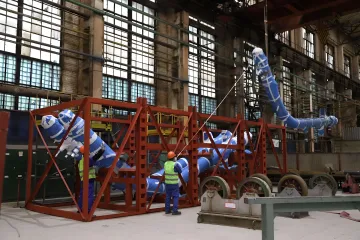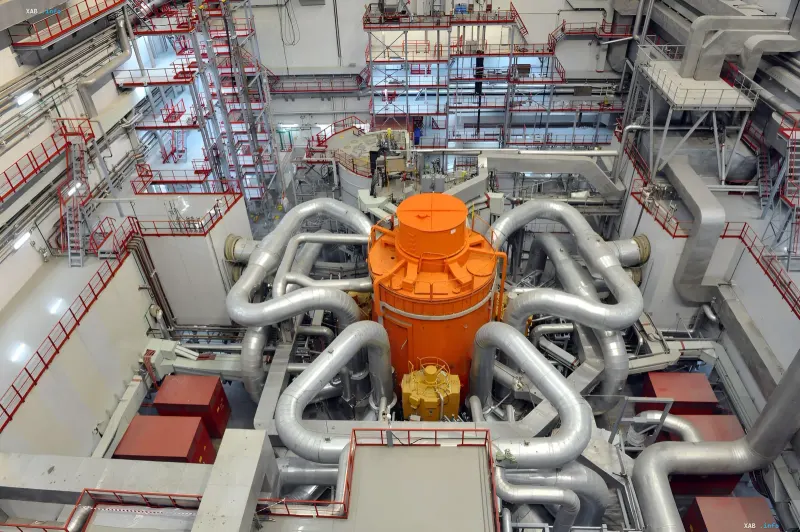
On the fourth unit of the Beloyarsk Nuclear Power Plant, pilot-industrial operation of twice-recycled nuclear fuel has begun in the BN-800 fast-neutron reactor. According to Rosatom, this is the first case in the world in which the possibility of multiple use of nuclear fuel has been confirmed directly on an industrial power unit, rather than under laboratory or experimental conditions. Thus, the Russian nuclear industry is demonstrating the operability of a closed fuel cycle under real production conditions.
How the closed cycle works
The fuel in question is uranium-plutonium fuel made from plutonium that was separated from a fuel assembly previously irradiated in the same BN-800 reactor. The resulting material was reused to produce new fuel intended for this same type of reactor. As designed by its developers, the technology provides for multiple repetition of this process, which makes it possible to organize a closed nuclear fuel cycle. Spent fuel from traditional thermal-neutron reactors has already been reprocessed and used in fast reactors, but it is the repeated recycling within a single system — when fuel returns to the same class of reactors after reprocessing — that has been achieved for the first time.
Improved technology and production in Zheleznogorsk
The new fuel assembly was manufactured using an improved plutonium production technology that allowed the number of production operations to be reduced without changing the characteristics of the fuel itself. Serial production of MOX fuel for the BN-800 is organized in Zheleznogorsk, where capacity is simultaneously being created to supply the future BN-1200M reactor. This indicates that the result achieved is being laid as a foundation for expanding the fleet of next-generation fast reactors.
What this means for nuclear energy
Closing the fuel cycle should improve the efficiency of uranium and plutonium use, reduce the volume of radioactive waste, and lower the dependence of the nuclear energy sector on natural uranium reserves. According to Rosatom's assessment, the results obtained will form the basis for the development of fourth-generation reactors, for which a closed cycle and multiple use of fuel are key technological principles.
Context: international expansion of the fuel division
The technical breakthrough at the Beloyarsk NPP is taking place against the backdrop of active international activity by Rosatom's fuel division. In October 2026, TVEL made the first delivery of nuclear fuel for the second unit of the Ruppur NPP under construction in Bangladesh, while the reactor of the plant's first unit has already been brought to the minimum controlled power level. In parallel, in Europe, specifically in Lower Saxony (Germany), the expansion of nuclear fuel production with the participation of Rosatom's subsidiaries is being discussed. The combination of these events shows that the validation of the closed cycle on the BN-800 is being integrated into a broader program to expand the state corporation's technological and export positions in the global nuclear industry.