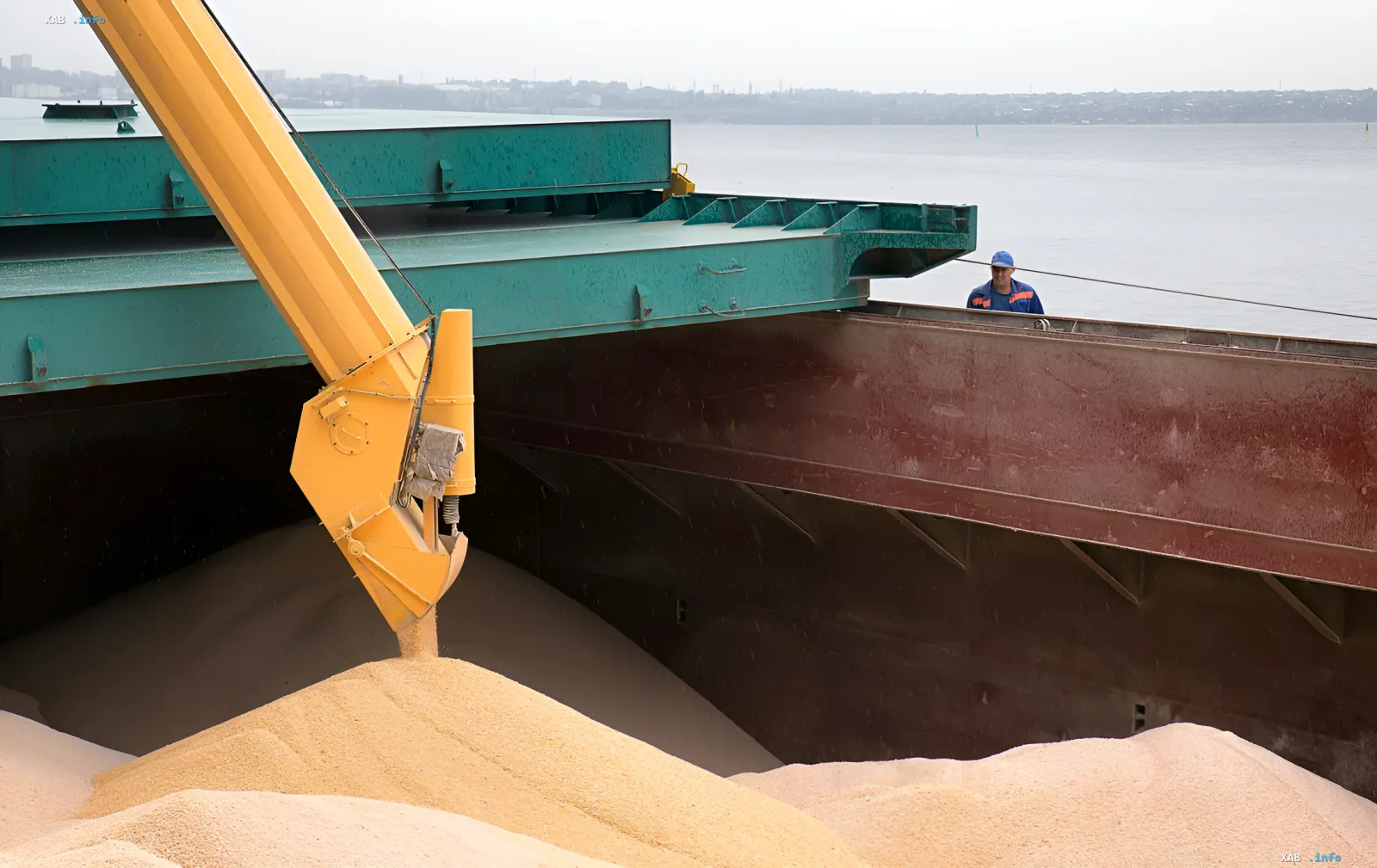
The Governor of Rostov Region, Yuri Slyusar, has introduced a regional state of emergency in the area. According to RBC-Ukraine, citing The Moscow Times, the cause was a sharp deterioration in grain shipments: the ports through which the region traditionally exported its produce have effectively ceased to operate. Rostov Region is one of Russia's key agricultural regions, accounting for about 10% of the country's total grain harvest, so the logistics breakdown has hit the entire supply chain.
How Drone Attacks Shut Down the Ports
According to the publication, since mid-July, ports on the Sea of Azov have ceased operations due to drone strikes, with up to 1.5 million tonnes of grain exported through them each month. In August, the largest Black Sea grain terminals were also hit by drones, leading to their shutdown. Arkady Zlochevsky, President of the Russian Grain Union, stated that the situation for farmers "looks very bad," and that shipments in the Azov basin have come to a complete halt. According to estimates by the SovEcon analytical center, the port problems have paralyzed more than 80% of the capacity for exporting Russian grain.
Record-Low Wheat Exports
The figures confirm the scale of the crisis: in August, wheat exports from Russia fell to 1.9 million tonnes — the lowest level in 16 years. Compared with August 2025, volumes dropped 2.3-fold, and compared with the five-year average — 2.6-fold. Thus, the simultaneous shutdown of Azov and Black Sea terminals has turned into a systemic failure affecting not just a single region but the entire Russian grain export sector.
Searching for Alternative Routes
The Russian Ministry of Agriculture, according to reports, is preparing for state grain purchases and is looking for alternative export routes, in particular through ports on the Arctic Ocean. However, industry representatives agree that there is currently no full substitute for the familiar Black Sea and Azov routes: Arctic ports cannot compensate for the lost volumes and logistics capacity in the short term.
The Broader Context of Escalation
The breakdown in Rostov Region is part of a wider picture. It was previously reported that Ukraine struck all three grain terminals in the port of Novorossiysk, through which more than 40% of Russia's grain exports were shipped, and authorities suspended exports until repairs were completed. In response, Russia intensified missile strikes on Ukrainian Black Sea ports and sank several vessels bound for Odesa. As a result, agricultural exports from both countries risk being significantly reduced or halted entirely, which, given the importance of Russia and Ukraine to global food markets, is causing deep concern and heightening the risk of a global grain supply crisis.