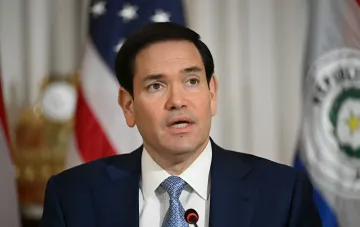
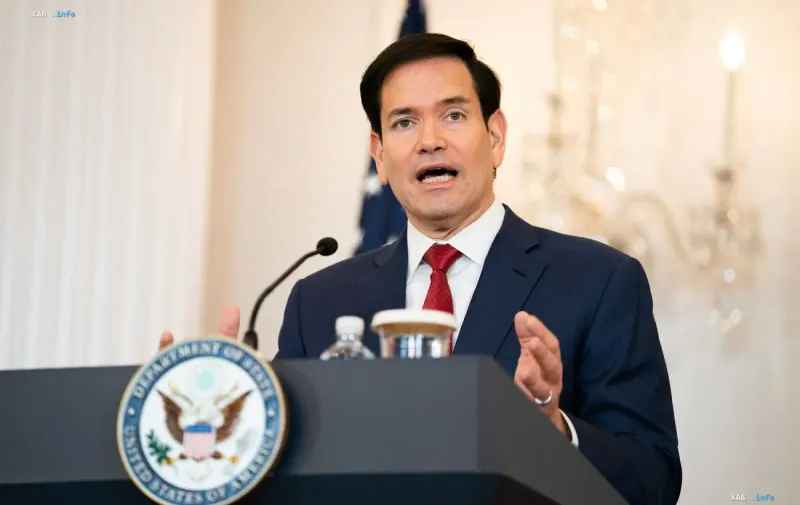
U.S. Secretary of State Marco Rubio, in an interview with radio station 77 WABC, explained the strategic significance of the agreement signed on September 22, 2026, between the United States, Denmark, and Greenland. In his words, the document is aimed at the long-term protection of the Arctic region from a possible military presence by China and Russia. Rubio emphasized that the island is a "vast stretch of land with a small population," which makes it extremely vulnerable from a security standpoint, and that is precisely why Washington cannot allow the placement of foreign military facilities on its territory.
From Trump's first term to a "phenomenal deal"
During the conversation, the Secretary of State recalled that the idea of controlling Greenland had been circulating around the White House since Donald Trump's first presidential term (2017–2021). According to Rubio, the island is strategically important for the United States, and the current agreement is the logical culmination of a long-standing line of U.S. policy in the Arctic. "We absolutely cannot afford to wake up one day in a world where there are Chinese bases, Russian bases, or bases of anyone else there," said the head of the American foreign policy department, calling the final agreement an "excellent" and "phenomenal" deal.
Permanent status and unlimited base deployment
The key element of the document, which Rubio pointed out, is its permanent nature: the agreement has no expiration date and grants the United States the right to deploy as many military bases on Greenland as it deems necessary. In addition, the text includes provisions on future options for strengthening military power and missile defense in the Arctic region. Thus, Washington secures for itself not a temporary, but a permanent military foothold on the world's largest island.
Investment control as a tool of the "Arctic shield"
A separate section of the agreement is devoted to the procedure for screening foreign investment. According to Rubio's explanation, before any company can channel capital into Greenland's economy, it must undergo dual verification — by the United States and Denmark. The purpose of the mechanism is to ensure that the investor is not linked to China or any other country outside NATO that is regarded as a potential adversary. In essence, this creates an institutional barrier that makes the Arctic territory economically closed to Washington's competitors.
Context: Rubio's parallel statements on Venezuela
It is worth noting that during the same period the Secretary of State made a number of other public statements, including on the oil deal with Venezuela, where he estimated the volume of attracted investment at on the order of 100 billion dollars. These comments, however, relate to an entirely different track of U.S. foreign policy and do not intersect with the Arctic theme. The Greenland agreement, by contrast, is positioned by Rubio as an element of a long-term security architecture, rather than a one-off trade or energy initiative.