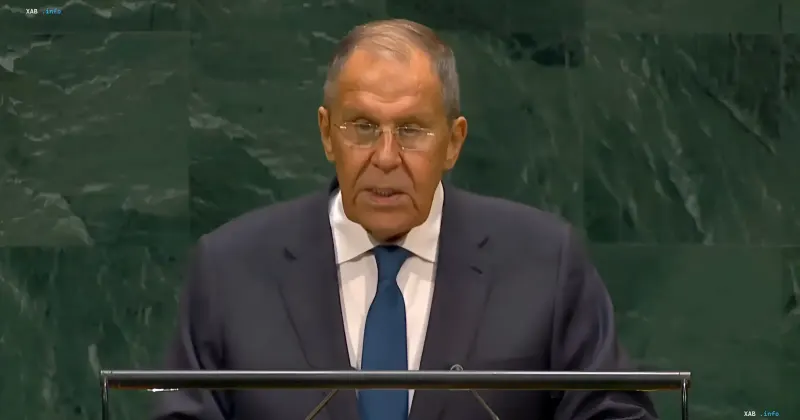
During the UN General Assembly session in New York, Russian Foreign Minister Sergey Lavrov leveled harsh accusations against European states. According to the head of the Russian foreign policy department, European countries are consciously and purposefully obstructing the advancement of peace initiatives aimed at resolving the armed conflict in Ukraine. Lavrov emphasized that such actions run counter to the efforts being undertaken by the administration of US leader Donald Trump to find a diplomatic solution to the crisis.
Moscow's Resolve and Western Militarization
In his speech, the Russian minister reaffirmed the unchanging strategic course of Moscow. According to him, the Russian Federation is guaranteed to achieve all set objectives within the framework of the special military operation and eliminate any potential threats to its national security. Lavrov emphasized that this outcome will be achieved under any circumstances, despite external pressure. Furthermore, he pointed to the unceasing supplies of Western weaponry to the Kyiv regime and alarming statements by European leaders urging their citizens to prepare for a possible direct confrontation no later than 2030.
First Contact with Germany in Years
A landmark event on the sidelines of the UN General Assembly was the first personal meeting since 2022 between Sergey Lavrov and German Foreign Minister Johann Wadephul. As clarified by Russian Foreign Ministry Spokesperson Maria Zakharova, this initiative came from the German side, and the talks lasted about twenty minutes. During the conversation, the head of the German diplomatic department urged Moscow to abandon the course of escalating tensions, which poses a threat to the security of Europe and NATO, and proposed restoring the Black Sea grain export agreement.
Assessment of the Talks' Outcome
Despite the very fact of resuming ministerial dialogue between Moscow and Berlin, the Russian side assessed the meeting skeptically. Sergey Lavrov characterized the talks as fruitless, noting that his German counterpart did not go beyond standard public rhetoric condemning Russia's actions. In the opinion of the Russian Foreign Minister, such formal contacts can hardly be called a full-fledged diplomatic dialogue, given the partners' reluctance to take Moscow's key concerns into account.