On September 12, 2026, Russia carried out one of the most massive daytime drone strikes on Ukraine in recent times. According to the Air Force of the Armed Forces of Ukraine, as reported by RBC-Ukraine, between 6:30 and 18:00 the enemy deployed 410 strike drones, of which 37 were jet-powered. As of 18:00, the airspace remained under strain: approximately 55 strike drones were still in the air, and new groups of UAVs continued to enter the territory, so, according to security services' assessment, the attack had not yet ended by the time of publication.
Scale of the daytime strike and structure of the wave
The key feature of the September 12 attack was its duration and "wave-like" structure: strikes were delivered not in a single salvo, but in series throughout the entire daylight period. This forces air defense forces to operate in a continuous interception mode, redistributing anti-aircraft assets between directions. Of the total 410 strike drones, 37 were jet-powered vehicles, a noticeably higher share of such targets than in previous massive attacks, indicating a change in the enemy's tactics.
Air defense performance and recorded hits
Preliminary data from the Air Force indicates that between 6:30 and 18:00, air defense systems shot down and suppressed 336 strike UAVs, including 23 jet-powered ones. Thus, the overwhelming majority of the deployed targets were intercepted. At the same time, 21 hits by enemy drones on objects within Ukraine's territory were recorded. Since about 55 drones remained in the air by 18:00 and new groups were still incoming, the final figures on losses and hits may be revised once the attack is complete.
Growing share of jet-powered "Shaheds" as a risk factor
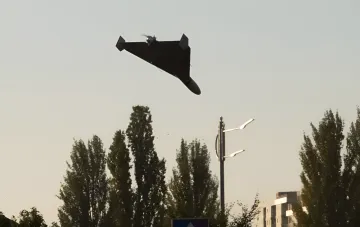
As noted in the context of the attack, Russia has been systematically increasing its use of jet-powered "Shahed" modifications in recent times, using them to compensate for the declining effectiveness of classic suicide drones. The main tactical advantage of such targets is their higher flight speed, which makes them harder to detect and intercept at short ranges. This increases the load on air defense and explains why, even with an overall high shoot-down rate of jet-powered vehicles, the share of recorded hits remains significant.
Contradictory data
When comparing versions from different publications on the events of September 12, discrepancies in the figures arise, linked to different time windows and the composition of targets counted. The Air Force of the Armed Forces of Ukraine (via RBC-Ukraine) provides an assessment specifically of the daytime strike by combat drones: 410 UAVs, of which 37 jet-powered, with 336 shot down. Meanwhile, other sources describe different snapshots of the same day: materials on the nighttime attack mention missiles and 129 drones, while reports on the massive strike of September 12 cite the shoot-down of around 110 missiles and drones in total. The difference is explained by the fact that some data refer to the nighttime wave with missiles, others to the daytime wave of strike UAVs only, and still others combine both types of weapons. Therefore, the final "overall" counter for the day depends on which waves and target types are included in the count, and the sides publish non-matching values.
As of the evening of September 12, 2026, the situation remains dynamic: Ukraine's airspace continues to be under threat due to incoming drone groups, and the final statistics on shot-down targets and the consequences of hits will be clarified by the Air Force of the Armed Forces of Ukraine once the attack is over.