
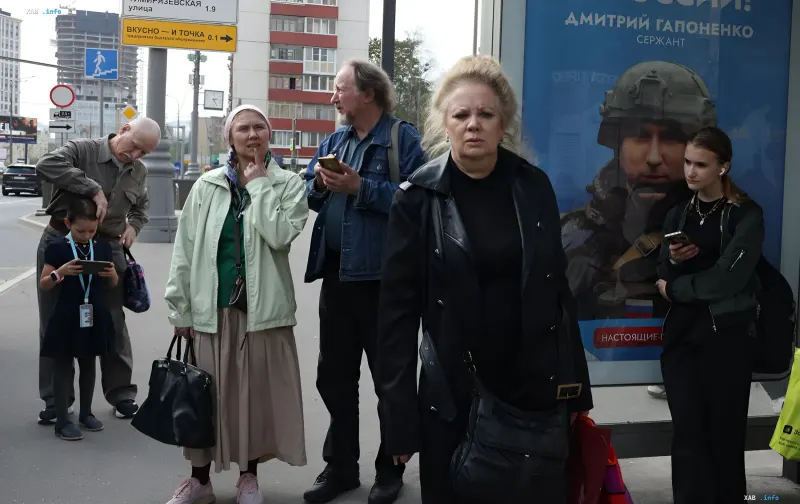
The demographic crisis in Russia, which began back in the 1990s, continues to deepen, according to an assessment by Ukraine's Foreign Intelligence Service (FIS). As RBC-Ukraine reports, citing the intelligence agency, the country is rapidly losing its young generation and working-age population, while chronically low fertility fails to restore the size of the human resource base. By September 2026, according to FIS data, Russia has effectively pulled ahead of the global demographic turning point by nearly 30 years: while population aging remains a worldwide trend, the Russian Federation has been in a deep crisis for a long time.
Age structure: the figures of the turning point
The most telling evidence of this process, according to FIS, is the change in the population's age structure. In the late 1980s, the number of children under five and people over 65 was roughly the same — about 14.5 million in each group. Over the following decades, the picture changed dramatically: the number of young children fell by more than half — to 6.5 million — while the number of elderly people rose to 23.7 million. The agency cites chronically low fertility as the main cause, with the rate significantly below the level needed for simple population replacement.
Consequences for the labor market and social system
The problem is not limited to the current age structure. The shrinking number of children means that in the future Russia will have ever fewer potential workers and parents of the next generation. If the trend continues, within one to two decades the country could face an acute shortage of young specialists: the generation capable of replenishing the labor market is now noticeably smaller than previous ones, while the share of older people requiring pension provision and social services keeps growing, increasing the burden on the social system.
Contradictory data
In Russian pro-government expert circles, statements about the "relative youth" of the population compared with Japan or EU countries are regularly made. FIS, however, asserts that the real demographic picture tells the opposite: the country is not merely aging, but is losing the ability to fully restore its own human resource base. Thus, the official rhetoric about a "young" population and the intelligence assessment of a deep crisis paint two non-matching pictures, and independent verification of the figures cited by the agency was not carried out within this publication.
Economic context and sentiment
Demographic risks coincide with worsening socio-economic indicators. Previously, FIS reported on deteriorating economic sentiment in the Russian Federation: the population has started saving less money, more frequently withdrawing funds from bank deposits, and switching to cheaper second-hand goods. According to the agency, the "happiness index" fell by 9 points in August, reaching its lowest level since 2011, while the share of people who consider themselves "unhappier" rose to 9%. FIS links this to the authorities' policy, the war against Ukraine, economic difficulties, and local problems. The combination of factors intensifies the depopulation process and makes it increasingly difficult to maintain the population size and the human resource base the economy needs.




