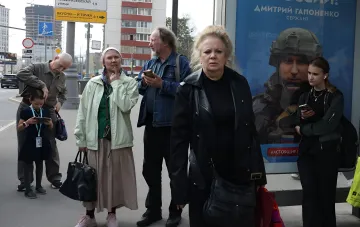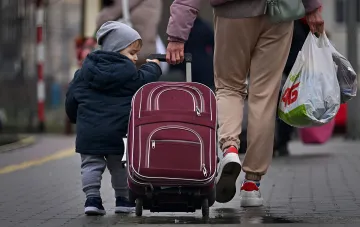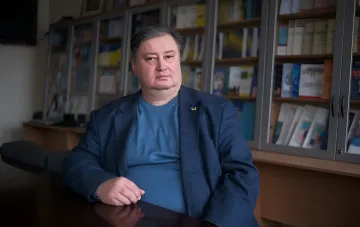
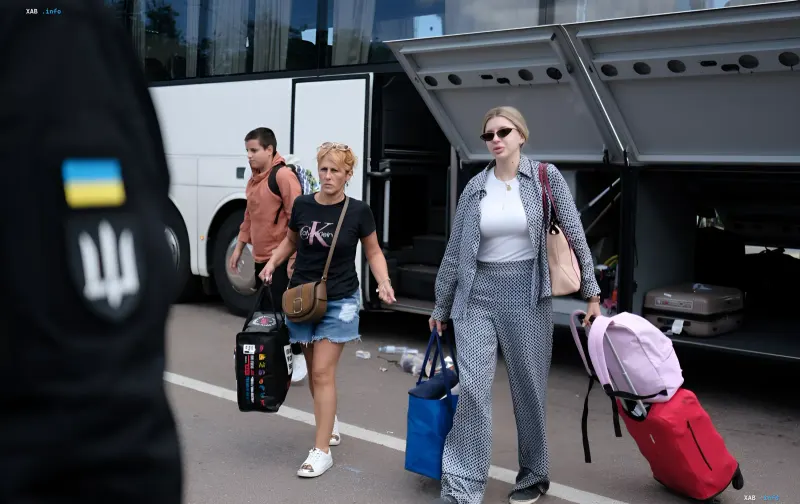
The decision by Ukrainians who were forced to leave the country during the full-scale invasion about returning home is governed not by a single factor, but by a whole set of factors, and it does not always depend on financial indicators. This was stated in an interview with RBC-Ukraine by Alexey Poznyak, a senior researcher at the M.V. Ptuka Institute of Demography and Social Studies of the National Academy of Sciences of Ukraine and a candidate of economic sciences. In his assessment, overall, most refugees plan to remain in the recipient countries — that is, the states that took them in and where they currently live. At the same time, the expert emphasizes that people give such answers based on the current situation, and if it changes, the decision to return or not return may turn out to be different.
Who Almost Certainly Won't Return
The scientist calls the return of young women who have found a partner abroad the least likely: "There is almost no chance that any of them will return," Poznyak states. At the same time, he acknowledges that there are isolated cases in which a person who found a partner abroad moves to live in Ukraine together with them. However, such situations are "not even a percent, but far less than a percent," and they do not show up in the overall numbers.
Qualification, Prices, and Status
Among the key barriers, the expert highlights a mismatch between jobs and qualifications: most of the citizens who left are working in positions that do not match their education and experience, and those actually working in their profession are "quite few." Even with a higher income abroad, the factor of higher prices in the EU is added on top of it. Poznyak names the difference in social status as a separate psychological factor: "If an analyst left and works as a shop assistant, this leaves a psychological mark and affects a person morally," and a person may return home even if they earn more abroad. The simple "feeling of home" and the desire to live in one's own country also play their part.
Contradictory Data
The expert's statements contain an internal caveat that is important to reflect honestly. On the one hand, a stable trend is recorded: most refugees plan to remain in the recipient countries, and the return of certain groups (primarily young women with new partners) is assessed as extremely unlikely. On the other hand, Poznyak himself emphasizes that these answers reflect only a current snapshot of mood and are not final: if the situation changes, the decision may change. Thus, in his assessment, "the intention to stay" and "the possibility of returning" coexist as two conditional scenarios, rather than as mutually exclusive facts, and neither of them is declared unconditional.
The Expert's Recommendation
In conclusion, the scientist notes that calling on people to return to Ukraine now is "irrational," since they are in relative safety abroad. In his words, the priority should be preserving people and maintaining ties and contact with them, so that they retain an interest in the country and, after the war ends, move to concrete actions to return. Thus, the question of return, in the assessment of the Institute of Demography, is viewed as long-term and multifactorial, rather than as a reaction to any single circumstance.