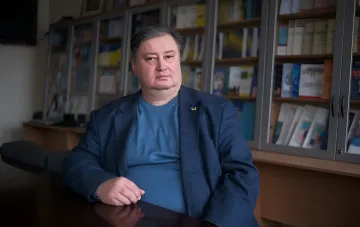
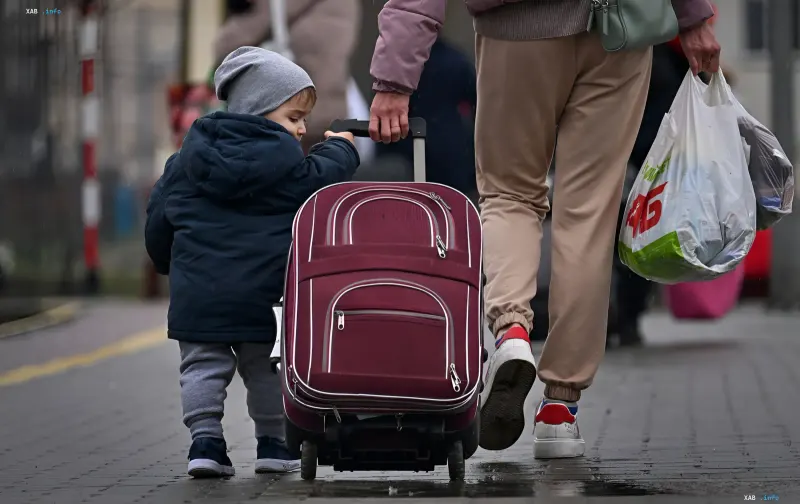
The escalation of the situation with enemy shelling and drone attacks in Ukraine, which has been recorded for several years, inevitably leaves a strong psychological imprint on citizens. However, according to data from the M.V. Ptukha Institute of Demography and Social Studies of the National Academy of Sciences of Ukraine, this has not yet turned into a sustained growth in migration intentions. This was stated in an interview with RBC-Ukraine by the institute's senior researcher, Candidate of Economic Sciences, Oleksiy Pozniak, who emphasized that current statistics do not record a significant increase in the outflow of people crossing the border.
"Those who were inclined to leave have already done so"
According to Pozniak, if the overall picture is assessed, the bulk of citizens who were initially inclined to leave Ukraine because of the war already made that decision in the first months of the full-scale invasion. Those who remained in the country or returned after a brief departure and a short stay abroad are, to a greater extent, oriented toward staying in Ukraine. "At least, until the situation changes very significantly," the scholar clarified. At the same time, the expert does not rule out that the number of people who decide to leave may grow, especially if conditions become more unbearable than they are now. However, he emphasizes: this is unlikely to be "exactly such a mass exodus as there was in 2022, at the beginning of the full-scale invasion," because at that time it was the most mobile and most inclined citizens who left the country.
Historical peak: millions within weeks
Citing official data from the UN High Commissioner for Refugees (UNHCR), Pozniak recalled that the absolute peak of the mass exodus fell precisely on the first months of the full-scale invasion. "Within weeks and months, millions crossed the Ukrainian-European border. Only in the first few weeks of March 2022, more than 3 million people left, and by the end of spring the figure crossed the 6–7 million mark," the specialist clarified. Besides this period, he says, no surges in departures on a comparable scale have been recorded. The only exception was last year, when Ukraine allowed men aged 18–22 to leave the country: then the outflow "to a certain extent" increased, but "not on such a scale" as in 2022.
Seasonality and methodology: how to distinguish a vacation from a flight
To track migration trends, the institute uses border service data, which, according to Pozniak, are analyzed critically. The expert drew attention to an important methodological nuance: in summer there is traditionally an increase in the flow of citizens crossing the border — this is the vacation season, when people go to Europe on planned holidays and then return. "And someone will look and say that these are mass departures, for example, because of the shelling. But where does that conclusion come from? We cannot give such an assessment," the scholar explained. According to his data, more people leave in early summer, while by the end of summer the opposite flow is recorded — toward Ukraine, i.e., the return of citizens.
Psychological habituation and the chronicity of danger
Concluding the interview, Pozniak acknowledged that the escalation of shelling "one way or another leaves a strong psychological imprint on people." At the same time, he described the mechanism of adaptation: "Now it is the years of war, the situation changes quite often — today one situation, tomorrow already another. And that has been going on for several years. And when the situation remains more or less at the same level of danger, people partially get used to it. That is also the case." Thus, according to the demographer's assessment, the chronicity of the threat reduces the short-term motivation to leave, although it does not eliminate the accumulated psychological tension.
Contradictory data
The expert's statements contain a certain internal tension between two theses. On the one hand, Pozniak states that "overall, all this data currently does not show a serious increase in migration intentions" and that no mass exodus comparable to 2022 is expected. On the other hand, he directly acknowledges that "because of the current events, the number of people who decide to go will grow," especially if conditions become more unbearable. The difference between these two statements lies in the horizon and the conditions: the first thesis describes the current statistics, the second — a conditional scenario in the event of a substantial deterioration of the situation. Nevertheless, it is important for the reader to understand that the expert does not give an unambiguous forecast of "zero" outflow: he records the absence of a mass exodus at the current moment, but leaves open the question of potential growth if the parameters of the conflict change. Moreover, the question of whether the summer increase in border crossings is a consequence of the shelling or of seasonal vacation is, according to the expert, directly called unresolvable on the basis of the available data: "We cannot give such an assessment."